500-Year-Old Samosa Recipe Goes Viral: Not Aloo, Royals Once Relished This Rich Filling
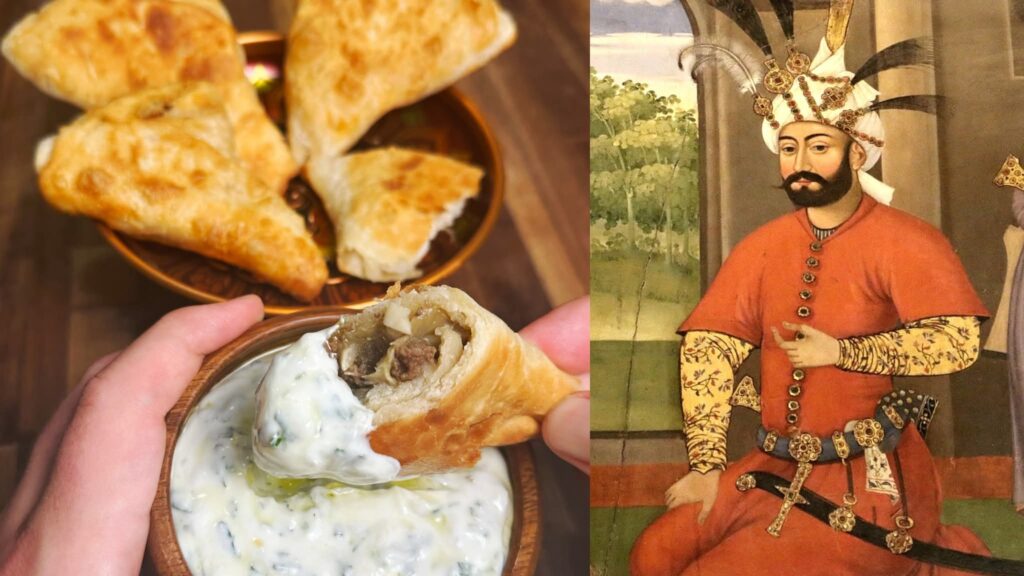
500-Year-Old Samosa Recipe Goes Viral: Not Aloo, Royals Once Relished This Rich Filling
Snacks in India, especially samosas, are everywhere—paired with evening chai, stuffed with spicy aloo, and loved across every corner of the country. From street vendors to home kitchens, the familiar potato filling has become the identity of this crispy treat. But here’s something surprising—there was a time when samosas had nothing to do with potatoes at all.
A post by historian Dr M.F. Khan has brought attention to one of the oldest known samosa recipes, found in a Persian manuscript called Ni’matnama (The Book of Delights). This text was written between 1501 and 1510 for the Sultan of Mandu in central India, showing that samosas were once a part of royal dining rather than everyday street food.
Dr Khan shared that the manuscript had an incredible journey over the years. It passed through the hands of Mughal Emperor Akbar, later reached Tipu Sultan of Mysore, and eventually came into the possession of the British East India Company. Today, it rests safe in the British Museum.

The biggest twist in this viral recipe is the filling itself. There were no potatoes or chillies involved—these ingredients only became part of Indian cuisine much later. Instead, the samosas were made using rich, aromatic, and carefully balanced ingredients.
As described in the manuscript:
“Mix together well-cooked mince with the same amount of minced onion and chopped dried ginger, a quarter of those, and half a measure of ground garlic, and having ground three measures of saffron in rosewater, mix it with the mince together with aubergine pulp. Stuff the samosas and fry them in ghee.”
The samosa is one of the most eaten street foods on the planet. This is a 500-year-old recipe for it, written in Persian in a manuscript sitting in the British Museum.
— Dr. M.F. Khan (@Dr_TheHistories) April 8, 2026
The manuscript is called the Ni'matnama, the Book of Delights, written between 1501-1510 AD, for the Sultan of… pic.twitter.com/uEjIe77zQl
The manuscript also explains that samosas could be prepared using different types of dough—thin coarse flour bread, fine flour bread, or even uncooked dough—adding variation to the texture and style. Compared to today’s popular version, these royal samosas were far more indulgent and fragrant. Dr Khan described them as “richer, more perfumed, and more obviously courtly than the street food version the world knows today.”
The samosa is one of the most eaten street foods on the planet….
— ArchaeoHistories (@histories_arch) April 3, 2026
The manuscript is called the Ni'matnama, sometimes translated as the Book of Delights, and it was written between 1501 and 1510 for the Sultan of Mandu, a medieval sultanate in central India. It is not just a… pic.twitter.com/Mmq5YxMZCa