Will India Ban Social Media For Children Under 16? PM Modi’s Australia Remarks Spark Debate
Will India Ban Social Media For Children Under 16? PM Modi's Australia Remarks Spark Debate
Prime Minister Narendra Modi’s praise for Australia’s under-16 social media ban has fuelled discussions on whether India could introduce similar age-based restrictions to improve children’s online safety.
By Vidhi Lalla
Prime Minister Narendra Modi has indicated that India is closely studying Australia’s decision to restrict social media access for children under the age of 16, raising speculation that similar age-based rules could be considered in the country.

Speaking during the Australia-India Leaders’ Summit, Modi praised Australia’s efforts to strengthen online safety laws and protect children from harmful digital content.
“The way you are bringing changes in laws related to IT and social media, and working to protect society, is highly inspiring for the world. We are learning a lot from your efforts and taking many lessons from them,” the Prime Minister said.
His remarks are being seen as the strongest indication yet that the Centre is examining stricter safeguards for children’s social media use.
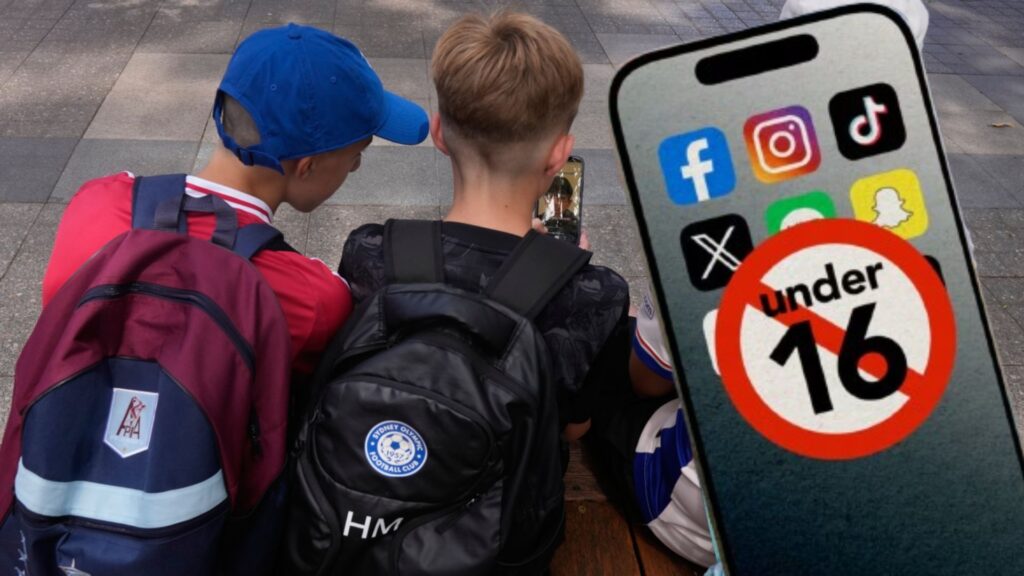
Australia became the first country to introduce a nationwide law preventing children under 16 from creating or maintaining accounts on major social media platforms, including Instagram, Facebook, TikTok, Snapchat, X and YouTube. The law places the responsibility on technology companies to verify users’ ages and block underage accounts, with heavy penalties for non-compliance.
Why India is discussing similar restrictions
The debate comes amid growing concerns over children’s online safety.
Recently, the Centre directed Instagram to remove advertisements promoting child sexual abuse. A Home Ministry report also highlighted the misuse of messaging platforms such as Telegram for sharing child sexual abuse material.
Union IT Minister Ashwini Vaishnaw had earlier confirmed that the government was holding discussions with social media companies on introducing age-based safeguards. Officials from the IT Ministry have since held multiple meetings with technology firms and other stakeholders.
Several states have also expressed concern. Karnataka has proposed restricting social media access for children below 16 years, Andhra Pradesh has suggested a similar move for those below 13, while Goa is exploring its own framework. However, since information technology falls under the Union List, only Parliament can introduce a nationwide law.
Challenges before India
Experts say implementing such a policy in India would be significantly more complex than in many other countries because of its massive digital population.
India has over 1.16 billion mobile connections, making it one of the world’s largest internet markets. Millions of children use smartphones for education, communication and entertainment.
Enforcing any age restriction would require reliable age verification systems, raising concerns over privacy and the collection of personal data from minors. Experts also point out that children may bypass restrictions through VPNs, shared family accounts or alternative applications with weaker moderation.
Australia’s experience has also highlighted these challenges. Although the country introduced the ban after studies found that nearly 70% of children aged 10-15 had been exposed to harmful online content, reports suggest many teenagers continue accessing social media using VPNs and other workarounds despite the restrictions.
How a social media ban could help children
If implemented effectively, age-based restrictions could offer several benefits:
- Reduce exposure to harmful content, including violence, pornography, cyberbullying and self-harm material.
- Lower the risk of online predators targeting children through fake profiles or direct messaging.
- Improve mental health by reducing excessive screen time linked to anxiety, depression and poor sleep.
- Encourage healthier childhood development by promoting more outdoor activities, hobbies and face-to-face interactions.
- Improve focus on studies by reducing distractions during school years.
- Protect children’s privacy by limiting the amount of personal information shared online.
- Reduce social media addiction and excessive dependence on digital validation.
- Strengthen parental supervision, making it easier for families to monitor children’s online activities.
Experts, however, note that restrictions alone may not be enough. Digital literacy, parental guidance, stronger platform moderation and age-appropriate online education will remain equally important in creating a safer online environment for children.
Disclaimer: The Centre has not announced any decision to ban social media for children under 16. The issue is currently under discussion, and no nationwide policy has been notified.