India’s “King of Sweets”: The Royal Story of Mysore Pak
India’s “King of Sweets”: The Royal Story of Mysore Pak
Every culture has that one indulgence that instantly signals celebration. In India, among countless beloved mithais, one rich, golden delicacy often rises above the rest in trivia books and popular conversation alike—Mysore Pak. Known for its luxurious texture and deep ghee flavor, this iconic sweet carries not just taste, but history, prestige, and tradition in every bite.
Why Mysore Pak Holds the Crown
While India boasts a dazzling variety of sweets, Mysore Pak is frequently referred to as the “King of Sweets,” especially in general knowledge contexts. This title isn’t official, but it reflects a widely accepted sentiment. Its royal beginnings, unmistakable richness, and enduring popularity across regions make it a symbol of indulgence and celebration.
What Makes Mysore Pak Special?
At first glance, Mysore Pak looks simple—but its magic lies in its minimal ingredients:

- Gram flour (besan)
- Sugar
- Generous amounts of ghee
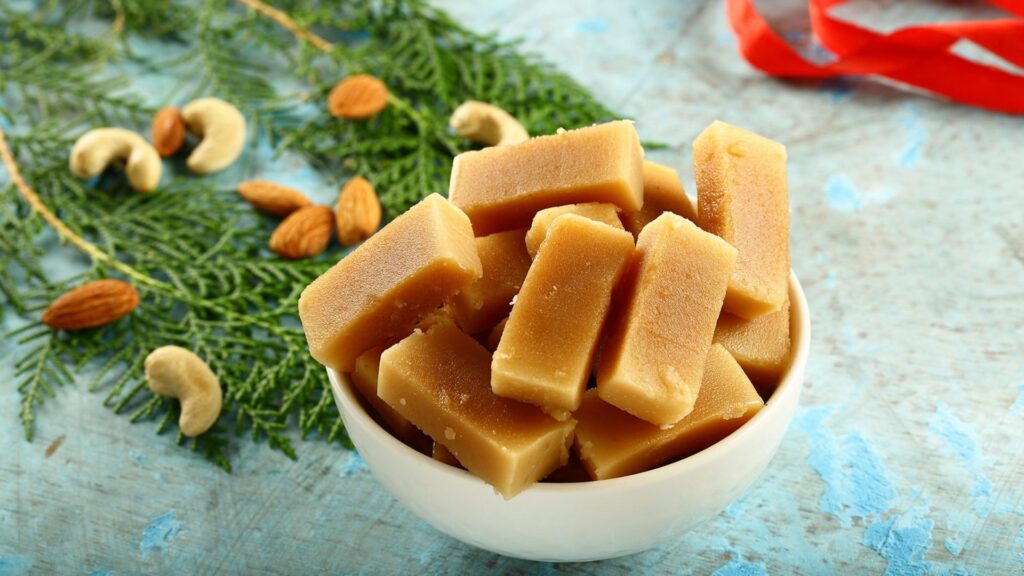
When prepared correctly, these transform into a soft yet structured sweet that resembles barfi but melts effortlessly in the mouth. The name “Pak” comes from paaka, referring to the sugar syrup that binds everything together.
Traditional versions are slightly firm with a crumbly texture, while modern adaptations are softer, lighter, and almost sponge-like, thanks to variations in technique and ghee content.
A Royal Beginning in Mysore
The origins of Mysore Pak trace back to the royal kitchens of Mysore during the reign of Krishna Raja Wadiyar IV. The sweet is credited to palace chef Kakasura Madappa.
Legend has it that when dessert was unexpectedly needed, Madappa improvised by cooking besan in ghee and mixing it with hot sugar syrup. The result was poured onto a plate and allowed to set. When served, the king was delighted by its taste and texture and asked for its name. On the spot, the cook called it “Mysore Pak”—a name that stayed forever.
Encouraged by the royal family, Madappa later began selling the sweet outside the palace, leading to the establishment of Guru Sweets near Devaraja Market. Even today, this shop is widely regarded as a destination for authentic Mysore Pak.
More Than Just a Sweet
Across South India, Mysore Pak is deeply tied to celebrations:
- Weddings
- Religious festivals
- Baby showers
- Special family occasions
For many households, it’s among the first sweets chosen when there’s something to celebrate. Beyond its taste, it represents heritage—especially in Karnataka, where it stands alongside regional staples as a culinary emblem.
It has also become a part of food tourism, with travelers visiting Mysuru specifically to experience its authentic preparation.
Different Styles You’ll Find Today
Over time, Mysore Pak has evolved into multiple variations:
Traditional Mysore Pak
- Firm texture
- Porous, slightly crumbly inside
- Classic style associated with heritage sweet shops
Soft Mysore Pak
- Higher ghee content
- Extremely soft and melt-in-the-mouth
- Popularized by modern sweet brands
Flavored Versions
- Infused with saffron, cardamom, dry fruits, or even chocolate
- Contemporary twists, though purists prefer the original
Despite these variations, the essence remains the same: careful cooking and precise timing.
How Mysore Pak Is Made
Ingredients
- 1 cup gram flour (besan)
- 2 to 2½ cups ghee
- 2 cups sugar
- 1 cup water
- Pinch of baking soda (optional)
- ½ tsp cardamom powder (optional)
Method
1. Roast the Besan
Heat some ghee in a heavy pan, add sifted besan, and roast gently until aromatic and golden.
2. Prepare Sugar Syrup
Dissolve sugar in water and cook until it reaches a one-string consistency.
3. Combine and Cook
Slowly mix the roasted besan into the syrup. Gradually add hot ghee while stirring continuously until the mixture thickens and turns glossy.
4. Set the Sweet
Pour into a greased tray, allow it to partially cool, then cut into pieces before it fully sets.
The secret lies in patience and precision—especially with the syrup and ghee ratio. Cutting corners often results in a dry texture rather than the signature melt-in-the-mouth finish.
Why It Still Matters Today
Even with modern desserts gaining popularity, Mysore Pak continues to hold its place. It represents a rare combination of simplicity and richness—proof that a few humble ingredients can create something extraordinary.
For many, it’s tied to nostalgia, family traditions, and regional pride. For others, it’s a culinary experience worth traveling for. Whether served at festivals or gifted in festive boxes, its presence still signals something special.
A Sweet That Earned Its Crown
The title “King of Sweets” isn’t just about flavor—it’s about legacy. From an improvised royal dessert to a nationwide favorite, Mysore Pak has traveled through time without losing its identity.
Its golden blocks may look modest, but each bite carries a story of tradition, craftsmanship, and indulgence. And perhaps that’s what truly makes it royal—not just where it came from, but how deeply it continues to be cherished.