China’s Property Market Hits a 20-Year Low: Should India’s Realty Sector Be Worried?
China’s Property Market Hits a 20-Year Low: Should India’s Realty Sector Be Worried?
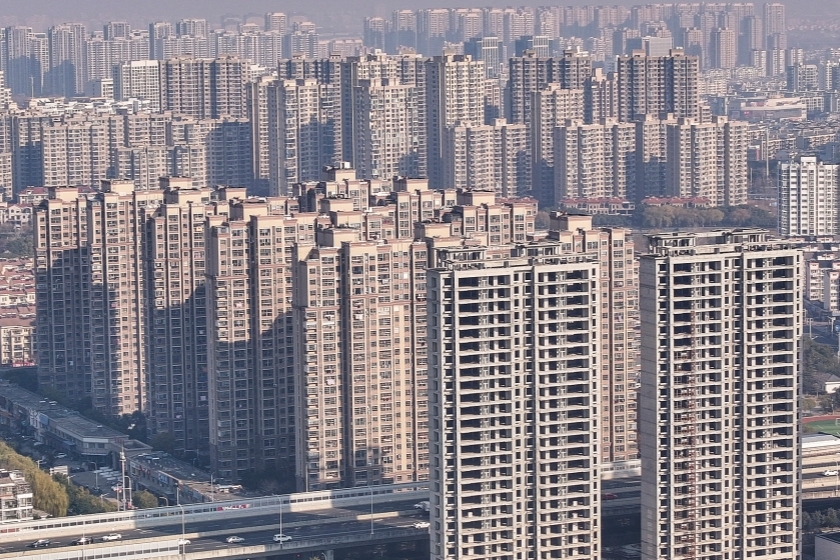
China’s once-booming property sector is now grappling with one of its longest and deepest downturns in decades, sparking fresh global debate about whether similar risks could ever emerge in India’s housing market.
Recent data referenced from the Bank for International Settlements suggests that China’s inflation-adjusted residential property price index slipped to 86.79 in Q4 2025. That represents a steep drop from its peak of 113 recorded in late 2021, translating into an approximate 23% real-term decline over four years and effectively wiping out nearly a quarter of the market’s value after adjusting for inflation.

Rather than a sudden collapse, analysts describe this as a drawn-out “slow-motion correction” stretching across four consecutive years. The downturn has been broad-based, with residential prices across 70 major cities reportedly falling to their weakest levels in around two decades. Investment in real estate also contracted by 14.7% during the first ten months of 2025, while new home sales have now been declining for five straight years. At the same time, unsold completed housing stock has ballooned to nearly 391 million square metres, a sharp 72% rise compared to 2021 levels.

The scale of this slump is particularly significant given that real estate and related industries once accounted for almost 25% of China’s GDP. Unlike many Western economies where household wealth is more closely tied to equities, Chinese families have historically stored a large share of their savings in property. As prices fall, that wealth base has taken a heavy hit, impacting consumption and financial confidence.
The stress in the sector has also triggered major corporate failures. Evergrande collapsed under a debt burden exceeding $300 billion and was removed from the Hong Kong Stock Exchange in August 2025. Another major developer, Country Garden, has defaulted on its obligations, while once-stable industry giant Vanke reported a record loss of $6.8 billion for 2024 and has sought extensions on bond repayments.
China's real estate market is now at a 20-year low. The chart below is not a prediction. It is already happening.
— UnveiledChina (@Unveiled_ChinaX) April 28, 2026
According to Bank for International Settlements data, China's inflation-adjusted residential property price index stood at 86.79 in Q4 2025. The peak was 113 in late… https://t.co/k8BKYrwuQP
As these developments unfold, discussions have intensified on social media about whether India could experience a comparable housing correction. Concerns being raised include currency weakness of the rupee, volatility in equity markets, job market uncertainty, and the broader disruption expected from artificial intelligence-driven changes in the economy.
China's residential property prices have crashed to the same levels as of 2005, more than 20 years back.
— Gurjot Ahluwalia (@gurjota) April 28, 2026
I hope you know which country this is likely to repeat in. pic.twitter.com/bwpz7IiJbi
However, many analysts argue that India’s housing landscape is structurally different from China’s. Unlike the oversupply-driven imbalance seen in China, Indian real estate is still largely supported by genuine end-user demand. Rapid urbanisation and demographic expansion continue to fuel the need for housing, while a significant portion of the population still lacks adequate shelter, keeping demand relatively resilient.
Additional support factors such as investment from non-resident Indians (NRIs) and the presence of unaccounted wealth in certain segments are also believed to sustain demand in the short to medium term. At the same time, cautionary signals remain—slowing income growth and weakening rental yields could gradually pressure investor returns and affordability.