Pune’s Future Is Looking Up: Why Vertical Growth Is Becoming a Necessity, Not a Choice
Pune's Future Is Looking Up: Why Vertical Growth Is Becoming a Necessity, Not a Choice
As land becomes scarce and the city continues to attract new residents, Pune is increasingly turning to high-rise development to balance housing demand, infrastructure efficiency and sustainable urban growth.
By Vidhi Lalla
PUNE: Pune has long been regarded as one of India’s most liveable cities, attracting professionals, students, entrepreneurs and retirees alike. However, the very factors that have made Pune a preferred destination are now creating new urban challenges. Rising population, increasing housing demand, shrinking land availability and mounting pressure on infrastructure are forcing the city to rethink how it grows.
The answer, urban planners say, lies not in expanding endlessly outward but in building upward.


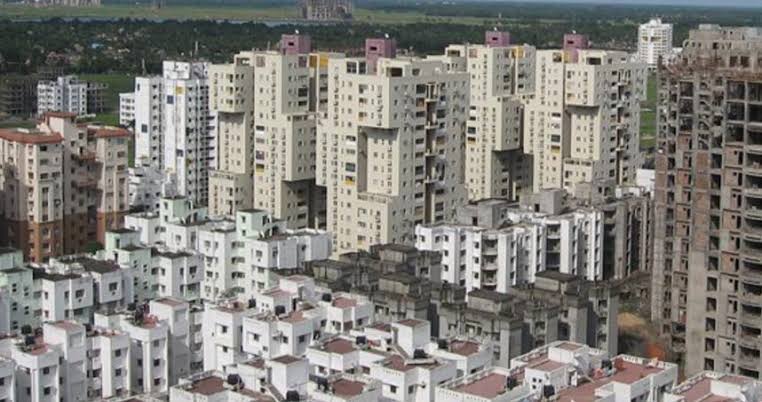
Across neighbourhoods such as Baner, Kharadi, Wakad, Hinjewadi, Viman Nagar and Hadapsar, Pune’s skyline is undergoing a visible transformation. High-rise residential towers, mixed-use developments and integrated townships are replacing the low-density urban pattern that once defined the city.
The shift comes at a time when India’s urban population is expected to approach 600 million over the next decade. As more people migrate to cities seeking better employment opportunities, education and healthcare, urban centres face an increasingly difficult question: how can they accommodate growth without exhausting land and resources?
For Pune, the challenge is particularly significant. The city’s rapid expansion over the last two decades has led to rising land prices in prime locations, longer commuting distances and increased pressure on civic infrastructure.
“Land within the city is becoming a premium resource. Vertical development allows Pune to accommodate more residents without sacrificing connectivity and access to essential services,” said Aniket Deshmukh, an urban planning consultant based in Pune.
One of the biggest drivers behind the city’s vertical growth is land scarcity in established residential corridors. Areas close to IT hubs, Metro stations and commercial districts have become highly sought-after, making low-density development economically impractical.
Developers are increasingly utilising Floor Space Index (FSI) provisions to create taller residential structures that maximise land use while supporting growing housing demand. Transit-Oriented Development policies around Metro corridors have further accelerated this trend by encouraging higher-density construction in well-connected locations.
The approach is helping create neighbourhoods where housing, workplaces, shopping, healthcare and recreation are located within shorter distances, reducing dependence on long commutes.
“People today prioritise convenience. Living close to work, Metro stations and daily amenities has become more important than owning larger homes on the city’s outskirts,” said Riya Kulkarni, a resident of Baner.
Urban experts argue that the benefits of vertical growth extend beyond housing supply. High-rise developments reduce urban sprawl, preserve valuable land resources and allow better utilisation of existing infrastructure such as roads, water networks, public transport systems and utilities.
They also create opportunities for sustainable practices including rooftop solar installations, rainwater harvesting systems, centralised waste management and energy-efficient building designs.
In many newer developments across Pune, integrated communities are emerging where residents can access parks, healthcare facilities, recreational spaces, retail outlets and educational institutions within a single ecosystem. Such developments are increasingly being viewed as a practical response to the demands of modern urban living.
At the same time, Pune faces another demographic challenge that is expected to influence future housing design, an ageing population.
As India’s senior citizen population continues to grow, future residential projects will need to incorporate accessibility features, healthcare support, community spaces and safety measures that cater to older residents.
“Well-planned vertical communities can offer seniors a better quality of life. Security, medical access, elevators, social spaces and maintenance services become much easier to manage within integrated developments,” said Madhav Joshi, a retired resident of Kothrud.
While vertical growth is gaining momentum, experts caution that taller buildings alone will not solve urban challenges. Infrastructure expansion, public transport improvements, water management systems and social amenities must evolve alongside residential development.
The city must also ensure that future growth remains balanced, with adequate green spaces, pedestrian-friendly streets and strong civic infrastructure supporting increased density.
For Pune, the debate is no longer whether the city should grow vertically. The reality of limited land, rising housing demand and changing demographic needs has already made that decision inevitable.
The focus now is on ensuring that vertical growth is planned intelligently, creating neighbourhoods that are not only taller but also more sustainable, connected and liveable.
As Pune prepares for its next phase of urban evolution, its future skyline may well become a symbol of a city learning to grow smarter rather than simply larger.