2000 Vs 2026: How Prices Of Everyday Essentials Have Changed In India
2000 Vs 2026: How Prices Of Everyday Essentials Have Changed In India
From petrol and LPG cylinders to milk and other household necessities, the cost of everyday living in India has risen sharply over the past two decades, reflecting changing economic realities and inflationary pressures.
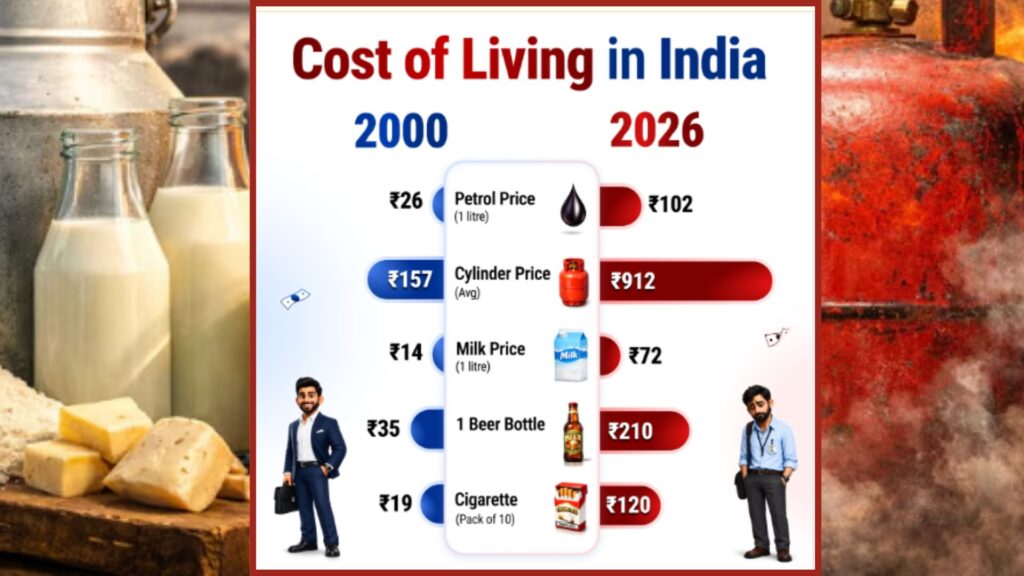
A social media post comparing the prices of essential commodities in 2000 and 2026 has triggered widespread discussion online, drawing attention to how much everyday expenses have increased over the years.
The comparison highlights the rising cost of living in India, where the prices of key household essentials have climbed significantly despite growth in incomes and the economy.
One of the most noticeable increases has been in fuel prices. Petrol, which cost around ₹26 per litre in many parts of India in 2000, now costs nearly ₹102 per litre in several cities. Rising global crude oil prices, taxes, transportation costs and other economic factors have contributed to the increase.

Cooking gas has also become considerably more expensive. A domestic LPG cylinder that cost about ₹157 in 2000 is now priced at around ₹912 in 2026. Although governments have introduced subsidies and support measures over the years, LPG remains a major monthly expense for millions of households.
Milk, one of the most commonly consumed items in Indian homes, has also recorded a substantial rise in price. While rates vary depending on city, brand and quality, retail prices today are significantly higher than they were two decades ago. Higher costs of cattle feed, transportation, labour and packaging have all contributed to the increase.
The viral comparison has resonated with many people because it reflects the growing pressure on household budgets. However, experts point out that a true cost-of-living assessment goes far beyond fuel and grocery prices.
Housing costs, healthcare expenses, education fees, public transport, electricity bills, communication services and entertainment spending all play a role in determining how expensive life has become. Prices also differ widely between metropolitan cities, smaller towns and rural areas.
The comparison should therefore be viewed as an illustrative snapshot rather than a complete picture of India’s cost of living. A comprehensive analysis would require a much broader basket of goods and services, along with inflation-adjusted calculations and city-specific data.
Still, the figures offer a striking reminder of how everyday expenses have evolved over the years. For many families, the debate is not just about how much prices have increased, but whether income growth has kept pace with the rising cost of maintaining a similar standard of living.
Disclaimer: Prices mentioned are indicative and may vary by city, state, brand and time period. The comparison is intended to illustrate broad trends and should not be treated as a definitive measure of India’s cost of living.