Proposal To Increase Lok Sabha Seats Could Boost Maharashtra’s Parliamentary Representation Under New Delimitation Model
Proposal To Increase Lok Sabha Seats Could Boost Maharashtra’s Parliamentary Representation Under New Delimitation Model
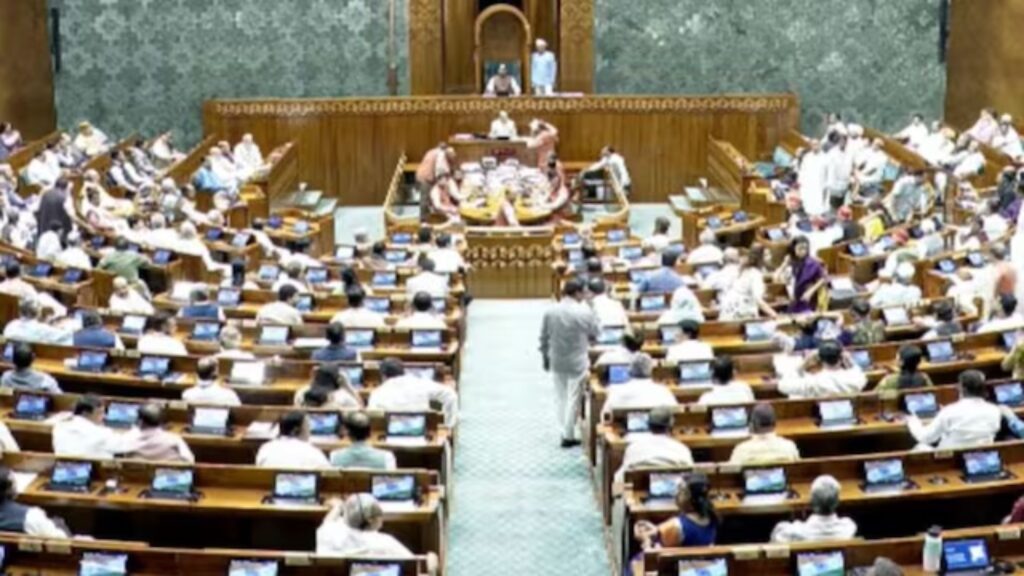
New Delhi, June 11, 2026: The Economic Advisory Council to the Prime Minister (EAC-PM) has recommended a major overhaul of India’s parliamentary constituency structure, proposing an increase in the number of Lok Sabha seats from the current 543 to 824. The recommendation is part of a broader delimitation framework aimed at improving representation while maintaining regional balance across the country.
The report suggests that constituency delimitation should not be based solely on population. Instead, it recommends a multi-factor approach that takes into account voter turnout, constituency size, Scheduled Caste (SC) and Scheduled Tribe (ST) populations, linguistic diversity, and levels of social polarization.

Under the proposed model, Lok Sabha seats in larger states, including Maharashtra, would increase by 50 percent. The council has also recommended doubling the number of seats in smaller states and Union Territories such as Mizoram, Sikkim, Puducherry, Ladakh, Andaman and Nicobar Islands, Nagaland, Chandigarh, and Lakshadweep.

According to the report, the restructuring seeks to maintain a balance between northern and southern states. The share of southern states in the Lok Sabha would remain largely unchanged at 23.6 percent, compared to the current 23.7 percent. Similarly, the combined share of six major northern states—including Maharashtra, Uttar Pradesh, Bihar, Gujarat, Rajasthan, and Madhya Pradesh—would be 45.2 percent, close to the existing 45.6 percent.
The study, based on Lok Sabha election data from 2009 to 2024, recommends splitting 170 existing constituencies. Of these, 59 constituencies would be divided into two parts, while 111 constituencies would be split into three segments to ensure more balanced representation.
The report also highlights the need to improve women’s participation in elections. It recommends the creation of women-only polling booths and targeted voter registration campaigns in urban areas where female voter turnout remains comparatively low.
The council has further advised that future delimitation exercises should be based on the findings of the 2027 Census rather than the 2011 Census, arguing that updated demographic data would lead to a more accurate and equitable redistribution of parliamentary constituencies.
If implemented, the recommendations could significantly reshape India’s electoral map, with Maharashtra expected to emerge as one of the major beneficiaries of the proposed expansion in Lok Sabha representation.