Smart Meter, Shocking Bill: Maharashtra Consumers Demand Answers From Mahavitaran
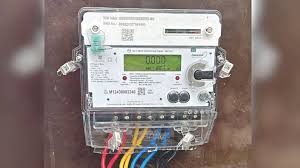
Smart Meter, Shocking Bill: Maharashtra Consumers Demand Answers From Mahavitaran
From ₹800 monthly payments to ₹16,000 in three months, the numbers coming out of Kalyan-Dombivli, Navi Mumbai and Pune are telling a story that official explanations have failed to address.
By Vidhi Lalla
Pune: When a resident of Seawood Arcade, Nerul, opened his electricity bill in March, it read ₹3,000. After a smart meter was installed, the same bill rose to ₹10,000 in April, ₹15,000 in May, and ₹16,000 in June. The society chairman of the same building, whose bills previously ranged between ₹3,000 and ₹4,000, was billed ₹11,870 in May and ₹13,190 in June. Neither of them changed their lifestyle or added new appliances. Their usage, by their own account, stayed the same.

Across Maharashtra, electricity bills have risen five to ten times after smart meter installation. Consumers crowd Mahavitaran offices daily to seek corrections, and by most accounts, they leave without resolution.
“I have no objection to smart technology if it genuinely benefits consumers. But when my bill suddenly becomes four or five times higher without any increase in usage, I expect a transparent explanation, not just an assurance that everything is normal,” said a Pune resident requesting anonymity.
Kalyan-Dombivli: Three Months of Double Bills and No Power
Residents who paid between ₹700 and ₹800 per month before March are now consistently receiving bills that are double or triple that amount, month after month. The problem is spread across a long list of areas in Dombivli including MIDC, Sangav, Manpada Road, Kelkar Road, Ramnagar, Tilak Path, Savarkar Road, Pendse Nagar, Thakurli Cholegaon, Mahatma Phule Road, Subhash Road, Pandit Deendayal Road, and Reti Bandar Road.
What makes this harder to accept is that the billing problem has arrived alongside a reliability problem. Citizens in Dombivli, Kalyan East, Kalyan West, and Titwala are dealing with frequent power outages, including a 24-hour blackout on one Sunday. Paying more for electricity while receiving less of it has sharpened the anger considerably.
“Consumers can accept higher bills if consumption genuinely rises. What creates distrust is when households report no significant change in usage but receive bills several times higher. Transparent meter audits and quicker grievance redressal become essential in such situations,” observed Neetu Bhatia, a consumer rights activist.
The installation process has added another layer of grievance. In several societies on Kopar Road in Dombivli West, residents formally objected and were overruled. In other buildings, meters were fitted while members were out for work, without prior notice or consent. This has sparked internal disputes within housing societies that have no clear path to resolution.
A BJP corporator, a Welfare District President, and representatives of MNS, Congress, and Uddhav Sena visited the Mahavitaran office together to register their objection. Shiv Sena workers in the Khalapur area went further, storming the electricity board office in Khopoli under their taluka chief and issuing a warning that a large-scale protest would follow if forced installation continued. Notably, even the ruling BJP and Shinde Sena have publicly opposed the smart meter rollout.
A former member of the Electricity Regulatory Commission has been unambiguous in his position: increased bills of this nature are an injustice, citizens have every right to oppose them, and they should collectively approach the Electricity Regulatory Commission for redress.
What Mahavitaran Says and Where the Gap Lies
The utility’s official response denies any link between smart meters and higher bills. Its position is that smart meters only accurately record actual consumption, and that the recent spike is a seasonal effect driven by the increased use of ACs, coolers, and fans during summer. The Nagpur Circle Chief Engineer has publicly asked citizens not to believe what he has described as rumours and directed anyone with doubts to visit the nearest Mahavitaran office.
The company’s stated benefits for smart meters are real and worth acknowledging. The meters are BIS approved, operate on AMI technology, comply with cybersecurity standards, and carry no installation fee for consumers. Electricity used between 9 AM and 5 PM qualifies for a discount of up to 85 paise per unit, and smart meters offer improved accuracy for solar energy users tracking generation against consumption.
“Smart meters are designed to improve billing accuracy and enable better energy management. However, every technological transition must be supported by transparent communication, accessible consumption data and a robust complaint-resolution mechanism to build consumer confidence,” said Raman Jain, an independent power sector analyst.
These are genuine advantages. But they do not explain how a household that paid ₹3,000 in March ends up paying ₹16,000 in June without adding a single appliance. Summer usage may account for some increase. A fivefold jump in three consecutive months is a different matter entirely.
Until Mahavitaran provides meter-level consumption data for each disputed case and establishes a complaint redressal process that produces actual outcomes, the question consumers are asking will remain unanswered: is this upgrade serving them, or being done to them?