Supreme Court Questions CBSE Three-Language Policy for Class 9, Suggests Starting Third Language From Class 5 or 6
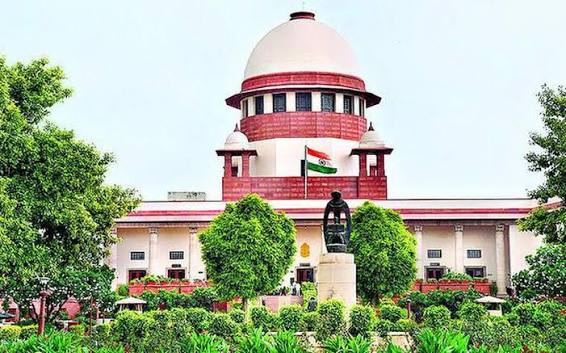
Supreme Court Questions CBSE Three-Language Policy for Class 9, Suggests Starting Third Language From Class 5 or 6
New Delhi, July 16, 2026: The Supreme Court has questioned the implementation of the CBSE three-language policy from Class 9, observing that students at that stage are already under significant academic pressure and should not be burdened with learning an additional language.
A Bench of Justices B.V. Nagarathna and R. Mahadevan suggested that the third language should instead be introduced from Class 5 or Class 6, allowing students sufficient time to learn it before entering the crucial secondary school years.

During the hearing, the Bench remarked, “Class 9 is already academically demanding. Why introduce a third language at that stage?” The judges noted that adding another subject could increase stress among students and advised the Centre to reconsider the policy.

Third Language Should End by Class 9
Justice Nagarathna observed that the third language should ideally be taught from Class 6 and completed by Class 9, pointing out that students begin preparing for their Class 10 board examinations as early as Class 8.
Recalling her own school days, the judge remarked that students in Class 8 were already being introduced to Class 10-level subjects, highlighting the growing academic burden faced by schoolchildren.
Hearing on Tamil Nadu’s Plea
The observations came while the Supreme Court was hearing a petition filed by the Tamil Nadu government challenging a Madras High Court order directing the state to establish Jawahar Navodaya Vidyalayas (JNVs) in every district.
Tamil Nadu has consistently opposed the implementation of the three-language policy in Navodaya schools.
The Bench also advised the Tamil Nadu government to reconsider its stand on establishing JNVs, noting that the Central Government bears the entire operational cost, while the state is only required to provide land.
At the state’s request, the matter has been adjourned, with the next hearing scheduled for August 11.
No Stay On Three-Language Policy
Earlier this week, the Supreme Court declined to stay the implementation of the CBSE three-language policy for the 2026–27 academic session.
The Court observed that learning additional languages is beneficial and sought responses from the Central Government and CBSE within ten days regarding the practical challenges in implementing the policy.
Under the revised framework, students are required to study two Indian languages and one foreign language. Petitioners have argued that the policy was introduced without adequate preparation, citing a shortage of qualified teachers, textbooks, and supporting educational infrastructure in schools.
The matter is scheduled for further hearing on July 29.