RERA Strengthens Homebuyer Rights with 90-Day Order for Builders
RERA Strengthens Homebuyer Rights with 90-Day Order for Builders
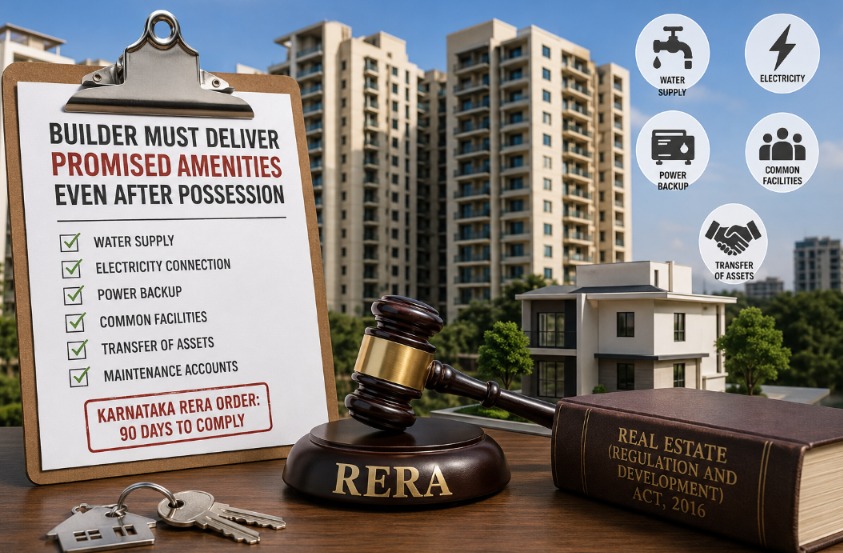
16 July, 2026: In a major relief for homebuyers, the Karnataka Real Estate Regulatory Authority (K-RERA) has ruled that builders cannot consider their responsibilities over simply by handing over possession of a flat. The authority has directed a Bengaluru-based developer to complete all promised amenities and transfer key project assets to the residents’ association within 90 days.
The case was filed by a homebuyer who took possession of an apartment in 2017. Despite waiting for more than six years, the buyer alleged that several facilities promised at the time of purchase had not been delivered. These included Cauvery water supply, BESCOM electricity meters, diesel generator backup, and the transfer of the land Khata, maintenance accounts, corpus fund and other common assets to the apartment owners’ association.

After examining the complaint, K-RERA ordered the developer to restore essential power supply, complete all amenities promised in the sale agreement, transfer the land Khata to the authorised residents’ association, hand over electricity and water meters, transfer the corpus fund and escrow account balance, submit maintenance records, and transfer project management to the residents’ association. The builder has been given 90 days to comply with the order.

The authority observed that merely handing over the keys to an apartment does not amount to complete possession if the promised common facilities remain unfinished. It said a developer’s obligations continue until every contractual and legal commitment under the Real Estate (Regulation and Development) Act, 2016 (RERA) has been fulfilled.
Legal experts welcomed the ruling, saying it reinforces the rights of homebuyers. They noted that purchasing a home includes not just the apartment but also the infrastructure, utilities and common amenities promised during the sale process. Builders cannot avoid these obligations after giving possession.
Experts also pointed out that amenities mentioned in brochures, advertisements, approved plans or sale agreements are legally enforceable commitments. If developers collect money based on such promises, they are required to deliver them.
Another important aspect of the ruling is that it applies even to older housing projects. K-RERA rejected the builder’s argument that RERA did not apply because the project’s occupancy certificate had been issued before certain provisions of the Act came into force. The authority relied on Supreme Court principles to clarify that ongoing obligations under earlier agreements remain enforceable.
According to legal experts, the order also strengthens the requirement for developers to promptly transfer maintenance accounts, corpus funds, common areas and project records to residents’ associations, reducing prolonged dependence on builders.
The ruling sends a clear message that a residential project is not considered complete simply because buyers have received possession of their flats. Developers remain legally responsible until all promised amenities, common facilities and statutory obligations have been fulfilled, providing stronger protection for homebuyers under RERA.