Why Did India Lose Over 17,000 Government Schools in Five Years? Parliament Data Sparks Debate
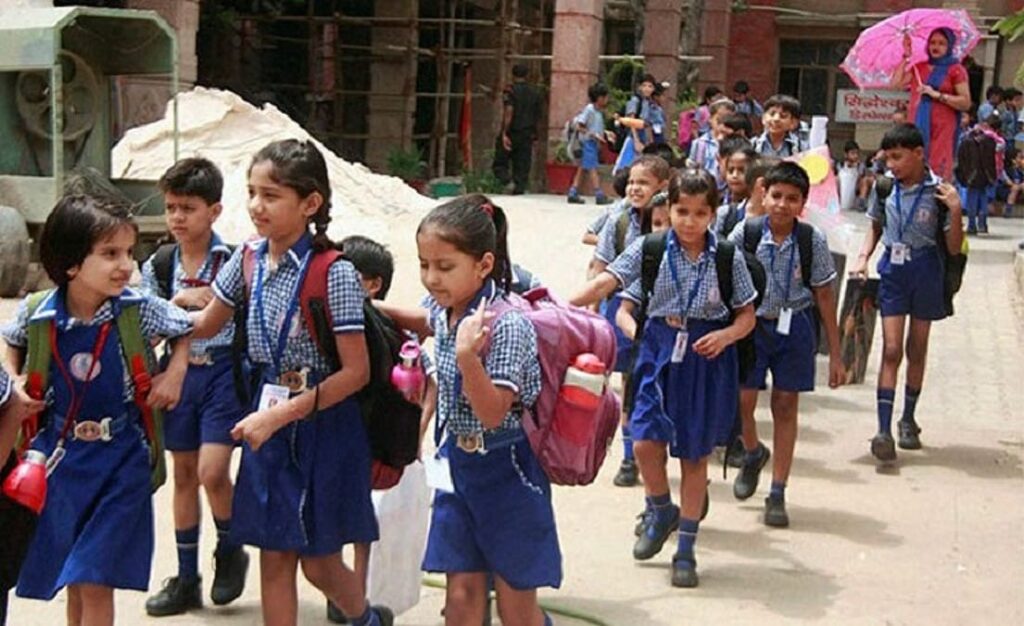
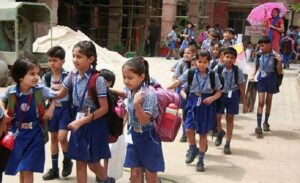
Why Did India Lose Over 17,000 Government Schools in Five Years? Parliament Data Sparks Debate ( representative image )
Government data presented in Parliament shows a decline of more than 17,000 government schools since 2021-22. While the Centre attributes school mergers to state governments and the National Education Policy, questions remain about the impact on students and access to education.
By Vidhi Lalla
The number of government schools in India has fallen by more than 17,000 in the last five years, according to data presented in the Lok Sabha, triggering fresh debate over school mergers, access to education and the future of public schooling.


Minister of State for Education Jayant Chaudhary, replying to a question raised by MP Anand Bhadoria, said that the total number of government schools declined from 10,22,386 in 2021-22 to 10,05,245 in 2025-26. This reflects a reduction of 17,141 schools across the country.
The figures have raised concerns over whether schools are being shut down and how the changes may affect children, especially those in rural and remote areas. However, the Centre clarified that decisions on opening, closing or merging government schools are taken by state governments and Union Territories, not by the Central Government.
According to the government, the National Education Policy (NEP) 2020 encourages the creation of school complexes or clusters to improve the use of resources, infrastructure and teaching staff. It added that any merger should be carried out only after ensuring that children’s access to education is not adversely affected.
The decline has not been uniform across the country. Jammu and Kashmir recorded the sharpest fall, with the number of government schools dropping from 23,173 to 18,787. Other states reporting lower numbers include Maharashtra, Assam, Himachal Pradesh, Uttarakhand, Arunachal Pradesh, Meghalaya, Telangana, West Bengal, Madhya Pradesh and Karnataka.
In contrast, some states have expanded their government school network. Rajasthan increased its schools from 68,948 to 69,983, while Bihar recorded an increase from 75,558 to 76,435. Chhattisgarh and Gujarat also reported modest growth, indicating that the trend varies from state to state.
In Uttar Pradesh, the overall number of government schools remained largely stable, rising slightly from 1,37,024 to 1,37,103. However, district-level data shows declines in places such as Ghaziabad, Aligarh, Jhansi, Hathras, Firozabad, Prayagraj and Jalaun, suggesting that local patterns differ from the state-level picture.
The government also shared data on girls’ education. While the gross enrolment ratio for girls improved at the secondary and higher secondary levels, it declined slightly in the primary and upper primary classes. Similarly, school retention improved at higher secondary level but dipped marginally in primary education.
Under the Samagra Shiksha scheme, the Centre said it continues to provide financial assistance to states for opening new schools, constructing classrooms, improving infrastructure, supporting Kasturba Gandhi Balika Vidyalayas, providing free textbooks and uniforms, offering transport support where required and helping bring school dropouts back into the education system.
Despite these explanations, several questions remain unanswered. The data presented in Parliament provides only the overall number of government schools and does not specify how many schools were permanently closed, how many were merged or how many new schools were opened during the same period. It also does not indicate whether students in merged-school areas now have to travel longer distances or whether these changes have affected enrolment and attendance.
As discussions over school consolidation continue, education experts believe that future policy decisions should balance efficient use of resources with ensuring that every child has easy access to quality education, particularly in rural and underserved regions.
Disclaimer: The figures in this article are based on data presented by the Central Government in the Lok Sabha. Education policies and school infrastructure decisions are implemented by individual state governments and Union Territories.