Airlines Oppose Free Seat Rule, Warn Of Higher Airfares For Passengers
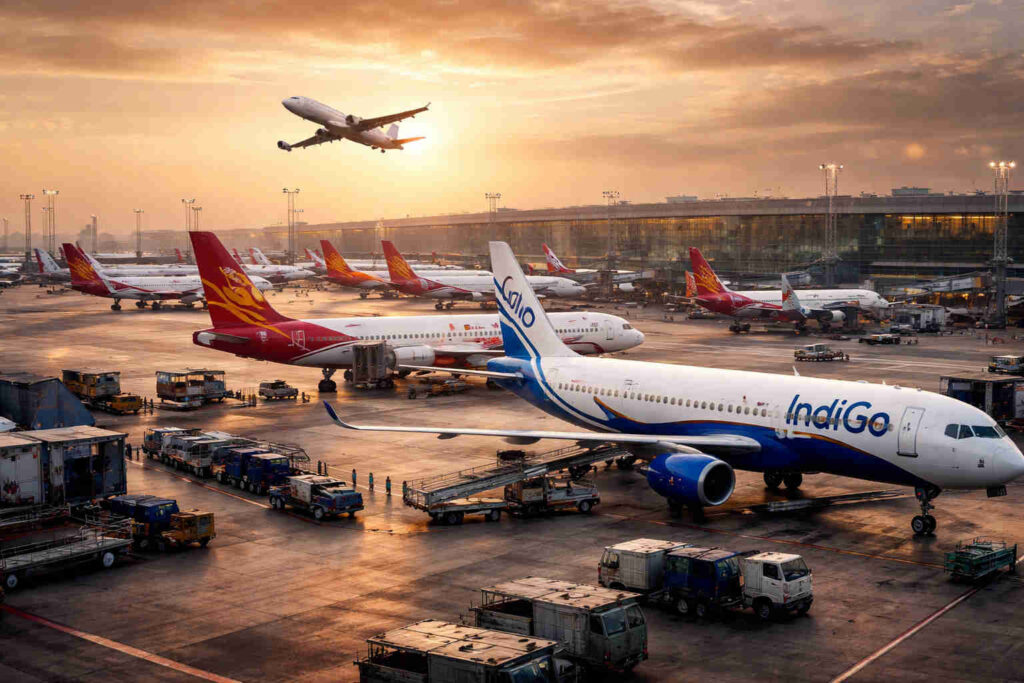
Airlines Oppose Free Seat Rule, Warn Of Higher Airfares For Passengers ( AI Image)
IndiGo, Air India, SpiceJet say govt move may backfire as revenue loss could push ticket prices up
India’s leading airlines — IndiGo, Air India and SpiceJet — have strongly opposed the government’s directive to make at least 60 per cent of seats free for selection, warning that the move could ultimately lead to higher airfares for passengers.
The airlines have flagged concerns that the decision, though aimed at benefiting travellers, may have unintended consequences for both the aviation sector and ticket pricing.
Airlines Flag Revenue Impact

The Federation of Indian Airlines (FIA), representing the three carriers, said the directive would significantly impact airline revenues.
“The financial impact of the directive on airlines will be significant, compelling airlines to recover the lost revenues through increases in fares. As a result, all passengers, including those who may not wish to preselect seats, will end up paying higher fares,” it said.
Seat Charges A Key Revenue Source
Airlines argued that seat selection fees are an important part of their earnings, especially in a high-cost operating environment.
“Seat selection fees form a legitimate component of airline revenue, particularly in the high-cost environment in India where costs rise year on year,” the grouping noted.
They added that airlines operate on thin margins and rely on additional revenue streams to offset rising expenses such as fuel, maintenance, and airport charges.
Concern Over Market Interference
The airlines also raised concerns about regulatory overreach, stating that such directives interfere with market-driven pricing.
“Airlines operate on thin margins and rely on ancillary revenues to offset rising operational costs, including fuel, maintenance, airport charges… Imposing a uniform restriction on ancillary revenue undermines commercial flexibility and interferes with market-driven pricing mechanisms,” the grouping said.
What The Government Wants
The directive asks airlines to offer free seat selection for a minimum of 60 per cent of seats on every flight, aiming to make air travel more passenger-friendly and transparent.
Currently, airlines typically charge between ₹200 and ₹2,100 for selecting seats, depending on factors like seat location and legroom.
Why Passengers May Still Pay More
Airlines warned that while the move may appear beneficial at first glance, the cost burden will likely be redistributed across all passengers.
“If applied, this measure will set a precedent for excessive intervention in ancillary pricing with heavy loss of revenues for the airlines, apart from creating uncertainty for airlines regarding future regulatory constraints,” the grouping said.
They also pointed out that such a shift could disproportionately impact price-sensitive travellers, reducing overall affordability.
The airlines have urged the government to reconsider the directive, arguing that the move could defeat its own objective of improving passenger welfare by making tickets more expensive overall.