Are Small Charter Planes More Dangerous? What Ajit Pawar’s Crash Brings Back Into Focus
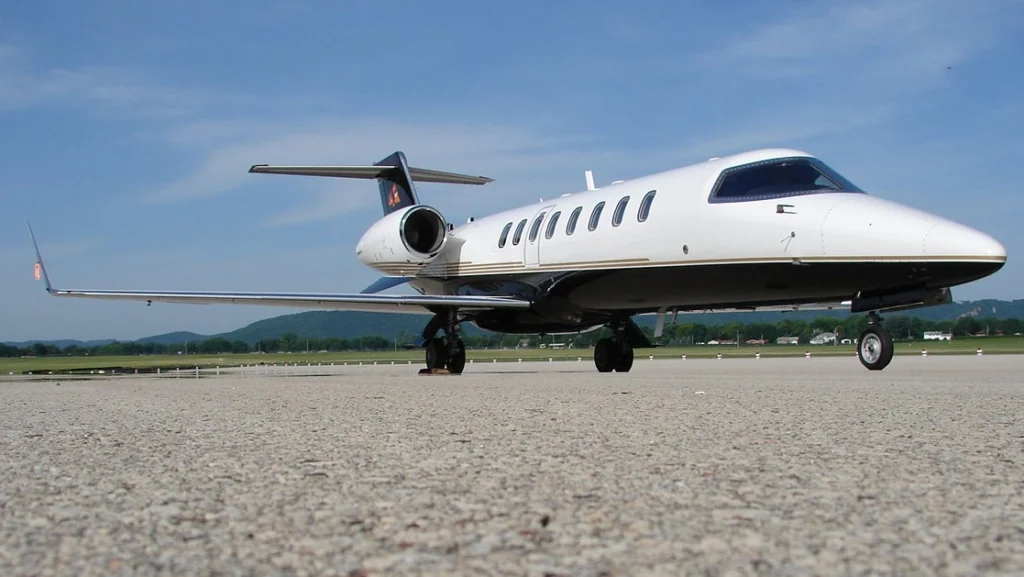
Are Small Charter Planes More Dangerous? What Ajit Pawar’s Crash Brings Back Into Focus
The Baramati tragedy has revived a critical debate on private aviation safety, turbulence, and the risks associated with smaller aircraft operations.
The tragic plane crash near Baramati that claimed the life of Maharashtra Deputy Chief Minister Ajit Pawar and others has once again brought the safety of small charter aircraft under intense public and professional scrutiny. While the investigation into the exact cause of the crash is still underway, the incident has reignited an important question that often follows such tragedies: are small charter planes inherently more dangerous than commercial aircraft?
Chartered and private aircraft operate under different conditions compared to large commercial airlines. These planes usually land at smaller airstrips, many of which lack advanced navigation aids such as the Instrument Landing System (ILS). In such situations, pilots must rely heavily on visual judgment, particularly during landing. If visibility is poor due to fog, rain, or haze, the margin for error becomes significantly smaller.
One of the key challenges with small aircraft is their size and weight. Lighter planes are more sensitive to wind shifts, turbulence, and sudden weather changes. What feels like mild turbulence in a large commercial aircraft can feel much stronger in a smaller jet. This does not necessarily make them unsafe, but it does mean pilots must respond faster and with greater precision.


Another factor is the design and safety systems. Commercial aircraft are built with multiple layers of redundancy: several engines, backup electrical systems, advanced terrain warning systems, and automated flight stabilization tools. Smaller charter planes usually operate with fewer backup systems. While they are built to strict aviation standards, the reduced margin for technical failure makes operational discipline and maintenance even more critical.
Airport infrastructure also plays a major role. Large passenger planes operate from highly controlled airports with constant radar monitoring, runway lighting, weather reporting systems, and air traffic control guidance. Smaller charter aircraft often use regional or private airstrips where facilities are limited. In such environments, pilots depend more on their own situational awareness and experience.
Human factors remain one of the most significant contributors to aviation accidents worldwide. Studies by aviation safety agencies have shown that pilot decision-making accounts for a large percentage of accidents. In chartered flights, especially VIP operations, there can be additional pressure to land on schedule or avoid delays. This does not mean pilots act irresponsibly, but it can subtly influence judgment during difficult weather or unstable approach conditions.
The Baramati crash has also reopened discussion about “go-around” procedures. When a landing approach is unstable, standard aviation practice is to abort the landing and try again later or divert to another airport. In smaller airstrips without sophisticated landing aids, realigning for another approach can involve large turns and altitude changes, which increase workload in a short time frame.
Mechanical reliability is another important aspect. Commercial aircraft are subject to extremely frequent inspections and strict regulatory oversight. While charter aircraft are also regulated, the level of operational intensity and supervision may vary depending on the operator. Maintenance standards become critical in ensuring flight safety.
It is important to clarify that small charter planes are not automatically unsafe. Thousands of such flights operate safely every day across the world. However, their operational environment is less forgiving. Weather, pilot skill, aircraft condition, and airport facilities must all align for safe outcomes. Any weakness in this chain can increase risk.
Turbulence perception also plays a psychological role. Passengers often feel more anxious in smaller aircraft because motion is more noticeable. This sensation does not necessarily indicate danger, but it reinforces the belief that private aircraft are more unstable. Pilots mitigate this by changing altitudes to locate smoother air, something private jets can often do more flexibly than commercial flights.
The Baramati tragedy is a reminder that aviation safety depends on precision, caution, and disciplined decision-making. It highlights the need for strict maintenance protocols, advanced pilot training, and realistic scheduling that allows pilots to prioritize safety over urgency.
As investigations continue, the focus must remain on understanding what went wrong, not just for accountability, but to ensure that similar tragedies can be prevented in the future. The debate is not about whether charter planes should exist, but about how safety systems around them can be strengthened.
Every aircraft, regardless of size, demands respect for the complexity of flight. The Baramati crash underscores how fragile that balance can become when even one element fails.
Disclaimer: This article is for informational purposes only and does not replace official findings or aviation safety advisories issued by regulatory authorities.