Automobile Industry Experts Back E20 Fuel, Say It Is Safe for Vehicles After Extensive Testing
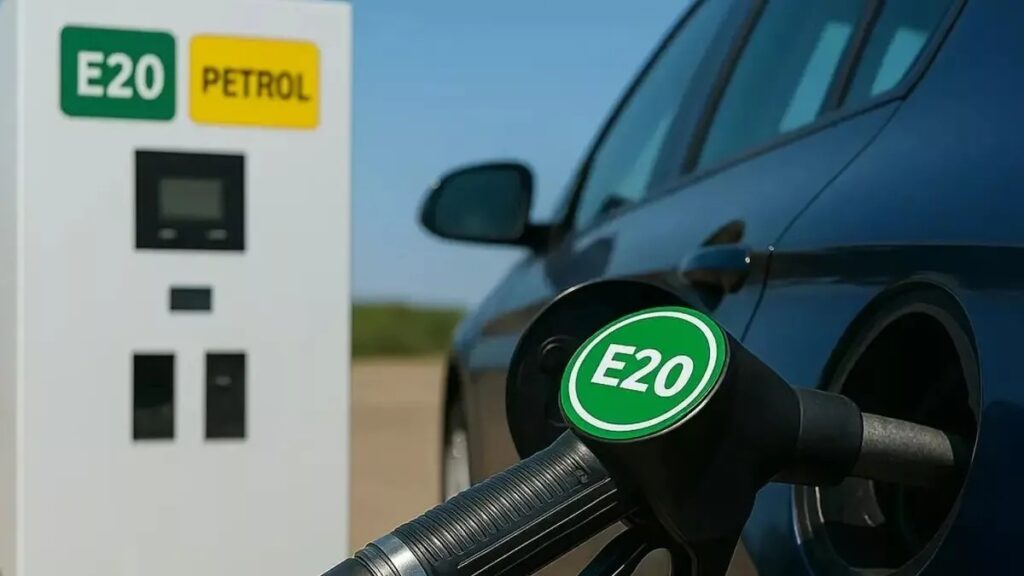
Automobile Industry Experts Back E20 Fuel, Say It Is Safe for Vehicles After Extensive Testing
Representatives from Maruti Suzuki, Toyota, Hero MotoCorp, Hyundai, Bajaj Auto, TVS and Engineers India Ltd. said E20 petrol is scientifically validated, environmentally beneficial and safe for compatible vehicles.
By Vidhi Lalla
Senior leaders from India’s automobile industry have sought to address concerns surrounding E20 petrol, asserting that the fuel is safe for vehicles and has undergone years of scientific testing before its nationwide rollout.

Speaking at a press conference organised by the Press Information Bureau (PIB), experts from Maruti Suzuki, Toyota Kirloskar Motor, Hero MotoCorp, Hyundai Motor India, Bajaj Auto, TVS Motor Company and Engineers India Ltd. (EIL) said the move towards 20 per cent ethanol blending is the result of years of research, validation and regulatory approval.
Former Engineers India Ltd. CMD Vartika Shukla said India’s ethanol blending programme has evolved gradually rather than being introduced suddenly. She noted that ethanol blending stood at around 1.5 per cent in 2014-15 and has steadily increased to the present E20 programme. According to her, higher ethanol blending will help reduce carbon emissions, lower dependence on imported crude oil and strengthen India’s energy security.
Toyota Kirloskar Motor Country Head Vikram Gulati said ethanol is a high-performance fuel with a higher octane rating that offers good drivability. He explained that vehicles sold in India undergo stringent design validation, certification and independent testing before reaching consumers. Gulati added that ethanol is not a new fuel and has been used internationally for many years, including in motorsport applications. He also described ethanol as a cleaner fuel derived from plant-based sources, helping reduce net carbon emissions.
Addressing concerns over older vehicles, Rahul Bharti, Senior Executive Officer at Maruti Suzuki, said India officially adopted E20 fuel standards from 2023 after extensive testing. He stated that the company had also tested vehicles originally designed for E10 petrol on E20 fuel across all critical parameters and found no issues of concern. According to him, manufacturers have incorporated adequate safety margins to prevent corrosion, wear or damage to components that come into contact with E20 fuel.
Hero MotoCorp Executive Ashutosh Verma said the company services millions of motorcycles every year and has not observed any higher incidence of damage in vehicles using E20 fuel compared with conventional petrol. He said extensive service data collected from customers has not indicated any abnormal problems linked to ethanol-blended fuel.
The industry experts also stressed that India’s automotive sector follows one of the world’s most rigorous regulatory systems. Vehicles are subjected to multiple stages of testing, certification, homologation and post-production quality checks before being approved for sale.
Experts said wider adoption of ethanol-blended petrol offers multiple long-term benefits, including reduced greenhouse gas emissions, lower crude oil imports, improved energy security and support for India’s clean energy transition.
The panel reiterated that E20 fuel has been introduced only after extensive scientific evaluation and encouraged consumers to rely on verified technical information instead of misconceptions surrounding ethanol-blended petrol.
Disclaimer: Vehicle owners should always refer to their manufacturer’s owner’s manual or consult an authorised service centre regarding fuel compatibility, especially for older vehicle models.