Blackouts No Longer Mean Darkness: Kerala Startup Powers 1,000+ Homes With Smart Solar
Blackouts No Longer Mean Darkness: Kerala Startup Powers 1,000+ Homes With Smart Solar
Energy24by7’s iCUBE and iCON devices slash bills and keep homes running through outages
When power cuts plunge Malappuram into darkness, most residents scramble for candles or wait anxiously for supply to return. But for Suresh Vijayakumar, it’s barely noticeable. His home and office, filled with automated systems — from smart locks to rolling shutters — run seamlessly on solar.
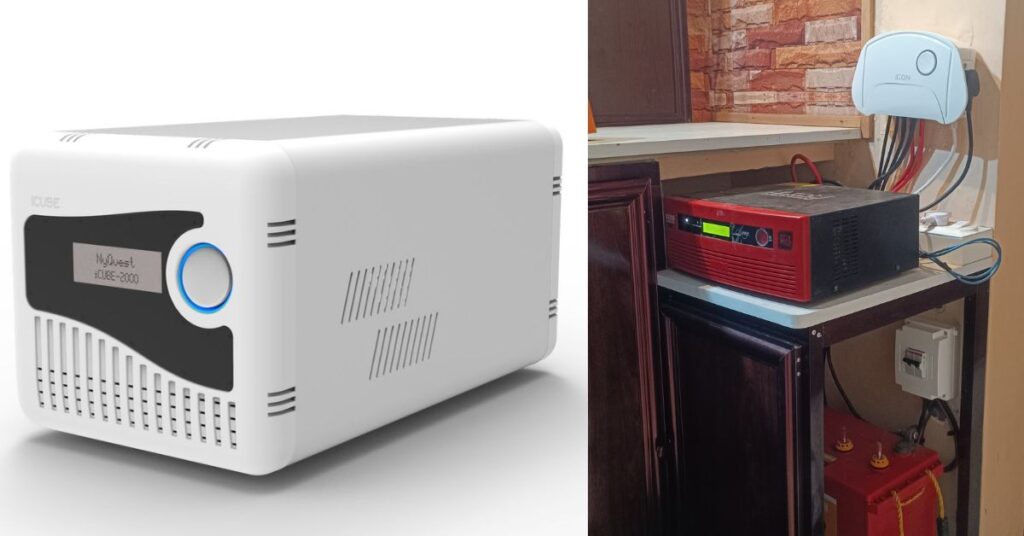
For the past year, Suresh has relied on Energy24by7’s iCUBE 2000 inverter, paired with batteries and rooftop panels. The system meets his daily needs while cutting his KSEB bills by up to 65 units a month. During last year’s monsoon, when 25 poles collapsed and his neighbourhood went dark for five days, Suresh stayed powered. “I was practically off-grid,” he recalls.

This reliability is the vision of Energy24by7, a Kerala-based startup founded in 2017 by Harsh Mohan, Nishanth CP, and their peers from Amrita Vishwa Vidyapeetham. As undergraduates in 2011, they discovered most Indian inverters wastefully consumed power just to stay switched on. Their first breakthrough, iCON (Intelligent Converter), allowed families to turn any old inverter into a solar-powered one without expensive replacements.
By 2017, the team formally launched NyQuest Innovation Labs, later rebranded as Energy24by7. Customer demand pushed them to go further, leading to iCUBE — a high-efficiency smart solar UPS with 97% peak efficiency, patented battery optimisation, and the ability to switch seamlessly between solar, battery, and grid power.
The startup’s mission is clear: make solar accessible to middle-class families, not just the wealthy. With systems that lower bills by 40–50% and run households for days during outages, their impact is already visible. Today, over 1,000 homes in Kerala, Tamil Nadu, and Karnataka are powered by Energy24by7, with pilot projects expanding to Kenya and Zambia.
Funding hasn’t been easy. “Each installation taught us something new. Redesigning for every customer slowed us down, and many investors weren’t patient,” admits Nishanth. But support from government grants, especially through the Ministry of Electronics, kept them afloat.
Recognition has followed: finalists at Global Climate Launchpad (2021), winners at Kerala Startup Huddle Global (2022), and twice featured in the SET100 Global List in Germany (2023 & 2025).
For customers like Suresh, the innovation has already reshaped daily life. “I can’t even think about a power outage now,” he says with quiet pride.