Can Eating Seeds Boost Well-Being or It’s Just a Fad? How Much You Should Actually Consume

Can Eating Seeds Boost Well-Being or It's Just a Fad? How Much You Should Actually Consume
Pumpkin, chia, flax, sesame and sunflower seeds are packed with nutrients, but experts warn that portion control and the right method of eating are essential.
Seeds have gone from simple kitchen add-ons to social-media superfoods. Health influencers often claim that pumpkin, sunflower, chia and flax seeds can transform your health. But nutritionists say the real picture is more balanced: seeds are genuinely beneficial, but only when eaten correctly and in the right amounts.
India has a rising interest in high-fiber foods because the average adult here consumes only around 15 grams of fiber daily, far below the recommended 25–30 grams. Seeds can help close this gap. For example, 20 grams of chia seeds provide nearly 6.8 grams of fiber, flax seeds offer 5.4 grams, and pumpkin seeds provide around 1.3 grams.

Experts note that seeds should not replace regular meals, but they can become a reliable part of a daily diet when used thoughtfully. Here is what each seed offers and how to eat them safely.

Pumpkin Seeds: Strong Bones And Better Immunity
Pumpkin seeds contain calcium, magnesium, phosphorus, zinc, iron, omega-3 fats, and antioxidants. These nutrients support bone strength, lower blood pressure, help control sugar levels, and may reduce cancer risk. Women, especially after menopause, often find them helpful because they support hormone balance and immunity.
They can be eaten roasted, powdered or sprinkled on salads—but only in small amounts. Overeating may cause bloating, gas or stomach pain.
Flax Seeds: A Powerful Support For Diabetes And Heart Health
Flax seeds are rich in fiber, omega-3 fats, magnesium, antioxidants and plant compounds linked to hormone balance. They help regulate blood sugar, reduce LDL (“bad”) cholesterol and may lower cancer risk.
They should be chewed well or consumed as a powder. Many people add flaxseed chutney to yogurt, salads or soups. Eating too much may cause indigestion or gas.
Chia Seeds: Complete Proteins And Support For Weight Control
Chia seeds contain all nine essential amino acids along with potassium, magnesium, protein, iron and omega-3 fats. They help with weight management, blood sugar control and overall strength.
Chia seeds must be soaked overnight before eating. Unsoaked chia can cause bloating. A maximum of 30 grams a day is advised, along with plenty of water.
Sesame Seeds: Strong Bones, Better Digestion And Relief For Women’s Health
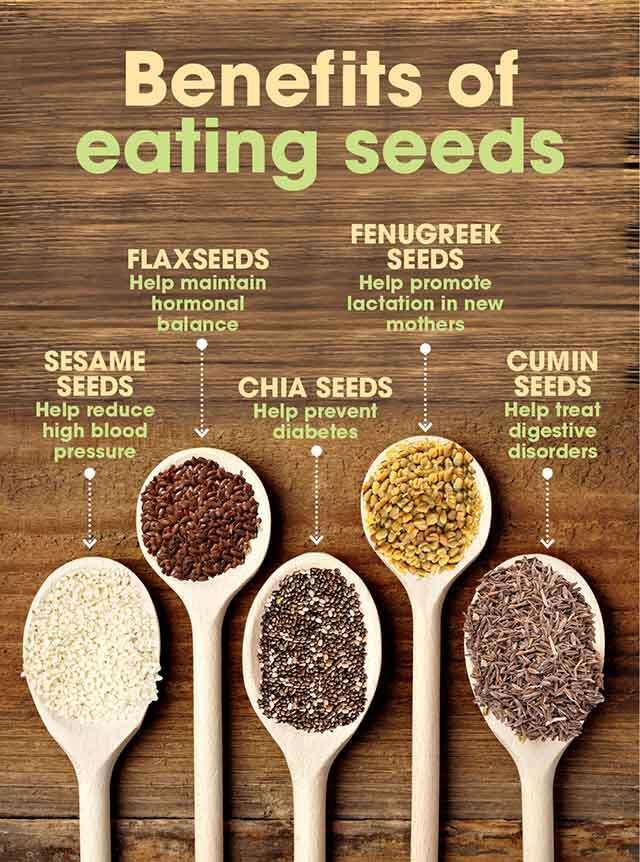
Used in India for centuries, sesame seeds are rich in calcium, protein, zinc, Vitamin B and healthy fats. They support bone strength, anemia recovery and diabetes control.
They are especially useful for women because they help improve hormonal balance, reduce mood swings, support fertility and ease menopausal symptoms.
However, sesame should not be consumed in large quantities as it may cause weight gain or stomach discomfort.
Sunflower Seeds: Vitamin E And Heart Protection
Sunflower seeds are packed with Vitamin E, healthy fats and anti-inflammatory compounds. They help maintain bone health, control blood pressure, reduce LDL cholesterol and may even lower cancer risk due to their linoleic acid content.
They also support thyroid health and reduce overall inflammation in the body.
How Much To Eat — And The Best Way To Combine Them
Nutritionists recommend creating a simple mix of four to five lightly roasted seeds and consuming only 20–30 grams a day.
Women may benefit from eating flax or pumpkin seeds in the 15 days before their period and sesame seeds in the 15 days after, as this pattern supports estrogen and progesterone balance.
Men, however, should avoid powdered flax seeds and instead choose roasted flax to avoid excess estrogen-like effects.
Seeds must always be eaten in moderation. When consumed correctly, they help reduce the chances of PCOS, infertility, weak bones, irregular periods, weight gain and mood swings—issues now increasingly seen even in young women and teenagers.
Disclaimer: This article is for informational purposes only and not a substitute for professional medical advice.