Check if Jaggery Contains Washing Powder Or Baking Soda: Simple Home Test To Check Purity
Check if Jaggery Contains Washing Powder Or Baking Soda: Simple Home Test To Check Purity
Food safety authorities suggest easy ways to detect adulteration in jaggery as concerns grow about harmful substances being mixed in the sweetener.
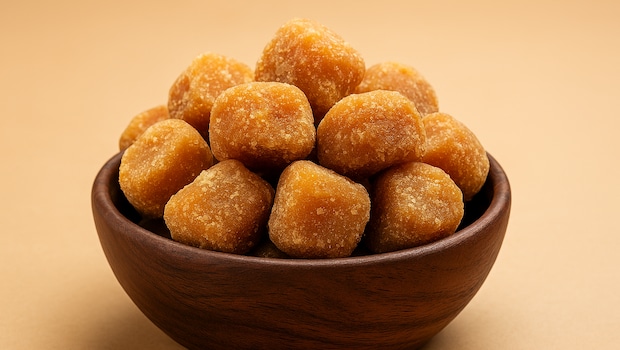
Jaggery is widely used in Indian households and is considered a healthier alternative to refined sugar. It is commonly used in traditional sweets, beverages and daily cooking. Many people prefer jaggery not only for its taste but also for its perceived health benefits.
However, experts have raised concerns that jaggery sold in markets may sometimes be adulterated with harmful substances such as washing powder or baking soda. These additives may be used to improve the appearance, texture or weight of the product, but they can reduce its quality and may pose health risks if consumed regularly.
To help consumers detect such adulteration, the Food Safety and Standards Authority of India has shared a simple method that can be performed at home.

To check for adulteration, take about two grams of jaggery and place it in a test tube or small container. Add a few drops of hydrochloric acid to the sample. If the jaggery is pure, there will be no reaction and no bubbles will appear. However, if bubbles form after adding the acid, it may indicate the presence of baking soda or similar substances. The bubbling occurs because baking soda reacts with acid to produce carbon dioxide gas.
A similar method can also be used to detect the presence of baking soda specifically. A small amount of crushed jaggery can be placed in a container and mixed with hydrochloric acid. If bubbles appear, it may suggest that baking soda has been added to the product.
Adulteration is often done because jaggery is in high demand and can be relatively expensive, especially during certain seasons. Some manufacturers add cheaper substances to increase the weight or improve the colour and texture, making the product appear more appealing to buyers.
Consumers are advised to take a few precautions while purchasing jaggery. Packaged jaggery should carry a valid licence number issued by the food safety authority. It is also recommended to avoid jaggery that looks unusually bright, shiny or overly uniform in colour, as this may indicate the use of chemicals or artificial additives.
Buying jaggery from trusted sellers or recognised brands can also reduce the risk of adulteration. In many cases, darker coloured jaggery is considered safer because it is usually less processed.
Health experts caution that excessive consumption of baking soda can be harmful. It may increase blood pressure and can cause digestive problems such as bloating, gas, cramps and nausea.
If consumers suspect that jaggery being sold in markets is adulterated, they can file a complaint through the official online portal or mobile application of the food safety authority or contact their local food safety department.
Disclaimer: This article is for general awareness. Consumers should rely on certified products and official food safety guidelines when making dietary choices.