Defying all Odds: At 21, Rickshaw Driver’s Son Becomes India’s Youngest IAS; Ansar Shaikh’s First-Attempt Success Inspires Thousands

Defying all Odds: At 21, Rickshaw Driver's Son Becomes India's Youngest IAS; Ansar Shaikh's First-Attempt Success Inspires Thousands
Maharashtra’s Ansar Shaikh secured AIR 361 in 2016, chose Marathi medium for mains and interview, now serves as ADM in West Bengal
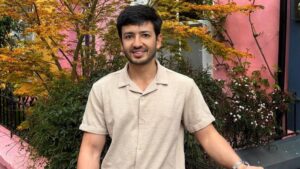
Ansar Shaikh from Shelgaon village in Jalna district, Maharashtra, became India’s youngest IAS officer when he cleared the UPSC Civil Services Exam at just 21 years old. In 2016, he secured an All India Rank of 361 in his first attempt, proving that dedication and focus can overcome financial constraints.
His father drives an autorickshaw, and his mother worked as a farm laborer. The family faced significant economic challenges, yet they prioritized Ansar’s education. His brother left school after Class 7 to work in a garage and contribute to family income. His sister was married at 15. These sacrifices allowed Ansar to continue his studies.
Educational journey

Ansar completed his schooling in Marathi medium and scored 91 percent in his 12th standard. He then graduated in Political Science from Fergusson College, Pune, with 73 percent marks. After graduation, he decided to prepare for the UPSC Civil Services Exam.
The UPSC exam is considered one of the toughest competitive examinations in India. It consists of three stages: Prelims, Mains, and Interview. The exam tests candidates across various subjects including general knowledge, current affairs, and decision-making abilities. Every year, lakhs of candidates attempt the exam, but only a few hundred succeed.
Ansar chose Political Science as his optional subject and appeared for both the mains examination and interview in Marathi, his mother tongue. This decision reflected his comfort with the language and his confidence in presenting his knowledge effectively in Marathi.

Youngest among achievers
Ansar’s achievement at 21 placed him among the youngest IAS officers in the country. Several other young officers have also cleared the exam at early ages, demonstrating that age is not a barrier to success in civil services.
The list of youngest IAS officers includes Ansar Shaikh who cleared in 2016 at age 21, Roman Saini in 2013 at age 22, Swati Meena Naik in 2007 at age 22, Amritesh Aurangabadkar in 2011 at age 22, Ankur Garg in 2003 at age 22, Smita Sabharwal in 2001 at age 22, Gaurav Goyal in 2006 at age 22, Tina Dabi in 2015 at age 22, S. Susmitha in 2017 at age 22, and Ashima Jain in 2018 at age 22.
Women officers in the list
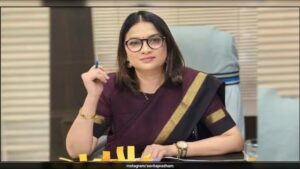
Women officers like Tina Dabi and Smita Sabharwal have also achieved success at young ages. Tina Dabi cleared the IAS exam in 2015 at 22 and currently serves as District Collector in Jaisalmer, Rajasthan. She has been known for her administrative work and community initiatives.
Smita Sabharwal belongs to the 2001 batch and has had a distinguished career in civil services. These women officers serve as role models for future generations, showing that gender is not a limitation in achieving top administrative positions.
Current posting
After clearing the UPSC exam, Ansar was posted as Additional District Magistrate in Cooch Behar, West Bengal, as of 2022. In this role, he handles administrative responsibilities including law and order, development programs, and public welfare schemes in the district.
The ADM position requires managing multiple departments, coordinating with various government agencies, and ensuring effective implementation of policies at the ground level. For someone from a humble background, this position represents both responsibility and opportunity to serve the public.
Family’s role in success
Ansar has consistently acknowledged his family’s contribution to his success. Despite their limited resources, his parents ensured he had access to education. His brother’s decision to start working early and his sister’s early marriage were difficult choices the family made to support his studies.
Such family sacrifices are common in many Indian households where resources are limited but aspirations remain high. Ansar’s success validates those sacrifices and demonstrates that with proper support and determination, economic background need not determine one’s future.
Message for aspirants
Ansar’s journey offers practical lessons for UPSC aspirants. He showed that clearing the exam in the first attempt is possible with proper planning and dedicated preparation. His choice to appear in Marathi medium proves that candidates can succeed in their preferred language rather than feeling pressured to use English.
His background also sends a message that the civil services are accessible to candidates from all economic strata. The exam tests knowledge, understanding, and aptitude rather than social or financial status.
For students from rural areas or economically weaker sections, Ansar’s achievement demonstrates that their circumstances should not limit their ambitions. With focus, consistent effort, and family support, they too can compete successfully in national-level examinations.