Does The Viral Spoon-on-Window Trick Actually Prevent Moisture And Mold?

Does The Viral Spoon-on-Window Trick Actually Prevent Moisture And Mold?
A simple household trick involving a metal spoon placed on a window frame has recently gone viral online. Many people claim that positioning the spoon correctly can prevent condensation from damaging windows, walls, and wooden frames. The idea has gained popularity because it is free, easy to try, and takes only a few seconds to set up.
How The Spoon Trick Works
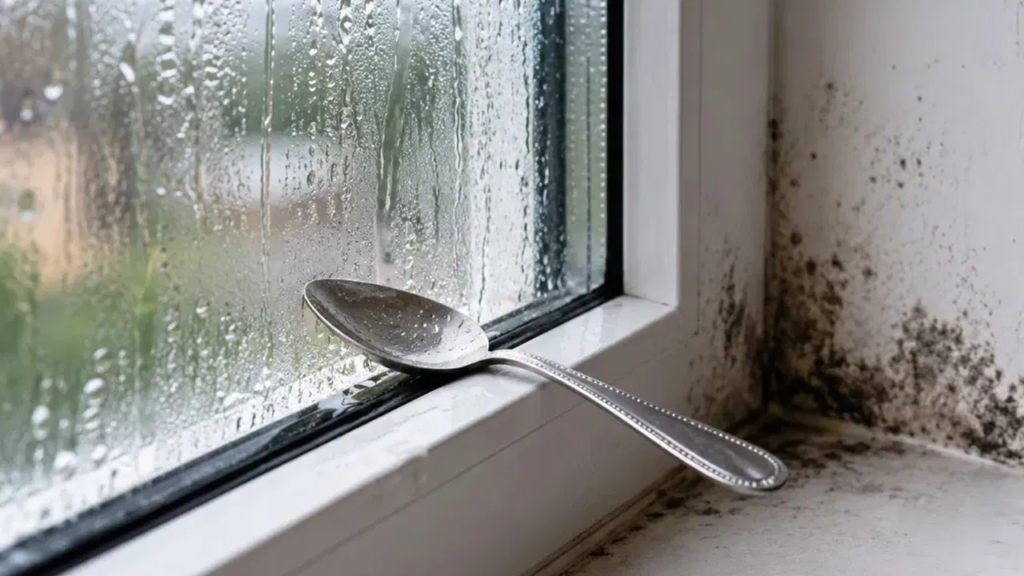
The method is simple. A metal spoon, usually stainless steel, is placed on the window frame with the bowl extending slightly outside the glass and the handle pointing toward the room. Supporters believe the spoon helps guide moisture away from the window before it collects on the sill.
The Science Behind The Trick
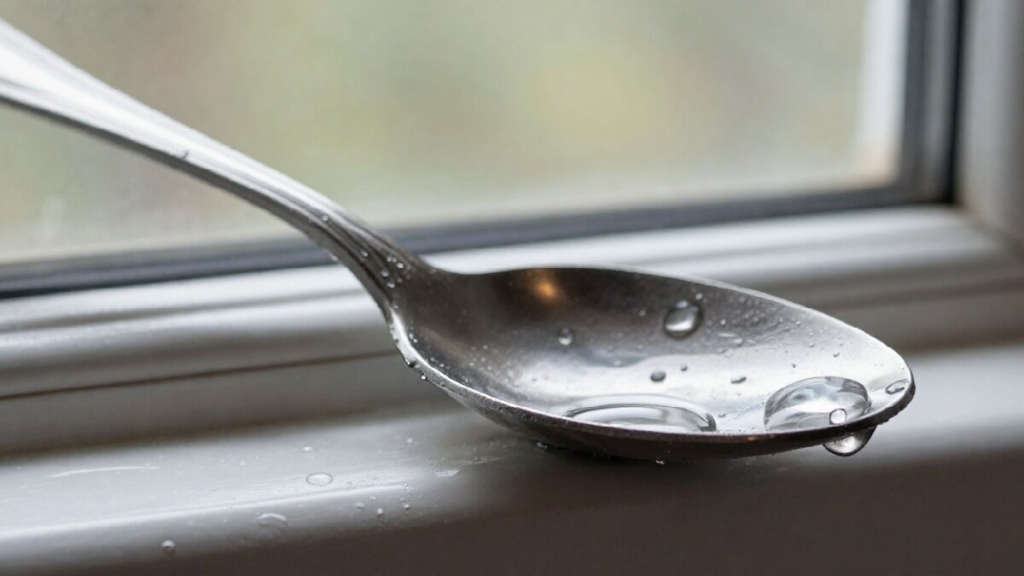
There is some real science behind the method. Condensation forms when warm indoor air carrying moisture touches a cold surface like a windowpane. As the air cools, water vapor turns into liquid droplets. This is the same process that causes bathroom mirrors to fog up after a shower.

Since metal conducts heat more efficiently than glass, the spoon becomes colder faster than the surrounding window surface. Moisture in the air may condense on the spoon first, and the droplets can then drip outside instead of running down the glass and pooling on the sill.
What The Spoon Can Actually Do
In a limited way, the spoon can help redirect moisture away from the window frame. On cold nights when a small amount of condensation forms, the trick may keep the sill drier and reduce minor water buildup.
This can help prevent small amounts of moisture from damaging paint or wood around the window.
What The Spoon Cannot Do
The spoon does not reduce humidity inside a room. It does not remove moisture from the air or stop condensation from forming elsewhere in the home.
If a house has high humidity caused by cooking, showers, leaks, damp walls, or poor ventilation, the spoon will not solve the actual problem. Mold can still grow behind walls, under carpets, or in other hidden damp areas.
Better Ways To Control Moisture
Experts recommend focusing on proper moisture control instead of relying only on small DIY tricks. Some effective solutions include:
- Fixing plumbing leaks quickly
- Using bathroom and kitchen exhaust fans
- Improving airflow and ventilation
- Opening windows when possible
- Keeping gutters and drainage systems clear
- Using dehumidifiers in humid rooms
These methods help remove excess moisture from the air before it turns into condensation.
Why Condensation Matters
Condensation on windows is often a sign of excessive indoor humidity. If moisture levels remain high for long periods, mold growth becomes more likely.
Mold can trigger allergies, coughing, breathing problems, skin irritation, and asthma symptoms in sensitive individuals. That is why managing indoor humidity is important for both home maintenance and health.
Final Verdict
The viral spoon trick is not completely fake, but its benefits are limited. It may help divert a small amount of condensation away from a window frame, but it cannot replace proper humidity control or home maintenance.
It works best as a temporary and minor solution rather than a complete fix for dampness and mold problems.