E-Challan Scam Alert: How to Spot a Fake Traffic Challan SMS Before You Lose Money
E-Challan Scam Alert: How to Spot a Fake Traffic Challan SMS Before You Lose Money
Cybercriminals are sending fake e-challan messages to trick vehicle owners into revealing banking details. Here are the warning signs and the steps you should take to stay safe.
By Vidhi Lalla
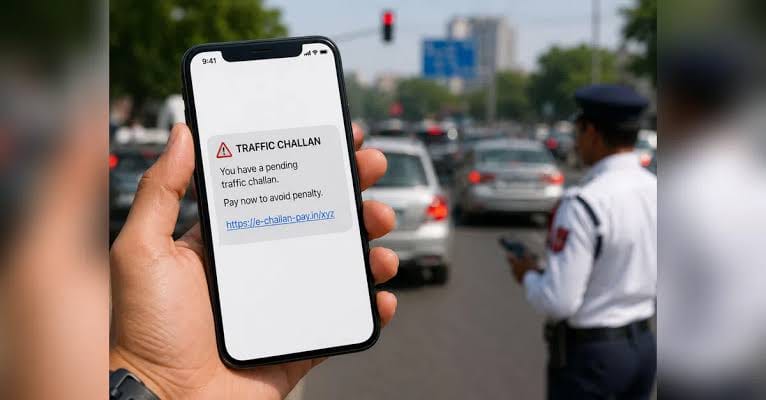
Pune: A new cyber fraud is targeting vehicle owners through fake e-challan SMS messages. Fraudsters are sending text messages claiming that a traffic challan has been issued against a vehicle and urging recipients to make an immediate payment.

Many people panic after receiving such messages and click on the payment link without verifying its authenticity. In several cases, this has resulted in financial fraud, with victims losing money from their bank accounts.
How does the e-challan scam work?
Cybercriminals send SMS messages claiming that a traffic violation has been recorded and that an e-challan is pending. The message usually warns of penalties or legal action if payment is not made immediately.
The SMS contains a payment link that appears genuine. Once users click on the link, they may be asked to enter debit or credit card details, internet banking credentials or a One-Time Password (OTP). Fraudsters use this information to gain access to bank accounts and steal money.
In some cases, clicking on the link can also install malware or other harmful software on the user’s mobile phone.
How to identify a fake e-challan message
The easiest way to verify an e-challan message is to carefully check the website link.
Official traffic challan messages issued by government agencies generally use the.gov.in domain. For example, the official National e-Challan portal is echallan.parivahan.gov.in.
If the message contains shortened or unfamiliar links ending in .com, .net, .xyz, .apk,bit.ly or other suspicious domains, it should be treated with caution. Avoid clicking on such links.
Instead of using the link provided in the SMS, visit the official e-Challan website directly through your browser and verify the challan using your vehicle registration number or driving licence details.
What to do if you become a victim
If you accidentally click on a fraudulent link or make a payment through a fake website, act immediately.
Contact your bank and request that your debit card, credit card or internet banking services be blocked to prevent further unauthorised transactions.
You should also report the incident to the National Cyber Crime Helpline by dialling 1930. Complaints can also be registered online through the official cybercrime.gov.in portal. Prompt reporting can improve the chances of recovering lost money.
Safety tips to avoid e-challan fraud
- Never panic after receiving an e-challan SMS. Verify it first.
- Always check whether the website uses the official.gov.in domain.
- Do not click on suspicious or shortened links received through SMS or messaging apps.
- Never share your OTP, banking password, debit card PIN or CVV with anyone.
- Visit the official e-Challan portal directly instead of using links received in messages.
- Keep your mobile phone’s operating system and security software updated to reduce the risk of malware attacks.
With cyber fraud cases increasing across the country, experts advise users to verify every payment request carefully before sharing personal or financial information online.
Disclaimer: This article is intended to create awareness about cyber fraud. If you receive a suspicious message or believe you have been targeted by an online scam, verify information only through official government websites and report the incident to the relevant authorities immediately.