‘Eagle-Eye’ Aerials Reveal Over 30 Km Gridlock as Mumbai–Pune Expressway Comes to a Standstill
‘Eagle-Eye’ Aerials Reveal Over 30 Km Gridlock as Mumbai–Pune Expressway Comes to a Standstill
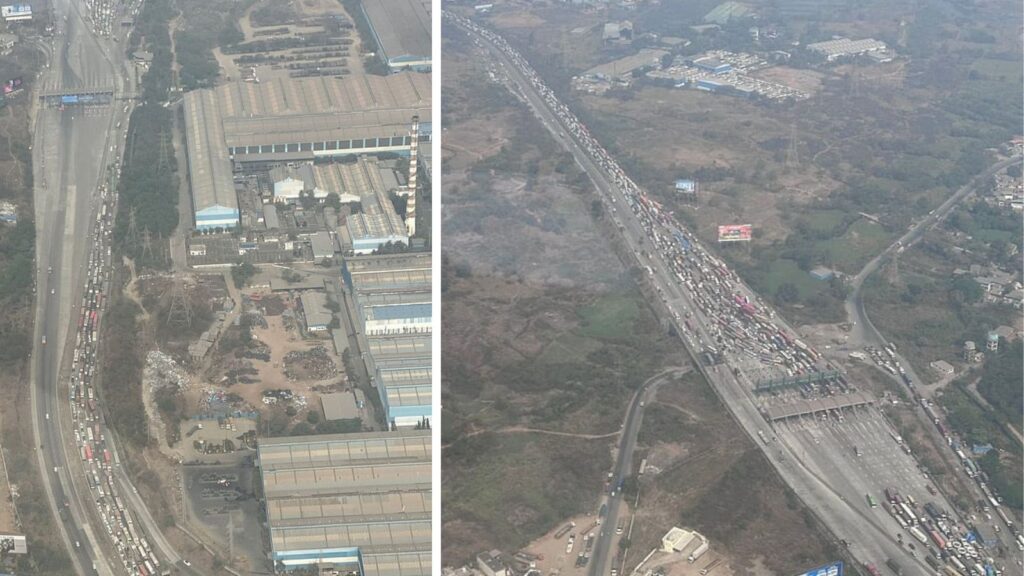
High-altitude aerial visuals have surfaced showing the alarming extent of traffic chaos on the Mumbai–Pune Expressway, Maharashtra’s most critical road link between its two largest cities. Captured from a helicopter flying over the Khandala Ghat section, the “eagle-eye” images reveal a seemingly endless stretch of vehicles frozen in place, transforming the expressway into what resembles a massive parking zone.
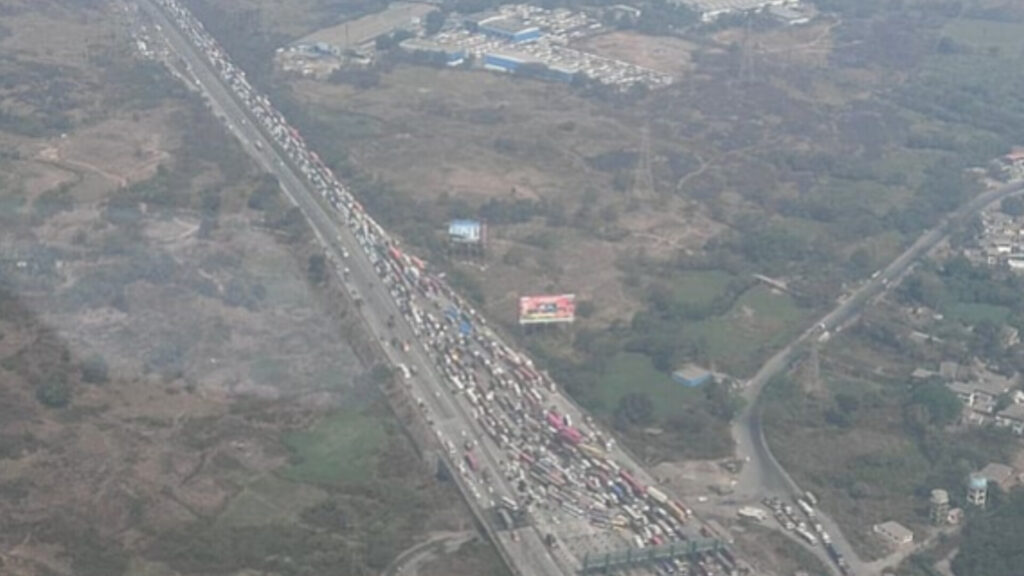
The photographs were taken on Wednesday afternoon near the Khalapur toll plaza, close to Khopoli in Raigad district. From several hundred feet above the ground, the scale of the disruption becomes unmistakably clear. What is normally a high-speed corridor appears completely paralysed, with rows of vehicles extending far beyond what stranded commuters on the ground can visually assess.
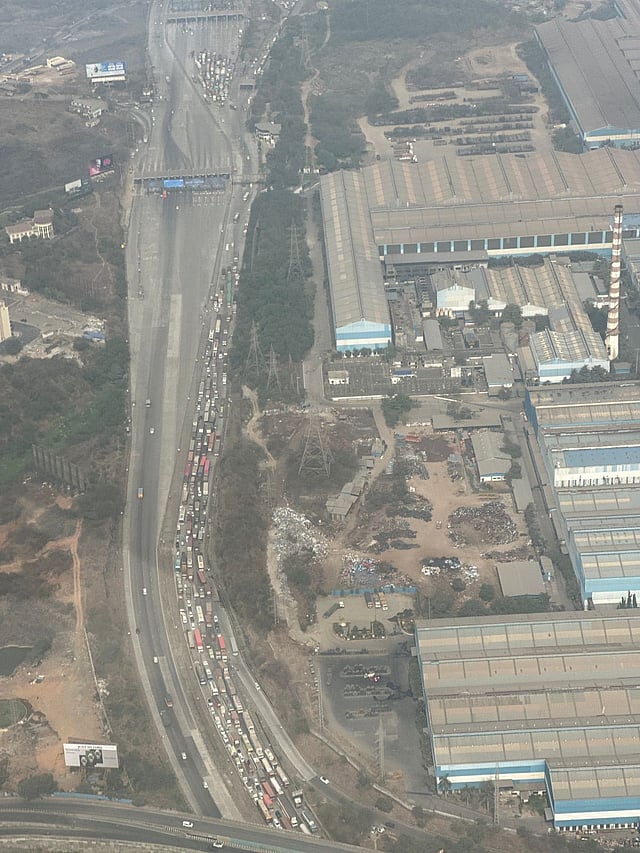
The traffic jam originated near the Adoshi Tunnel after a propylene gas tanker overturned on Tuesday evening at around 5 pm. Since the incident, congestion has continued to build, with reports indicating that the backlog of vehicles stretches up to the Kiwale area in Pimpri-Chinchwad. This suggests that nearly the entire length of the expressway has been affected by the blockage.

Despite efforts by authorities to divert vehicles off the expressway wherever possible, the situation has remained severe. The aerial visuals show all three lanes fully occupied, packed tightly with heavy multi-axle trucks, commercial vehicles, buses, and private cars. Many vehicles have remained stationary for more than 16 hours, leaving thousands of commuters stranded with little movement or relief.
Mumbai Pune express Highway.
— Vighnesh Rane (@Vighrane01) February 3, 2026
I was stuck on this for 8 plus hours.They have finally starred clearing traffic and opened a single lane from around 12.30 to 1am
Crew and police working Hard to ensure this leak is taken Care of pic.twitter.com/6blIwAt6af
Why the Traffic Situation Remains Unresolved
Expectations of a quick clearance have faded, and the aerial perspective explains why progress has been so slow. The overturned tanker continues to leak propylene gas, a highly flammable substance. Officials have warned that even a minor spark — including one generated by a vehicle ignition — could lead to a dangerous explosion, especially given the narrow terrain of the ghat section.
Mumbai Pune Expressway is the most badly managed road with a very very high toll in our country.
— Atul Modani (@atulmodani) February 3, 2026
Thousands stranded daily in Khandala stretch
Crores of rupees lost in fuel and breakdown of Vehicles. pic.twitter.com/IAmFS2llOp
Due to this risk, authorities have enforced a strict no-movement safety perimeter around the accident site. As a result, traffic flow on the expressway has been completely halted. The impact has also spilled over onto the Old Mumbai–Pune Highway (NH-48), where secondary traffic jams have formed as vehicles attempt to find alternate routes.
A Crisis Visible Only From the Sky
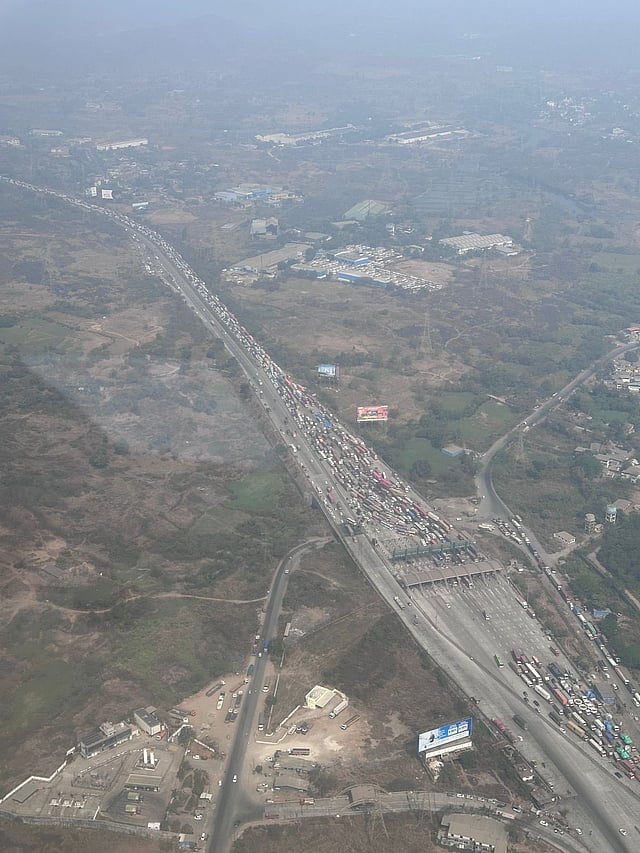
The “eagle-eye” visuals provide a stark reminder of the magnitude of the situation. From above, the expressway appears entirely cut off, hemmed in by mountain slopes on one side and deep valleys on the other, leaving no room for vehicles to turn back or disperse. Until the gas leak is fully controlled and the tanker safely removed, authorities are expected to maintain restrictions, prolonging the ordeal for thousands of motorists caught in one of the worst traffic standstills the expressway has seen.