Heavy Snowfall Covers Kedarnath Dham in Thick White Blanket, Security Forces Remain Alert
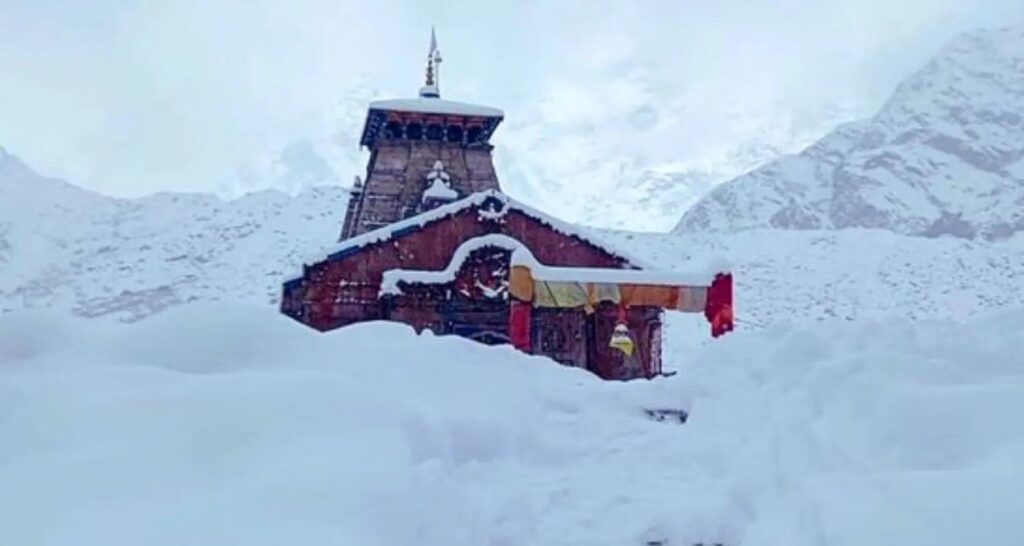
Heavy Snowfall Covers Kedarnath Dham in Thick White Blanket, Security Forces Remain Alert
Kedarnath, March 23, 2026: Continuous heavy snowfall has covered Kedarnath Dham under a thick layer of snow measuring nearly three to four feet, transforming the entire township and nearby areas into a vast white landscape.
According to the Kedarnath Temple Committee, the sacred Kedarnath Temple one of the eleven Jyotirlingas along with the entire Kedar Valley, has been enveloped in fresh snowfall, creating a striking and serene atmosphere.
Despite freezing temperatures and severe weather conditions, personnel from the Uttarakhand Police and the Indo-Tibetan Border Police continue to remain vigilant, ensuring strict security arrangements and safety across the region.

Fresh Snowfall Turns Tungnath Temple into a Winter Wonderland
While much of India is gradually moving toward warmer summer temperatures, the higher Himalayan regions of Uttarakhand continue to experience severe winter conditions. Recently, fresh snowfall has once again covered the sacred Tungnath Temple, draping the area in a thick, pristine layer of snow.
Located in the Rudraprayag district at an elevation of about 3,680 metres (12,073 feet), Tungnath is regarded as the highest temple dedicated to Lord Shiva in the world. It is also one of the five revered shrines collectively known as the Panch Kedar.
Believed to be more than a thousand years old, the temple sits in the Garhwal Himalayas and holds both spiritual and geographical importance. It lies along a ridge that separates the waters of the Mandakini and Alaknanda rivers. From nearby viewpoints such as Chandrashilla peak, visitors can enjoy panoramic views of prominent Himalayan peaks including Nanda Devi and Chaukhamba.
Tungnath also carries deep mythological significance linked to the Mahabharata. According to legend, after the great war, the Pandavas sought forgiveness from Lord Shiva. To avoid them, Shiva is said to have taken the form of a bull and disappeared into the earth. Different parts of his body are believed to have reappeared at five locations, forming the Panch Kedar temples. At Tungnath, his arms are believed to have surfaced.
The temple remains a popular destination for both pilgrims and trekkers. The best time to visit is between April and June, as well as from September to November, when the weather is more favourable. Reaching the temple involves a scenic 3.5-kilometre trek from Chopta, often referred to as “Mini Switzerland of India.” The trail offers stunning views of snow-clad Himalayan peaks, attracting nature lovers and adventure enthusiasts alike.