How a 21-Year-Old F1 Fan Built One of India’s Biggest Motorsport Brands From ₹10,000
How a 21-Year-Old F1 Fan Built One of India's Biggest Motorsport Brands From ₹10,000
The story of boxbox.in, the Indian brand that turned a gap in the market into thousands of orders every month
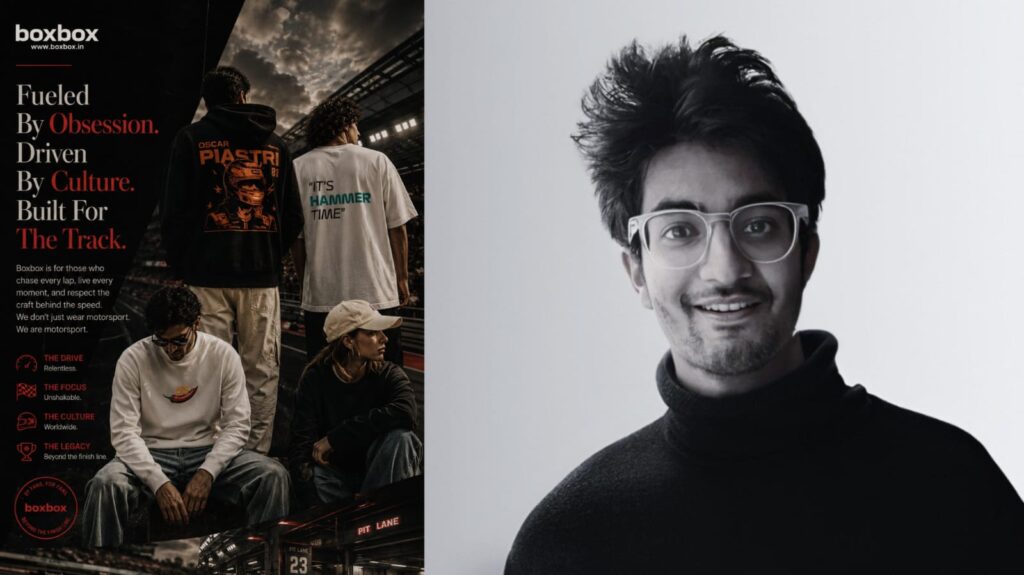
Most people who love Formula 1 watch the races, follow their favourite drivers and discuss every twist on social media. Abhishek Bora did something different. He noticed that Indian F1 fans had very few reliable options for high-quality merchandise and decided to build the solution himself. That decision, made at just 21, has grown into boxbox, one of India’s leading motorsport apparel and merchandise brands.

One Fan, One Gap, and One Big Decision
Abhishek’s passion for Formula 1 began long before he became an entrepreneur.

“I have been a huge Formula 1 fan since I was around 12 years old. I followed every race and everything related to the sport very closely. That passion eventually gave me the idea of creating my own brand,” he says.
The idea took shape during the COVID-19 pandemic while he was still in college.
“During the COVID period, I was at home with a lot of free time. Instead of letting that time go to waste, I decided to start working on my own brand, boxbox,” he recalls.
He saw a clear gap in the market. Official F1 merchandise was expensive, difficult to find in India and often failed to connect with local fans.
“I was a huge F1 fan and I always wanted to make money online. I saw there wasn’t any good trusted store selling F1-themed apparel. So I just jumped in.”
Starting With Almost Nothing
There was no investor, no business background and no large savings. Abhishek approached more than 20 suppliers before one in Mumbai agreed to give him a credit line of just ₹10,000.
He learned basic design tools, built the website himself and began creating products.
“I started completely from scratch. I invested my own money into creating designs and developing products. It took nearly three to five months before I received my first order,” he says.
That first sale remains unforgettable.
“I had just built a website, put it out on social media, and already had my first order. That just opened my mind.”
The moment proved that complete strangers were willing to trust a brand he had built from scratch.
The Part Nobody Talks About: The Hard Weeks
Early success did not translate into rapid growth. The business was receiving only a handful of orders each week.
“In the beginning, I relied almost entirely on Instagram and built an organic community. I later invested in Meta advertisements, which increased the brand’s visibility,” Abhishek says.
Friends became his first supporters and unofficial product testers.
“My friends tried my designs, shared honest feedback and encouraged me to keep going. Their support gave me the confidence to continue even when there were no orders coming in.”
He then taught himself Meta and Google advertising over a weekend. His first campaign failed completely, wiping out his budget. Instead of quitting, he analysed what went wrong and tried again.
“I got a hang of it and it started working. From 2-3 orders per week, I was getting 10s of orders every single day.”
Looking back, he believes persistence mattered more than perfection.
“The biggest lesson I learned is to keep going even when results are slow. If you believe in your product and continue improving it, opportunities eventually come your way.”
When One Person Is No Longer Enough
As orders increased, Abhishek realised he could no longer manage everything alone. He hired a designer and brought his brother into the business to handle fulfilment and operations. Later, he shifted production in-house after outgrowing his Mumbai supplier.
“I knew we had cracked the selling online code. Selling was the easy part.”
Today, technology and teamwork drive the company’s operations.
“A large part of our production process is automated, which helps us maintain efficiency and consistency. Today, we work with a team of seven people, including three designers. My father and brother are also actively involved in managing different aspects of the business,” he says.
The Crisis That Tested Everything
Growth was not without setbacks. One of the toughest moments came when a delivery agent disappeared with customer orders worth nearly ₹1 lakh. Complaints poured in and negative reviews started appearing online.
“That was the first time I realized that when you own a business, you are dealing with so many external forces not in your control. You are responsible for every mistake, even if you didn’t make it.”
The experience pushed boxbox to strengthen its systems and operations, making the business more resilient.
Why the Brand Is Called boxbox
The name comes directly from Formula 1 culture.
“‘BoxBox’ is a famous radio call used in Formula 1 when drivers are instructed to come into the pit lane. It is short, memorable and instantly connects with motorsport enthusiasts, which is why I chose it as the brand name,” Abhishek explains.
His family, however, had no idea what he was quietly building.
“My parents had absolutely no idea that I was building a business. They thought I was studying because I would quietly sit in a corner for hours, designing products and planning the brand.”
F1 in India Is Not a Niche Anymore
When boxbox launched in 2021, Formula 1 was still a relatively small community in India. The popularity of streaming content, social media and growing motorsport interest soon expanded the fan base, and boxbox grew alongside it.
The brand has since added football and basketball merchandise, but motorsport remains its identity and strongest community.
For Abhishek, the biggest reward is not the numbers but the moments that remind him how far the journey has come.
“Whenever I’m walking somewhere and I see someone wearing one of our hoodies or t-shirts, that’s the most satisfying and emotional thing. You’ve created something that people love, pay for, and wear proudly.”
What Abhishek Learned That Anyone Can Use
His advice is simple: focus deeply on one niche, build a quality product and learn the skills needed to reach customers. Quick success is rare, but consistent improvement compounds over time.
“In the end, it always comes down to who is persistent and constantly changing and adapting.”
From a ₹10,000 supplier credit line and a self-built website to thousands of orders every month, Abhishek Bora’s story shows how passion, patience and continuous learning can turn a fan’s idea into a thriving business.
Frequently Asked Questions
What is boxbox and where can I find it? boxbox is an Indian motorsport apparel and merchandise brand that ships across India. It started with a focus on F1 fan merchandise and has since grown to cover football and basketball as well. The website is boxbox.in.
Why is it called boxbox? The name comes from Formula 1 radio language. When a team tells their driver to come into the pit stop, they say box, box over the radio. It is an insider term that any real motorsport fan will recognise immediately, which is exactly the message Abhishek wanted to send with the brand name.
Who started boxbox and when? Abhishek founded boxbox in late 2021, when he was 21 years old. He started with a ten thousand rupee credit line from a supplier in Mumbai, no external investment, and a website he built on his own.
Does boxbox only sell Formula 1 merchandise? Motorsport, with F1 at the centre, is the core of what boxbox does. The brand has expanded into football and basketball as well, but motorsport remains the flagship and the identity of the business.