India’s Middle Class Struggles as Food Inflation Hits Budgets

India’s Middle Class Struggles as Food Inflation Hits Budgets
Urban consumption slowdown poses challenges to economic growth.
India’s middle class, long a key driver of urban consumption and economic growth, is feeling the squeeze of persistently high inflation, particularly in food prices. This financial strain has led to significant cutbacks in spending on non-essential items, from cookies to fast food, casting a shadow on the country’s rapid economic growth trajectory.
Urban Spending Slows Down

Over the past three to four months, urban consumption has slowed, affecting the earnings of major consumer goods firms and raising concerns about India’s long-term economic stability. Nestle India, known for its Kit Kats and Maggi noodles, recently reported its first revenue decline since the pandemic-hit June quarter of 2020.
Middle-class households, estimated to comprise a third of India’s 1.4 billion population, are a crucial demographic both economically and politically.
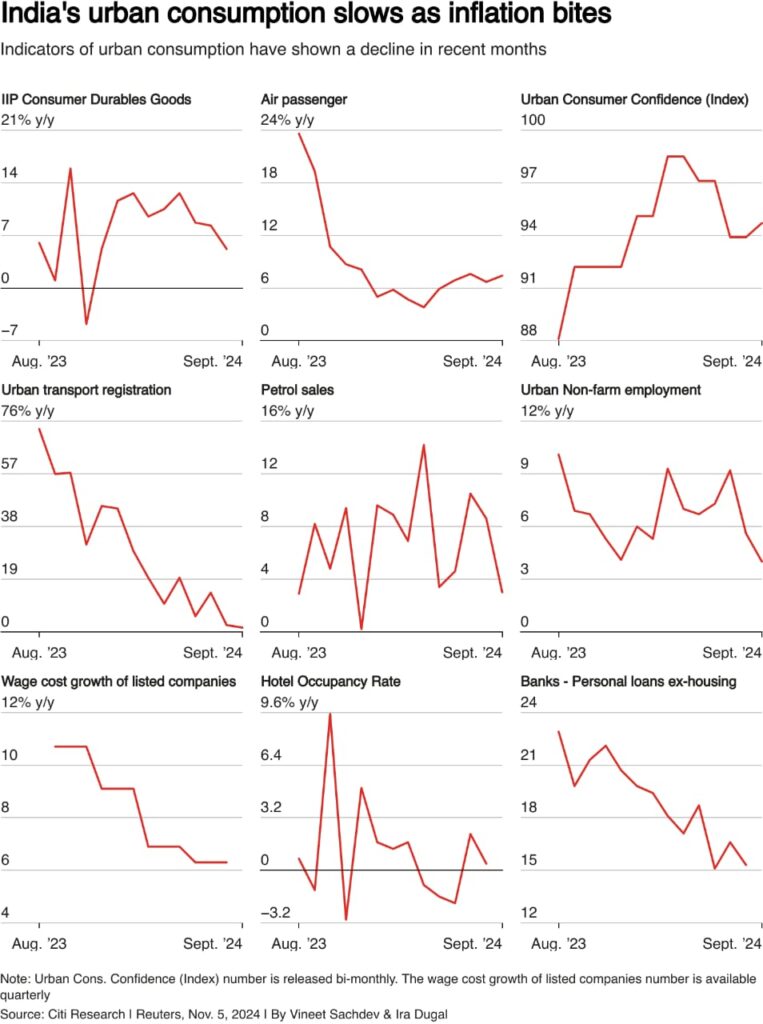
India’s economy is projected to grow at 7.2% for the fiscal year ending March 2025, the fastest among major global economies. However, this optimistic outlook is tempered by signs of a slowdown in household consumption, which is being weighed down by stagnant wages, declining savings and stricter personal loan regulations.
Headline inflation has averaged 5% over the past year, but food inflation has remained above 8%, driven by weather shocks that have pushed up prices for essentials like vegetables and cereals. Retail inflation in October 2024 hit a 14-month high of 6.2%, with food inflation soaring to 10.9%.
For many families, this has led to sacrifices during festive seasons. A 60-year-old dependent on her husband’s pension, lamented, “During this festival season, we have not spent at all. Savings are low, barely there.”
Consumer goods companies have reported shrinking sales volumes, with consumers opting for unbranded alternatives to traditional staples like tea and hair oil. Hindustan Unilever recorded its first sales volume decline in 11 quarters for its foods and refreshment division.
The trend extends to dining out, where fast-food chains like McDonald’s, Burger King, and KFC have posted same-store sales declines.
Despite the challenges, there are glimmers of hope. India’s central bank expects rural demand and government investment to help sustain economic growth.
However, some economists remain cautious. Firms like Citi and IDFC First Bank predict GDP growth for the July-September quarter may fall below the Reserve Bank of India’s 7% projection, citing weak urban demand as a major factor.
The slowdown has weighed on consumer stocks, with the Nifty FMCG index dropping 13% since October 1, compared to a 7.4% decline in the benchmark Nifty 50. Of the FMCG index’s 15 constituent firms, only one reported sales volume growth in the September quarter.
As urban consumption hits a two-year low, measured by indicators like airline bookings, fuel sales and wages, India’s policymakers and businesses face the pressing challenge of revitalizing middle-class spending to sustain the nation’s economic momentum.