Kapurwadi Lake: Historic Bird Haven and Lifeline Under Threat from Pollution and Neglect
Kapurwadi Lake: Historic Bird Haven and Lifeline Under Threat from Pollution and Neglect
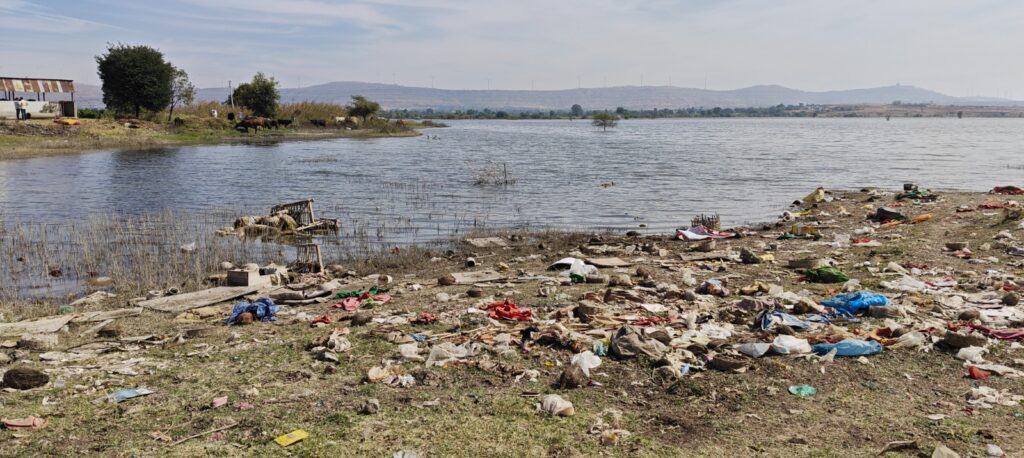
Ahilyanagar, December 25, 2025: A freshwater jewel with deep historical and ecological significance, Kapurwadi Lake is facing a severe crisis. Once a thriving rain-fed reservoir, the lake now struggles under plastic waste, solid debris, reckless visitors, and a lack of safety or security measures, threatening its ecological balance, cultural heritage, and role as a vital habitat for migratory and resident birds.
Among the first to raise the alarm is BJP member and civil rights activist Jaymala Dhankikar from Pune, who has spearheaded campaigns to save the lake. She has submitted urgent petitions to the Chief Minister’s Office (CMO), Union Ministry of Environment, Forest and Climate Change, Maharashtra State Environment Ministry, District Collector, Divisional Commissioner, Central Pollution Control Board (CPCB), and Maharashtra Pollution Control Board (MPCB), demanding immediate action. Dhankikar has emphasized that Kapurwadi Lake should be declared a “Lake of National Importance”, given its significance as a destination for international migratory birds.
Location, Size, and Historical Significance
Kapurwadi Lake is situated near Kapurwadi village in Nagar (Ahmednagar) taluka of Ahmednagar district (Ahilyanagar), Maharashtra, India, roughly 9 km from Ahmednagar city, the district headquarters. The village spans around 2,090 hectares (over 5,000 acres), with the lake forming the central water source supporting agriculture, drinking water, and groundwater recharge.

Historically, the lake is believed to have been constructed during the period of the Ahmednagar Kingdom (late 15th to early 17th century) as part of a planned water management system. Its construction allowed for the storage of monsoon rainfall to meet the year-round water needs of the local population. Over centuries, the lake also became an ecological sanctuary, supporting fish, aquatic plants, and a variety of birds. Its scenic surroundings, including banyan trees and flat plains, contribute to its cultural and historical importance. Despite this heritage, neglect, encroachment, and pollution have threatened its survival.
A Crucial Centre for Birds
Kapurwadi Lake is recognized as a key habitat for birds, attracting both resident species and seasonal migratory birds. Observers have reported 25–30 species during peak winter months, including wood sandpipers, purple herons, Asian koels, and red-crested pochards. The surrounding wetlands support over 200 bird species in the broader region.
Local birding groups have historically organized clean-up drives, collecting 22 sacks of garbage to preserve habitat quality for nesting and feeding birds. The lake provides essential stopover habitat for migratory birds on India’s flyways, making its protection a matter of both national and global significance. Its ecological value parallels other internationally recognized wetlands, such as Chilika Lake in Odisha and Basai Wetland in Haryana, which serve as models for sustainable bird habitat conservation.
Plastic Pollution and Reckless Visitors
The most pressing threat to Kapurwadi Lake comes from large-scale plastic and solid waste dumping, which blocks natural water percolation, contaminates water, and harms aquatic life.
In addition, reckless visitors exacerbate the problem. There is no police patrolling, no safety signage, and no regulated access, allowing visitors to enter sensitive zones, disturb wildlife, litter, and even defecate near the shoreline. This unregulated human activity disturbs birds, threatens aquatic life, and increases public health risks, compounding the lake’s ecological degradation.
Grassroots Advocacy and Jaymala Dhankikar’s Campaign
Jaymala Dhankikar has been at the forefront of citizen advocacy to protect Kapurwadi Lake. Her petitions demand:
- Independent environmental assessment and water quality testing by CPCB/MPCB
- Immediate removal of plastic and solid waste
- Enhanced enforcement to prevent illegal dumping and reckless visitation
- Recognition as a “Lake of National Importance” due to its ecological and bird habitat significance
- Scientific conservation planning and community engagement
Dhankikar’s efforts draw parallels with nationally recognized wetlands like Chilika Lake, which gained international recognition under the Ramsar Convention, and Basai Wetland, formally designated as an Important Bird and Biodiversity Area (IBA). Such recognition not only protects biodiversity but also encourages eco-tourism and sustainable management.
Regulatory Framework: NGT, MPCB, and CPCB
National Green Tribunal (NGT)
The NGT has a history of intervening in wetland and lake protection cases. Environmentalists argue that Kapurwadi Lake warrants NGT oversight, including a joint committee of CPCB and MPCB experts for assessment and restoration.
Maharashtra Pollution Control Board (MPCB)
The MPCB enforces plastic bans and monitors water quality but rural lakes like Kapurwadi remain largely unmonitored. Regular inspections, enforcement of anti-dumping regulations, and waste management improvements are urgently needed.
Central Pollution Control Board (CPCB)
The CPCB provides technical guidance and national standards for pollution control. Its involvement could ensure scientific restoration and long-term management, and support efforts to officially recognize the lake’s ecological importance.
Ecological and Community Impacts
- Water quality degradation harming aquatic ecosystems
- Loss of habitat for migratory and resident birds
- Reduced groundwater recharge impacting agriculture and drinking water
- Public health risks from contamination and unregulated human activity
Looking Forward: Conservation as a Priority
Kapurwadi Lake represents a historic, ecological, and cultural treasure. Immediate intervention is essential to protect its avian biodiversity, restore freshwater resources, and preserve a centuries-old heritage. Recognition as a Lake of National Importance, along with enhanced safety, regulated visitation, and community stewardship, could transform Kapurwadi into a model of sustainable lake conservation — similar to globally recognized wetlands.
Kapurwadi Lake — a historic waterbody, a bird haven, and a lifeline for communities — now depends on decisive action to survive and thrive for generations to come.