Maharashtra Budget 2026-27: What Becomes Cheaper And What Gets Costlier In The State
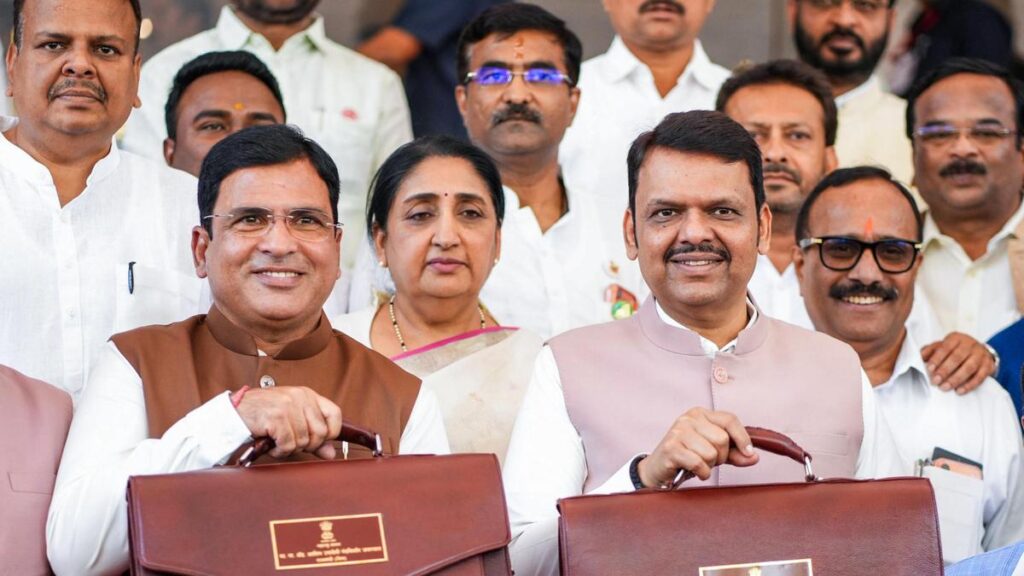
Maharashtra Budget 2026-27: What Becomes Cheaper And What Gets Costlier In The State
₹7.69 lakh crore budget presented by CM and Finance Minister Devendra Fadnavis focuses on welfare schemes, infrastructure growth and economic expansion
The Maharashtra government on Friday presented the state budget for 2026-27 with a total outlay of ₹7.69 lakh crore, outlining major plans for agriculture, infrastructure, urban development, health and industry. Chief Minister and Finance Minister Devendra Fadnavis said the budget aims to balance economic growth with social welfare while laying the foundation for the state to move toward a $1-trillion economy in the coming years.
The budget includes relief for farmers, expansion of welfare schemes for women, large infrastructure investments and several policy changes affecting different sectors of the economy.
What Has Become Cheaper
Several announcements in the budget aim to provide relief to citizens and support agriculture and healthcare.

Farmers will benefit from a crop loan waiver scheme under the Punyashlok Ahilyadevi Holkar Shetkari Karjmafi Yojana. Crop loans of up to ₹2 lakh taken until September 30, 2025 will be waived for eligible farmers. Additionally, farmers who regularly repay loans on time will receive an incentive of ₹50,000.
In the health sector, the government plans to expand the Mahatma Phule Jan Arogya Yojana, enabling more treatments and hospitals to be covered under the scheme. A ₹4,500-crore rural disease detection programme, supported by the Asian Development Bank, will focus on early screening of cancer, diabetes and heart disease.
The Mukhyamantri Majhi Ladki Bahin Yojana will also continue, under which eligible women receive ₹1,500 per month as financial support. The government plans to encourage entrepreneurship among women and create 25 lakh new “Lakhpati Didis” during 2026-27.
What Has Become Costlier
The budget also proposes certain new taxes and policy changes that may increase costs in specific sectors, particularly related to vehicles and transport.
The government has introduced new tax proposals on vehicles, which may lead to higher costs for certain categories of vehicles and related services.
At the same time, officials indicated that these measures are part of efforts to generate additional revenue while funding welfare schemes and large infrastructure projects.
Major Infrastructure And Development Plans
A major focus of the budget is long-term infrastructure expansion across Maharashtra. Metro projects in Mumbai and Pune will continue, and the state plans to expand the metro network to around 1,200 kilometres in the coming years.
The government also announced plans to develop “Third Mumbai” near Atal Setu and “Fourth Mumbai” at Vadhavan in Palghar, envisioned as large logistics and economic hubs. These projects are expected to support future urban expansion as nearly 70 percent of the state’s population may live in urban areas in the coming decades.
Education, Industry And Jobs
In education, a large EduCity in Navi Mumbai will be developed to host six international universities, along with eight to ten education hubs across the state.
The government also plans to strengthen the startup ecosystem by supporting 1.25 lakh entrepreneurs and 50,000 startups over the next five years.
To boost industrial growth, 18 mega industrial hubs and MSME centres in every district will be developed, which the government estimates could help create up to 50 lakh jobs.
Fiscal Targets
For the financial year 2026-27, the state has projected:
Revenue receipts: ₹6,16,099 crore
Revenue expenditure: ₹6,56,651 crore
Revenue deficit: ₹40,552 crore
The fiscal deficit is estimated at ₹1,50,491 crore, which the government said will remain below 3 percent of the Gross State Domestic Product (GSDP).
Through a mix of welfare schemes, infrastructure expansion and industrial development plans, the Maharashtra government said the budget is designed to accelerate economic growth while supporting farmers, women and small businesses across the state.