Natural Holi Colours You Can Make at Home for a Safe & Joyful Celebration
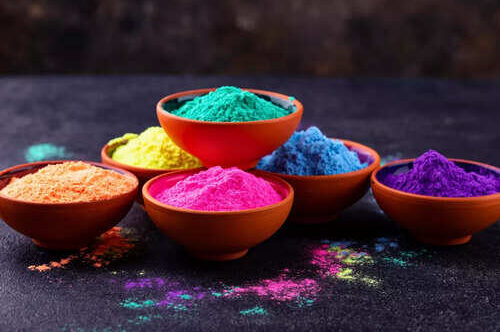
Natural Holi Colours You Can Make at Home for a Safe & Joyful Celebration
Holi is all about laughter in the air, bright faces, and hands dipped in colour. But while we celebrate with vibrant powders and splashes of water, our skin and hair often pay the price for synthetic dyes. Why not bring back the charm of tradition and prepare your own gentle, plant-based colours right in your kitchen? Using everyday ingredients like flowers, spices, vegetables, and flours, you can create beautiful shades that are festive, fragrant, and far kinder to your skin.
Here’s a complete guide to making skin-friendly Holi colours at home — both dry powders (gulal) and wet colours.
Green Holi Colour

Dry Green Powder:
• Traditionally, fresh gulmohur leaves were ground into a paste.
• You can also use henna (mehendi) powder.
• Mix the paste or powder with cornstarch, rice flour, or maida.
• Spread it on a tray and allow it to dry completely.
• Once dry, grind and sieve for a smooth texture.
Wet Green Colour:
Mix henna powder with water.
Keep in mind that henna in water may leave light stains on skin and clothes.
Yellow Holi Colour
Dry Yellow Powder:
• Mix gram flour (besan) and turmeric in a 1:2 ratio.
• Rub the mixture between your palms to blend evenly.
• Sieve it two to three times for a fine, soft finish.
• You can also combine turmeric with cornstarch instead of gram flour.
Wet Yellow Colour:
Boil marigold flowers in water to release their natural pigment.
Alternatively, mix organic turmeric into water.
Organic turmeric is recommended for a richer shade and better skin safety.
Red & Orange Holi Colours
From Flowers:
Traditionally made using palash (tesu) flowers.
Dry the flowers until crisp, grind them, and mix with cornstarch.
Using Hibiscus:
Sun-dry red hibiscus flowers until crunchy.
Grind into powder.
Add equal parts rice flour and a small amount of red saffron to enhance colour and volume.
Using Turmeric & Lemon:
Add lemon juice to turmeric.
The acidity of lemon turns turmeric reddish.
Dry the mixture in a well-ventilated area away from sunlight to prevent bleaching.
Wet Red Colour:
Boil pomegranate peels in water to extract a rich red shade.
Pink Holi Colour
Dry Pink Powder:
• Extract beetroot juice.
• Mix it with flour or cornstarch.
• Spread to dry completely.
• Grind and sieve into a soft powder.
Alternative Method:
Use the same process as red colour but with less lemon juice for a lighter pink shade.
Magenta & Purple Holi Colours
Magenta:
Boil beetroot slices in water for a deep magenta liquid.
Red onions can also be used similarly.
Strain and cool before use.
Purple Dry Colour:
• Grind black carrots into a paste.
• Mix with corn flour.
• Let the mixture dry fully.
• Add a few drops of rose water for fragrance before drying if desired.
Beetroot for Purple:
Boil beetroot, combine the juice with cornstarch.
Dry and grind to achieve a vibrant purple powder.
Blue Holi Colour
Natural blue shades can be derived from indigo plants, Indian berries, or jacaranda flowers.
• Extract the juice or colour essence.
• Mix with cornstarch.
• Dry thoroughly and grind into a fine blue powder.
Brown Holi Colour
• Boil about 200 grams of coffee in water.
• Strain and allow to cool.
• Add rose water to soften the coffee aroma.
• Keep in mind that coffee water may leave stains.
Grey Holi Colour
• Dry the seeds of amla (Indian gooseberry).
• Grind into a powder.
• Mix with corn flour for a smooth, safe grey shade.
Preparing your own Holi colours is more than just a DIY activity — it reconnects us with age-old traditions where flowers, herbs, and kitchen staples brought festivals to life. These natural shades are gentle on the skin, eco-friendly, and filled with the goodness of nature.
This year, let every splash carry not just colour, but care. When laughter echoes and vibrant hues fill the air, you’ll know your celebration is joyful, safe, and beautifully handmade.
Disclaimer: All the colours suggested above are made from natural, home-based ingredients. However, individual skin types may react differently to even herbal or kitchen ingredients. It is strongly recommended to perform a patch test before use.