Net-Zero Mining in India: Frameworks, Community Development, and the Road Ahead
Net-Zero Mining in India: Frameworks, Community Development, and the Road Ahead
India’s minerals sector holds enormous potential for sustainable growth. The country needs iron ore, coal, bauxite, and critical minerals to sustain its infrastructure ambitions. At the same time, mining operations contribute significantly to carbon emissions, land degradation, and social disruption in some of the country’s most economically fragile regions.
Achieving net-zero in mining isn’t about shutting operations down; it’s about restructuring how extraction, logistics, and community engagement work together. Let’s examine what that restructuring actually looks like.

What Net-Zero Means for a Mining Operation
Net-zero in mining does not mean zero extraction. It means reducing direct and indirect emissions to the lowest achievable level, then offsetting what remains. In practice, this involves action across four operational areas:
- Extraction: Replacing diesel-powered heavy machinery with electric or hybrid alternatives reduces Scope 1 emissions at the source.
- Logistics: Transportation of ore from mine to processing facility is one of the largest hidden emission sources. Pipeline systems and rail corridors significantly cut transport-related carbon intensity compared to road haulage.
- Processing: Beneficiation processes that recover usable ore from low-grade material reduce the need for additional excavation, limiting land disturbance and energy use per tonne of output.
- Energy supply: Shifting mine power from diesel generators to renewable micro-grids or grid-connected clean energy reduces emissions from auxiliary operations.
None of these changes happen independently. Net-zero progress in mining requires all four to advance in parallel.
Circular Mining: Getting More From What’s Already There
One of the least-discussed levers in sustainable mining is circular resource use. Historically, low-grade ores and mining by-products were treated as waste, stockpiled or disposed of, consuming land and generating long-term liability.
Advanced beneficiation technologies are changing this calculus. Materials like Banded Hematite Quartzite (BHQ), previously uneconomical to process, can now be converted into usable iron ore inputs through modern separation and concentration techniques. This has two important consequences:
- It reduces waste volumes and the land area required for tailings management.
- It extends the productive life of existing mine leases, reducing pressure to open new extraction areas.
Circular mining doesn’t eliminate environmental impact, but it materially reduces the impact per unit of output, which is the practical metric that matters.
Logistics Reform as a Carbon Strategy
Transport emissions in mining are frequently underestimated. A large open-cut iron ore mine can generate thousands of heavy truck movements per day, each contributing to fuel consumption, road wear, dust pollution, and safety incidents near surrounding communities.
Slurry pipeline systems offer a fundamentally different logistics model. Ore is mixed with water and pumped through pipelines directly to processing or dispatch facilities. The carbon reduction can be substantial, pipelines have been shown to cut logistics-related emissions by over 50% compared to equivalent road transport volumes. Beyond emissions, pipelines reduce truck traffic on rural roads, directly improving safety conditions in villages near the mine corridors.
The infrastructure cost is significant but the long-term operational savings and emissions reductions make pipelines one of the stronger investments in a net-zero mining roadmap.
Why Community Development is an ESG Imperative, Not a PR Exercise
Mining operations in tribal and rural districts create a social contract, whether companies acknowledge it or not. Land use, water access, dust, noise, and road traffic all affect local communities daily. How companies manage that relationship determines both their social licence to operate and their long-term stability.
Genuine community development in mining regions involves:
- Healthcare infrastructure: Many tribal districts hosting mining operations have inadequate primary healthcare. Mining companies with scale can establish or support medical facilities that serve the wider population, not just employees.
- Skill development: Training programmes that equip local youth for technical roles in mining, construction, and related industries create durable employment rather than short-term labour contracts.
- Women’s economic participation: Livelihood programmes targeting women in mining-adjacent villages, through self-help groups, microenterprise support, or direct employment, address the gender dimension of economic exclusion in these regions.
- Education access: Scholarships and school infrastructure support help break intergenerational poverty cycles in communities that have historically been bypassed by industrial development.
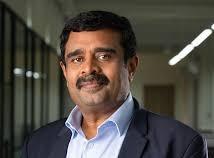
Industry leaders who treat these programmes as operational pillars rather than compliance checkboxes tend to face fewer disruptions and build more productive relationships with host communities. Industry visionary, B Prabhakaran, whose work at Lloyds Metals and Energy Ltd in Gadchiroli district has included employment generation for over 14,000 locals and structured skill development initiatives, represents one example of this approach being applied at scale in India.
The ESG Reporting Challenge in Indian Mining
India’s mining companies face growing pressure to report on ESG performance, but the sector lacks standardised frameworks tailored to its specific conditions. Global standards such as GRI and SASB provide useful structure, but their application to small and mid-sized Indian mining operations requires adaptation.
Key gaps that need addressing:
- Scope 3 emissions accounting: Most Indian mining companies report Scope 1 and 2 emissions but do not account for downstream processing and transport emissions linked to their ore.
- Community impact metrics: Employment numbers are commonly reported, but deeper indicators like wage levels, skill progression, and community health outcomes are rarely disclosed.
- Land rehabilitation tracking: Progressive rehabilitation of mined land during operations, rather than post-closure, remains uncommon in Indian practice.
Closing these gaps is not just about regulatory compliance. Transparent ESG reporting is increasingly a prerequisite for access to international capital markets and long-term partnerships with global steel producers.
Toward a Realistic Net-Zero Timeline for Indian Mining
A credible net-zero pathway for an Indian mining operation in 2026 looks less like a single transformation and more like a sequenced set of engineering and social investments:
- Short term (1–3 years): Electrify drilling and auxiliary equipment; conduct energy audits; begin renewable power feasibility studies; establish baseline community health and employment metrics.
- Medium term (3–7 years): Transition haul fleets to BEV or hybrid; invest in pipeline or rail logistics where volumes justify it; implement structured upskilling programmes tied to new equipment requirements.
- Long term (7–15 years): Achieve near-zero diesel dependency; full renewable energy supply for operations; progressive land rehabilitation integrated into extraction planning.
This is not an aspirational framework. It reflects the sequencing that operational and financial constraints actually allow. Companies that try to compress this timeline without adequate infrastructure investment tend to stall.
The Bottom Line
Net-zero mining in India is achievable, but it requires treating decarbonisation as an engineering and social problem simultaneously, not as a marketing position. The companies that will lead this transition are those making hard capital allocation decisions now, investing in workforce capability, and building genuine relationships with the communities they operate in.
The ones that wait for regulatory pressure to force the issue will find the transition both more expensive and more disruptive.