NGT Joint Committee Report Flags ‘Alarming’ Pollution in Godavari River at Nanded
NGT Joint Committee Report Flags ‘Alarming’ Pollution in Godavari River at Nanded
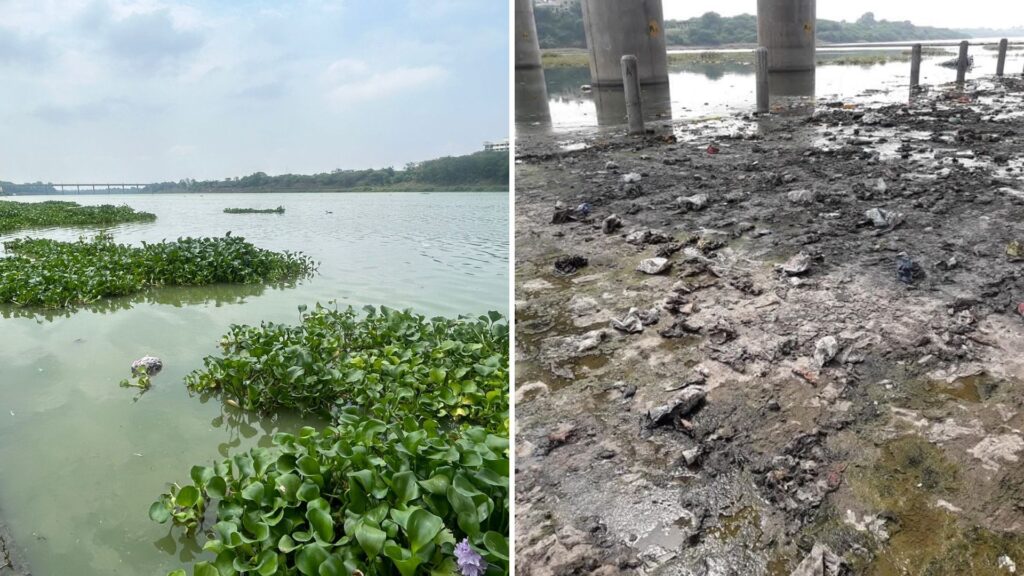
Nanded, Maharashtra — The Godavari River in Nanded is facing an “unprecedented threat” due to severe contamination from untreated sewage, filth, and toxic waste, according to a damning report submitted by a Joint Committee to the National Green Tribunal (NGT).
The committee — comprising officials from the Central Pollution Control Board (CPCB), Maharashtra Pollution Control Board (MPCB), and the District Magistrate, Nanded — was formed following an NGT order dated July 22, 2025. The action stemmed from a complaint filed by Jaymala Dhankikar regarding pollution at Nava Ghat. The report warns that pollution levels have reached “alarming proportions” and that the river water is no longer safe for consumption or any other use.
Sewage Discharge & Water Quality: Key Findings

Despite the Nanded Waghala City Municipal Corporation (NWCMC) having installed sewage treatment capacity of 142 MLD against a generation of 70 MLD, the committee found massive volumes of untreated sewage being discharged into the Godavari through several natural drains.
Seven major nallas — including Chunnal Nalla, Govardhan Ghat Nalla, and Nava Ghat Nalla — were found releasing untreated sewage directly into the river.
Samples from these drains showed extremely high pollution, with BOD levels between 75–110 mg/L and COD between 284–376 mg/L.
River water samples reflected heavy organic pollution. Upstream of Govardhan Ghat, water quality fell under Class D, while downstream of Shani Ghat it was graded Class C, indicating contamination even after conventional treatment.
Several STPs were non-operational at the time of inspection due to power failure, with no functional power-backup system in place. The committee noted that poor sewerage planning has left existing STPs both underutilized and ineffective.
Solid Waste Mismanagement Adds to Crisis
The report also highlights severe lapses in municipal solid waste (MSW) handling.
Nanded generates about 362 MT/day of waste, but the processing capacity is only 150 TPD.
The MSW facility at Tuppa has been running without valid authorization since its previous consent expired in January 2017.
The site stores unsegregated waste and lacks a leachate collection and treatment system, causing toxic leachate accumulation in drains — a serious risk to groundwater and the river, particularly during monsoon.
Of the 714,221 MT of legacy waste, 410,000 MT has been bio-mined, but the bio-mining plant was found non-operational.
Regulatory Action & Recommendations
The MPCB had earlier issued a Show Cause Notice and Proposed Directions to NWCMC over untreated sewage discharge, a 13 MLD treatment gap, and poor handling of legacy and plastic waste.
The Joint Committee has recommended:
1. Immediate corrective action through proper sewerage planning or interception and diversion of nallas to prevent untreated sewage from entering the river.
2. Installation of standby power backup at all STPs to ensure uninterrupted operation.
3. Levying of environmental compensation on NWCMC for sewage discharge and violations of Solid Waste Management Rules, 2016, with penalties applicable from April 1, 2020.
4. Strict compliance with the SWM Rules, including segregation, leachate treatment, and completion of legacy waste bio-mining, along with submission of short- and long-term action plans.