Petrol, Diesel Export Duty Cut From June 1: What It Means For Oil Companies And Consumers
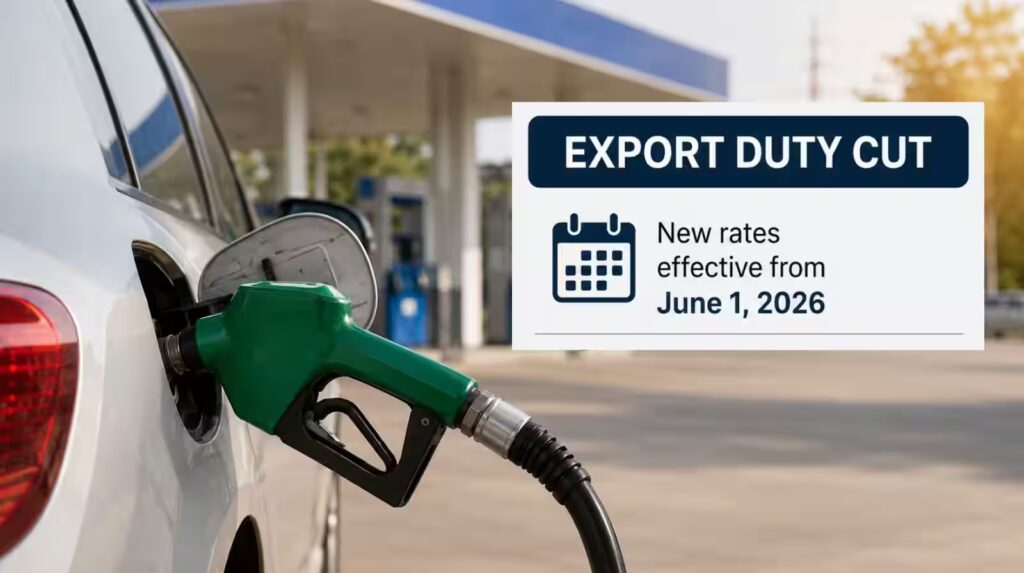
The Centre has reduced export duties on petrol, diesel and aviation turbine fuel (ATF) from June 1. While the move is expected to benefit fuel exporters and refiners, consumers are unlikely to see any immediate relief at petrol pumps.
The Central government has announced a reduction in export duties on petrol, diesel and aviation turbine fuel (ATF), with the revised rates coming into effect from June 1. The decision comes after a review of international crude oil prices and is aimed at reducing the tax burden on fuel exporters.
Under the revised structure, the export duty on petrol has been reduced from ₹3 per litre to ₹1.5 per litre. The duty on diesel has been cut from ₹16.5 per litre to ₹13.5 per litre, while the export duty on ATF has been lowered from ₹16 per litre to ₹9.5 per litre.

The government reviews these duties every 15 days based on global crude oil prices and the profits earned by refiners from fuel exports. The latest revision reflects changing market conditions and efforts to maintain a balance between industry profitability and domestic fuel availability.
The move is expected to provide relief to oil refining and exporting companies by lowering their export costs. Industry experts believe the reduction could improve margins for refiners that sell petroleum products in overseas markets.
However, the decision is not expected to bring any direct benefit to consumers. The reduction applies only to exports and does not affect taxes on petrol and diesel sold within the country. As a result, retail fuel prices at petrol pumps are likely to remain unchanged.
Officials have clarified that there has been no change in domestic taxation on petrol and diesel. Therefore, motorists should not expect a reduction in fuel prices because of the latest export duty revision.
The government uses export duties and windfall taxes as tools to manage extraordinary profits earned by fuel exporters during periods of high crude oil prices. These measures also help ensure adequate fuel supplies remain available in the domestic market.
The reduction in ATF export duty is also expected to benefit companies involved in aviation fuel exports. The aviation sector continues to monitor fuel costs closely as global energy markets remain sensitive to geopolitical developments and fluctuations in crude oil prices.
With the revised rates coming into effect from June 1, the government is expected to continue reviewing international crude oil trends and may make further adjustments if market conditions change.
Disclaimer: Fuel prices and taxation policies are subject to periodic government review. Readers should check official notifications for the latest updates.