Pune: Bombay High Court Clears Way For Probe Into ₹2,000 Crore Disproportionate Assets Case Of Ex City Engineer
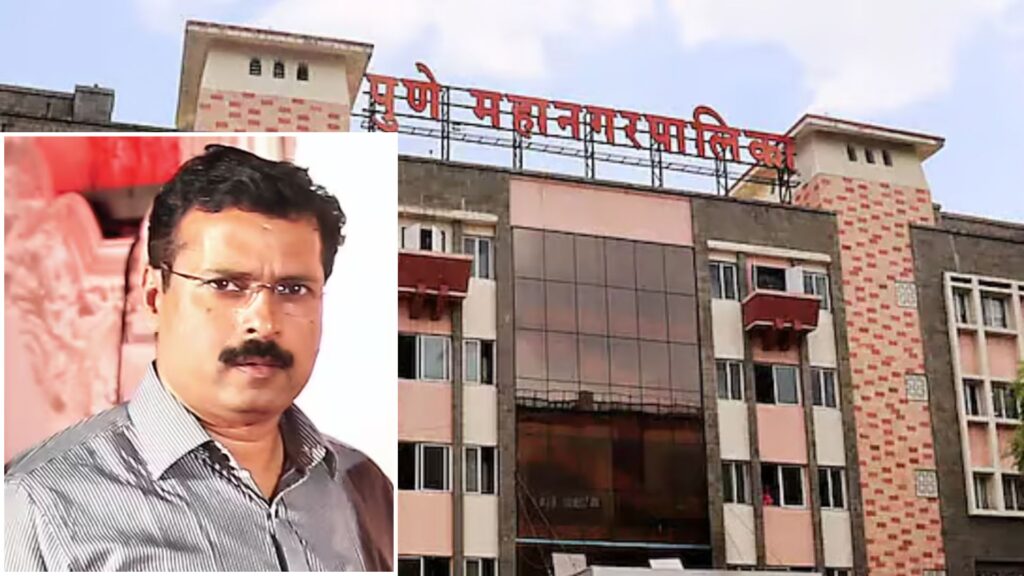
Pune: Bombay High Court Clears Way For Probe Into ₹2,000 Crore Disproportionate Assets Case Of Ex City Engineer
Pune, April 6, 2026: The Bombay High Court has overturned earlier decisions by the then Pune Municipal Commissioner that had blocked an inquiry into a senior civic official accused of amassing assets worth nearly ₹2,000 crore beyond known sources of income.
A division bench comprising Justices A.S. Gadkari and R.B. Bhonsale set aside orders issued in April 2019 by former Pune Municipal Corporation (PMC) Commissioner Saurabh Rao. These orders had denied permission to the Anti-Corruption Bureau (ACB) to initiate an open investigation against former city engineer Prashant Waghmare, who recently retired after a long tenure.
The court observed that the municipal commissioner had exceeded his authority by evaluating the merits of the allegations instead of simply determining whether there was enough initial evidence to allow further investigation. According to the bench, the role of the approving authority is limited to assessing if a prima facie case exists—not to conduct a detailed examination or reach conclusions about the accusations.

The case stems from a 2016 complaint alleging that Waghmare accumulated vast wealth disproportionate to his income during his time at the PMC. It also claimed that assets were held through family members and various associated companies.
During a preliminary confidential inquiry, the ACB reportedly found that the official did not fully cooperate and failed to provide key details about finances, investments, foreign travel, and other expenditures. Based on these findings, the ACB recommended a full-scale open inquiry.
However, the then commissioner rejected the request, citing explanations and documents submitted by the accused, and concluded that no case was established. This led to the closure of the initial inquiry.
The High Court ruled that such intervention was legally unsustainable. It emphasized that under the Prevention of Corruption Act, prior approval is required for probing decisions made in official duties, but this protection does not extend to cases involving disproportionate assets.
The bench further stressed that integrity in public service must remain unquestionable and that credible allegations must be investigated thoroughly. It warned that misuse of authority to block such inquiries undermines both legal processes and public trust.
Highlighting the broader impact, the court noted that corruption among public officials can damage the nation’s economy, governance, and global reputation. It reaffirmed that identifying and prosecuting corrupt individuals—regardless of their position—is essential in the public interest.
With this ruling, the High Court has effectively allowed the Anti-Corruption Bureau to proceed with a detailed investigation into the allegations against Waghmare. The case had been brought before the court by a Pune-based activist seeking an impartial probe.