Pune Citizens Raise Objections To Proposed Felling Of 1,488 Trees At BSI Mundhwa
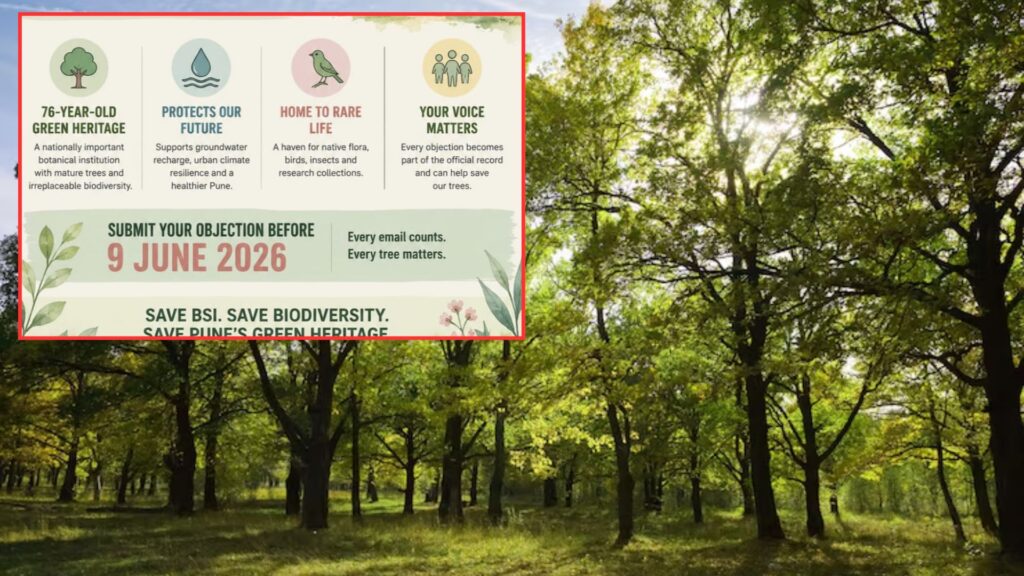
Pune Citizens Raise Objections To Proposed Felling Of 1,488 Trees At BSI Mundhwa
Pune, June 5, 2026: Environmental activists and concerned citizens have launched a campaign opposing the proposed felling of 1,488 trees within the campus of the Botanical Survey of India (BSI) in Pune for the construction of a new road under the RiverFront Development (RFD) project.
The last date to file the objection is June 9, 2026.
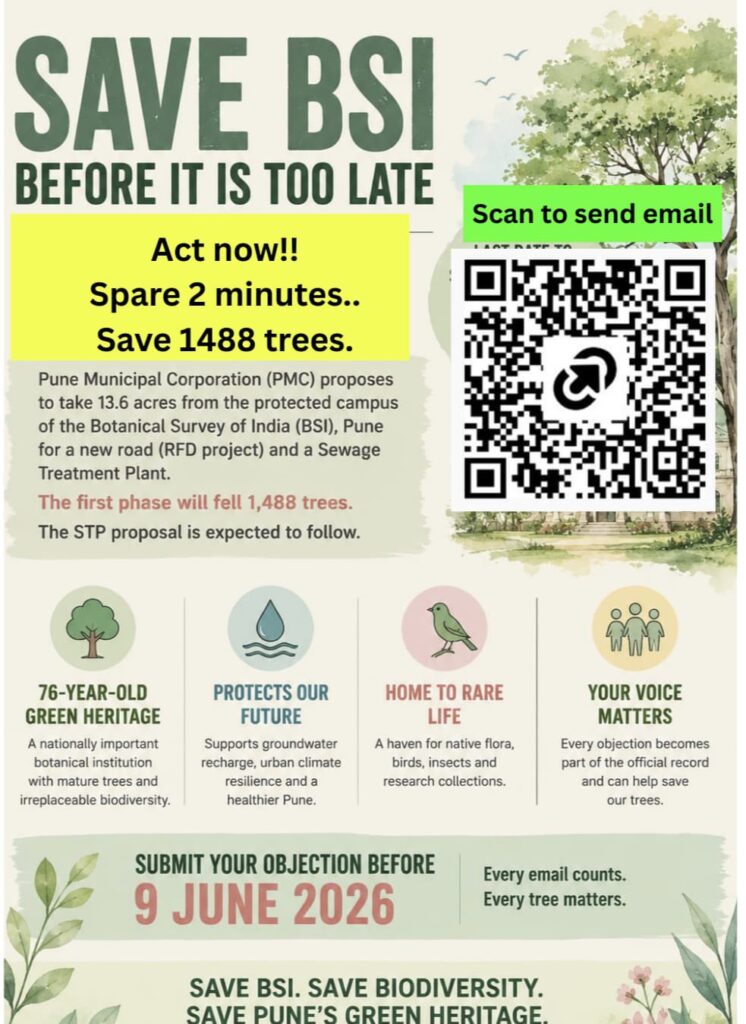
Citizens can record their objections on

Calling the move a “mindless massacre” of Pune’s green heritage, campaigners have urged residents to file objections against the proposal. They argue that the BSI campus is a protected botanical garden and serves as a living laboratory for scientific research, biodiversity conservation, and preservation of the city’s rapidly diminishing green cover.
Activists have outlined several objections to the proposed tree cutting. They contend that Pune currently lacks a legally constituted Tree Authority, which under the law must consist of a minimum of five members. They have also pointed to directives issued by the Supreme Court’s Central Empowered Committee (CEC), which reportedly placed restrictions on riverside tree felling without prior approval and expert assessment.
Another major concern raised is the alleged lack of transparency in the public notice issued by the Pune Municipal Corporation (PMC). According to campaigners, the notice does not provide detailed information about the trees proposed for removal, including their age, species, size, GPS coordinates, photographs, carbon sequestration value, and the ecological services they provide.
Environmentalists have further questioned the flood-risk assessment associated with the project. They argue that flood lines along Pune’s rivers have not been revised since 2011, despite the severe floods of 2019 that led to the evacuation of approximately 88,000 people and resulted in 27 deaths. They warn that extensive development along riverbanks could increase the risk of similar disasters in the future.
The campaign also criticizes the Tree Officer for allegedly failing to exercise statutory powers to postpone or reject plans that do not adequately protect existing trees. Activists claim that no alternative project design has been presented by the PMC Projects Department to minimize tree loss.
Concerns have also been raised regarding the ecological significance of the riparian zone. Campaigners state that the riverbank ecosystem supports rich biodiversity, including more than 125 documented bird species, 85 spider species, numerous insects, and native vegetation. They argue that under wildlife protection laws, development should not proceed until it is established that no rare, endangered, or ecologically critical species will be affected.
Another issue highlighted is the absence of a comprehensive tree census. Activists claim that the city has not conducted the mandatory tree census since 2013, despite legal requirements for updates every five years and directions from the High Court. They argue that a proper census would provide each tree with a unique identity and geotagged location, ensuring greater accountability.
Campaigners further point out that Pune’s green cover has reportedly declined to just 5–6 percent of the city’s surface area, significantly below the 33 percent green cover considered necessary for climate resilience. They warn that continued loss of mature trees due to infrastructure projects, including roads, metro works, and riverfront development, could worsen urban heat and environmental degradation.
The campaign has appealed to residents to support the objection process and protect the BSI campus, emphasizing that urban development should not come at the cost of irreplaceable ecological assets.