Pune Police ‘SAIYAM’ Report: 60% Youth Spend 3–6 Hours Daily On Screens, Flags Rising Addiction Risks

Pune Police ‘SAIYAM’ Report: 60% Youth Spend 3–6 Hours Daily On Screens, Flags Rising Addiction Risks
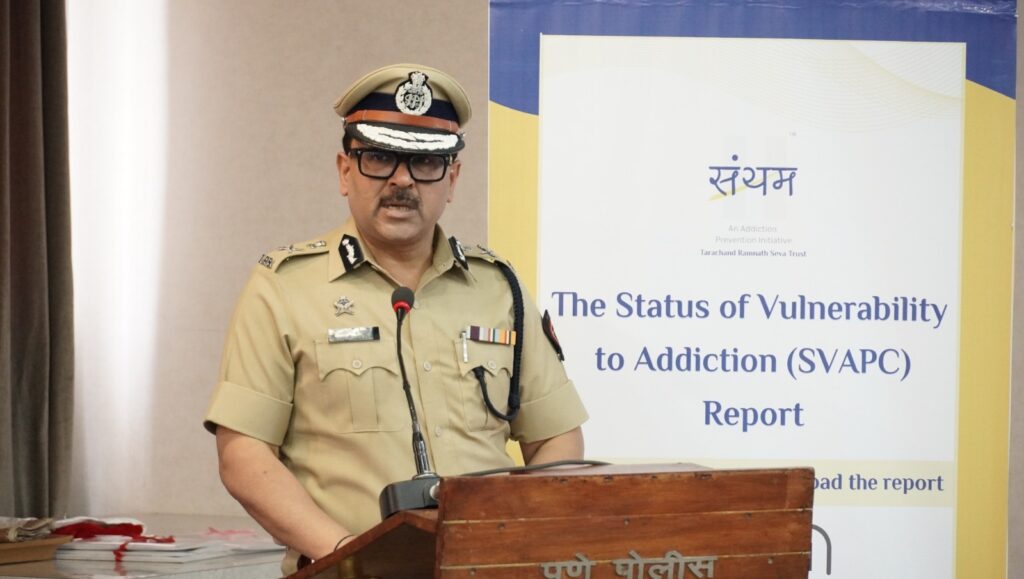
Pune, April 24, 2026: The Pune City Police has released its first city-wide report titled “SAIYAM: The Status of Vulnerability to Addiction”, shedding light on the growing risk of addiction among young people in Pune. The report was formally launched at the Police Commissioner’s Office by Police Commissioner Amitesh Kumar.
The study, jointly prepared by Tarachand Ramnath Seva Trust and the Pradnya Manas Research Department of Gyan Prabodhini, examines the increasing inclination towards addiction among youth and the underlying causes.
The research was conducted during the 2024–25 academic year and included responses from 1,887 adolescents and young individuals aged 13 to 22, along with insights from 77 adults, including parents, teachers, counsellors, doctors, and social experts.

The report focuses on five major forms of addiction: alcohol, tobacco, drugs, energy drinks, and digital usage. It goes beyond visible behaviour to analyse emotional regulation patterns, social influences, and psychological tendencies that contribute to or prevent addiction.
Key Findings:
- One in six adolescents has tried alcohol at least once.
- Despite 92% awareness about harmful effects, nearly 40% of adolescents reported using tobacco.
- Around 20% of students stated that drugs are accessible in their locality.
- Nearly one-third of adolescents show signs of digital addiction.
- About 60% of youth aged 20–22 spend 3 to 6 hours daily on screens.
The report underscores the urgent need for coordinated action by the government and society. It recommends strengthening law enforcement around schools and vulnerable zones, prioritising adolescent mental health and emotional resilience in education, recognising digital addiction as an emerging public health concern, and implementing preventive measures at an early stage. It also calls for developing scalable prevention models across Maharashtra.
Speaking at the event, Commissioner Amitesh Kumar emphasised that protecting youth from addiction requires collective efforts from schools, families, communities, and institutions. He highlighted the importance of identifying vulnerabilities early, increasing awareness, and adopting a sensitive and responsible approach.
As part of the initiative, informational booklets and awareness material based on the report will be presented across colleges. Workshops for school principals and targeted awareness sessions for students are also planned. The Pune Police, in collaboration with Tarachand Ramnath Seva Trust, will undertake sustained and coordinated efforts to address addiction-related challenges in the city.
Trustee Nandkishor Rathi described the report as a crucial step in understanding addiction risks among youth and enabling timely preventive action. Dr. Anagha Lavlekar noted that the study will help build a stronger foundation for prevention, awareness, and meaningful intervention strategies.