Pune: Survey Finds 57% Women Feel Unsafe On Buses; Parisar Submits Gender Action Plan To PMPML
Pune: Survey Finds 57% Women Feel Unsafe On Buses; Parisar Submits Gender Action Plan To PMPML
Pune, March 16, 2026: Urban mobility organisation Parisar has proposed a Gender Action Plan for Pune’s public bus system, urging authorities to introduce measures that improve safety and accessibility for women commuters using buses operated by Pune Mahanagar Parivahan Mahamandal Limited (PMPML).
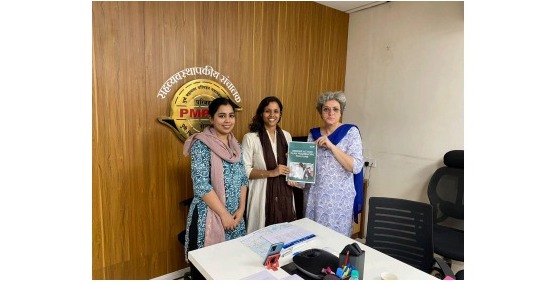
Representatives from Parisar Tanzeel Allapur and Shweta Vernekar met Alice Pore, Joint Managing Director of PMPML, and submitted a report titled “Gender Action Plan Framework for Pune.” The document outlines evidence-based recommendations aimed at creating a safer and more inclusive public transport system for women.
Survey Highlights Women’s Mobility Challenges
The framework is based on a study involving 540 women commuters, focus group discussions with women working in the service sector, and infrastructure audits of seven bus stops in Hadapsar. The research assessed safety concerns across the entire travel chain from walking to bus stops and waiting for buses to the experience during the bus journey.

The survey found that public buses play a crucial role in enabling women to access education and employment, particularly for students and young professionals. More than 55 percent of respondents were under the age of 34, while 41 percent were students, indicating the importance of reliable public transport in supporting women’s opportunities.
Waiting Time and Access Routes Raise Safety Concerns
The study highlighted concerns about waiting times and unsafe access routes. About 44 percent of women reported waiting more than 10 minutes for buses, while 22 percent waited over 30 minutes. Additionally, 54 percent of respondents said they reach bus stops on foot, often through poorly lit or deserted streets, increasing vulnerability.
Safety during travel also remains a concern. According to the survey, 57 percent of women reported feeling anxious while travelling by bus, and 11 percent said they had experienced or witnessed harassment in the previous three months. Incidents included staring, verbal abuse and unwanted physical contact. However, many cases go unreported due to lack of awareness about complaint mechanisms and low confidence in institutional response.
Infrastructure Gaps at Bus Stops
Infrastructure audits revealed that although most of the bus stops surveyed had shelters, none had emergency alert systems, CCTV signage, or visible helpline information. Several locations also lacked adequate lighting, drainage and visibility from surrounding areas, which affects perceived safety.
Interestingly, the survey also found that nearly 47 percent of women did not favour women-only buses, instead preferring improved safety measures across the entire public transport system.
Impact on Education and Employment
The report noted that mobility barriers have wider social consequences. Around 12 percent of respondents said they chose schools or workplaces closer to home due to transport difficulties, while 8 percent reported that women they know had dropped out of education or employment because of mobility challenges.
Key Recommendations
Parisar has recommended several measures to improve safety and accessibility in Pune’s bus network, including:
- Installation of CCTV cameras and emergency panic buttons in buses
- Anti-harassment announcements and gender-sensitisation training for drivers and conductors
- Better lighting and safer walking routes to bus stops
- Anonymous complaint systems for passengers
- Clear route information and wayfinding systems at bus stops
- Regular publication of gender-disaggregated ridership data
- Expansion of gender safety audits across different parts of the city.
The organisation said the framework could eventually be scaled into a citywide Gender Action Plan for Pune, similar to initiatives implemented by international transit agencies and projects such as the Los Angeles County Metropolitan Transportation Authority and the Gujarat Metro Rail Corporation.
Parisar officials believe that incorporating gender considerations into transport planning will help create safer, more inclusive and equitable public mobility systems for women in Pune.