Supreme Court bans heavy vehicle parking on highways, issues pan-India safety rules
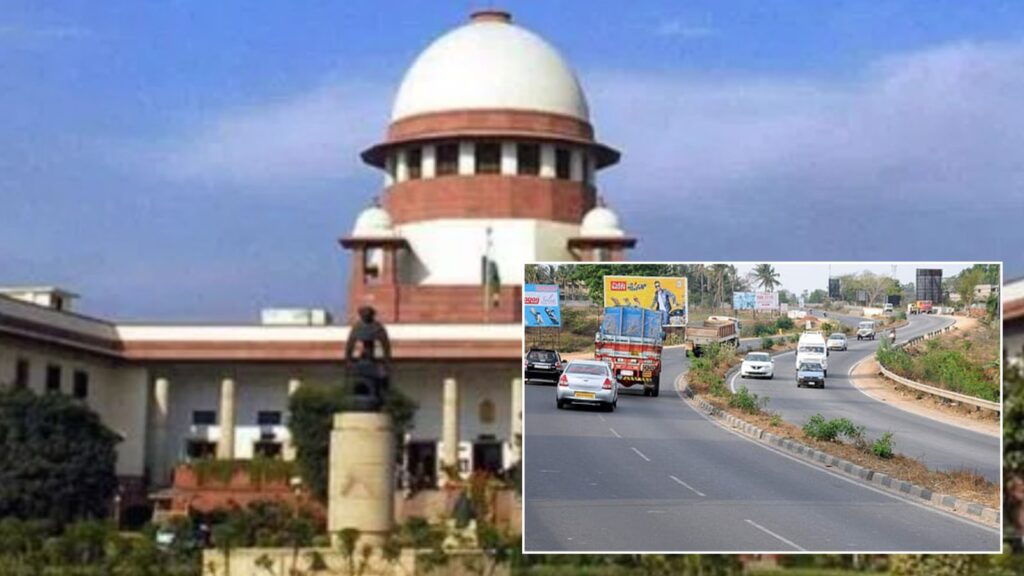
Supreme Court bans heavy vehicle parking on highways, issues pan-India safety rules
The top court said road safety is part of the right to life under Article 21 and ordered urgent steps to reduce accidents on highways and expressways.
In a major move on road safety, the Supreme Court has issued a series of pan-India interim directions aimed at reducing accidents on national highways and expressways. The court observed that highways should not become “corridors of peril” due to weak enforcement, illegal encroachments and planning failures.
A Bench of Justices J.K. Maheshwari and A.S. Chandurkar noted that national highways make up only around 2 per cent of India’s road network, but account for nearly 30 per cent of all road fatalities.
Highlights
- Supreme Court links road safety to Article 21 right to life
- No heavy vehicle parking on highway carriageways or shoulders
- New dhabas, eateries and commercial structures barred in highway right of way
- States, NHAI and Centre asked to take urgent safety steps
- Black spots to be identified and corrected quickly
Ban On Parking, Strict Vehicle Controls
The court ordered that no heavy or commercial vehicle can park or stop on national highways or paved shoulders, except at designated parking bays or authorised facilities.

This direction aims to prevent crashes caused by stationary trucks and unsafe roadside stoppages, which are often linked to major highway accidents.
New Dhabas And Commercial Structures Restricted
The Supreme Court also directed that no new dhaba, hotel, eatery or commercial establishment should be constructed or operated within the Right of Way of national highways with immediate effect.
The court said unplanned roadside commercial activity creates traffic hazards, dangerous entries and exits, and congestion on high-speed roads.
Surveillance And Enforcement Measures
The bench asked authorities to strengthen monitoring through Advanced Traffic Management Systems. This includes:
- Real-time alerts to police
- GPS-based timestamped photographic evidence
- Integrated e-challan systems
- Regular patrol teams on highways
The court also called for ambulances and cranes at regular intervals for faster emergency response.
Focus On Accident Black Spots
Authorities have been directed to identify accident-prone locations and publish lists within a fixed timeline. High-mast lighting, speed control cameras and corrective engineering measures have also been recommended.
Why This Matters
India records a high number of road deaths every year, with highways accounting for a disproportionate share despite covering a small part of the total road network. The court’s intervention seeks to improve accountability, infrastructure planning and enforcement across states.
The directions are expected to impact highway operations nationwide and may lead to stricter roadside regulation in the coming months.