Think Twice Before Planting This Attractive Plant, It May Invite Snakes
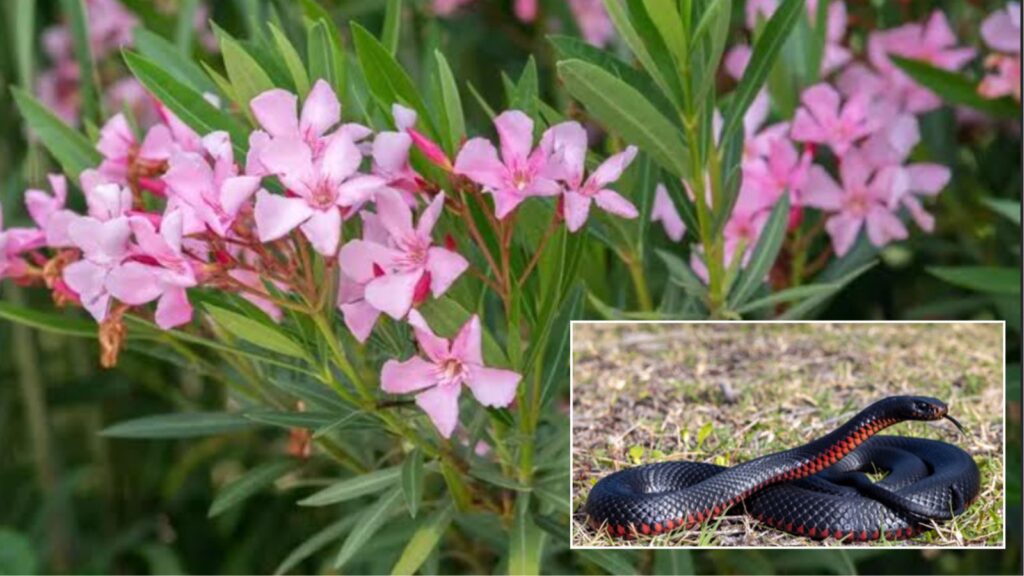
Think Twice Before Planting This Attractive Plant, It May Invite Snakes
Spending quiet time in a garden is one of life’s simple pleasures. Watering plants at sunset, admiring fresh blooms, or relaxing under greenery often brings a deep sense of calm. Yet the way a garden is designed can subtly influence which animals feel comfortable there. Conversations about outdoor safety have grown in recent times, and one widely planted ornamental shrub is frequently mentioned in these discussions — not because it feeds snakes, but because it may unintentionally provide them with ideal shelter.
Oleander: With its lush evergreen foliage and vibrant summer flower clusters, oleander is one of the most popular ornamental shrubs in warm climates. It’s drought-tolerant, fast-growing, and often used as a privacy hedge or foundation planting. But what makes it attractive in landscaping — its dense growth and low, multi-stemmed form — can also make it appealing to wildlife seeking shelter. Thick shrubs that provide shaded, undisturbed ground cover can create cool microhabitats, especially in hot regions where animals seek protection from heat and predators.
That doesn’t mean oleander causes snake problems. However, the physical structure it creates may unintentionally provide the kind of refuge certain reptiles prefer. Scientific literature makes it clear that snakes select habitats based on shelter quality — not on specific plant species.

A study titled “Shelter Site Selection and Fidelity in Snakes,” published in Herpetological Conservation and Biology, observed that snakes repeatedly returned to locations offering rocks, dense plants, and ground-level cover. Open, exposed terrain was generally avoided, reinforcing the importance of structural protection.
Another study, “Influence of Vegetation Structure on Reptile Movement in Restored Grasslands,” published in Landscape Ecology, examined reptile movement across modified landscapes. Researchers concluded that vegetation height, thickness, and ground cover played a stronger role in snake presence than plant species identity. Areas with layered, cluttered vegetation recorded higher snake activity compared to open, cleared zones.
Similarly, the study “Landscape Configuration Predicts Snake Occurrence in Agricultural Ecosystems,” published in Conservation Science and Practice, found that woody cover, vegetation density, and habitat arrangement were reliable predictors of snake occurrence. Individual plant species, however, had little measurable impact.
Together, these findings clarify an important point: plants like oleander do not attract snakes because of their scent or chemistry. Instead, their dense growth patterns create microhabitats that align with snakes’ natural needs for shelter and thermoregulation.
Garden Design and Snake Movement
Garden structure plays a critical role in how snakes navigate spaces. Dense shrubs, stacked firewood, rock piles, and accumulated leaf litter create interconnected shaded pathways. Research on reptile movement patterns shows that snakes often travel along continuous cover rather than crossing exposed, open ground.
When oleander bushes are planted close together or near compound walls, they may form uninterrupted shaded corridors. Such configurations can make it easier for snakes to move through a garden discreetly.
Myths About “Snake-Repelling” or “Snake-Attracting” Plants
Many traditional beliefs suggest that certain plants either draw snakes in or drive them away due to smell or chemical properties. Scientific research does not support these claims.
According to findings published in Copeia, a peer-reviewed journal in herpetology, snakes primarily respond to environmental conditions such as temperature, shelter availability, and prey presence. Plant chemistry plays little to no role in influencing snake behaviour.
Practical Steps to Reduce Snake-Friendly Conditions
Wildlife management research suggests that modifying habitat structure can lower the likelihood of snakes lingering in residential gardens. Some recommended measures include:
Trimming shrubs to create visible space beneath them
Removing piles of dry leaves and garden debris
Avoiding tightly packed plant clusters near entrances
Keeping grass trimmed and reducing ground-level clutter
Studies on habitat modification indicate that well-maintained, open landscapes provide fewer resting opportunities for snakes, encouraging them to pass through rather than settle.
Disclaimer: This article is based on findings from published scientific studies in journals including Journal of Thermal Biology, Herpetological Conservation and Biology, Landscape Ecology, Conservation Science and Practice, and Copeia. It is intended for informational purposes and does not claim that oleander directly attracts snakes.