This Indian Highway Just Got a Wildlife-Friendly Makeover — And It’s Not in a Metro City
This Indian Highway Just Got a Wildlife-Friendly Makeover — And It’s Not in a Metro City
What if a highway could signal drivers to slow down without any horn, signboard, or traffic cop — simply through its own design? A fascinating experiment on an Indian national highway is doing exactly that, using colour, texture, and clever engineering to protect wildlife living nearby.
This innovation has been introduced on the busy Jabalpur–Bhopal National Highway — a crucial route that later runs through parts of Madhya Pradesh’s forest landscape. Nearly 12 kilometres of this stretch pass directly through two major wildlife zones: the Veerangana Durgavati Tiger Reserve and the Nauradehi Wildlife Sanctuary.
For years, animals such as deer, jackals, sambar, Nilgai, and even tigers crossed this road, often coming dangerously close to speeding vehicles. Even though 8-foot-high iron fencing was installed on both sides, a few spots still remained high-risk because the natural movement paths of these animals couldn’t be completely blocked.

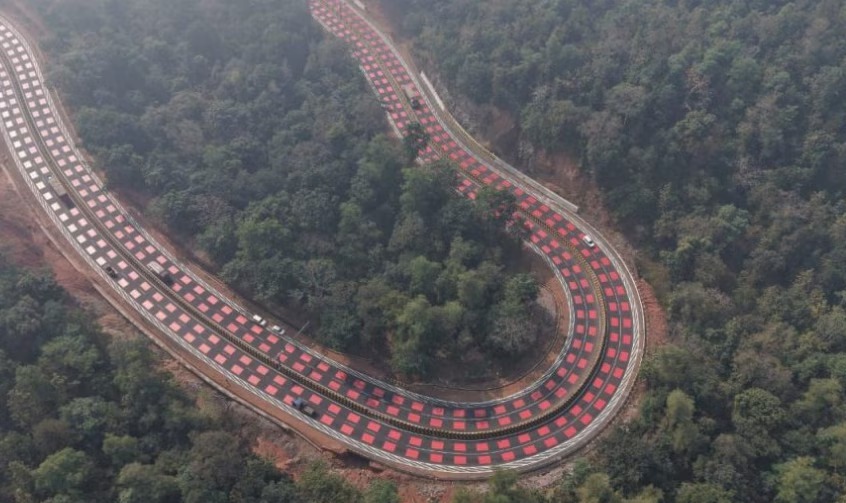
To address the issue, the National Highways Authority of India (NHAI) introduced a striking solution: bright red “tabletop” road markings along a two-kilometre portion of the wildlife zone. These raised patches sit about five millimetres above the regular surface. When a vehicle passes over them, the slight vibration instantly prompts drivers to slow down.
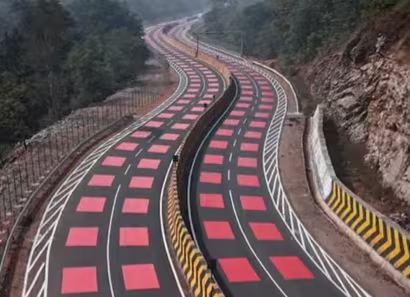
The intense red colour — rarely used on Indian highways — serves as a visual shock, alerting motorists that they’re entering an animal-crossing zone. According to NHAI official Amritlal Sahu, the unusual marking was chosen deliberately to break the monotony of typical white and yellow lines and compel drivers to pay attention.
But this isn’t the only safety measure in place. The route is also equipped with 25 dedicated wildlife underpasses, allowing animals to move beneath the highway freely and safely. These structures help preserve natural movement corridors and reduce surface-level crossings, lowering the risk of accidents.
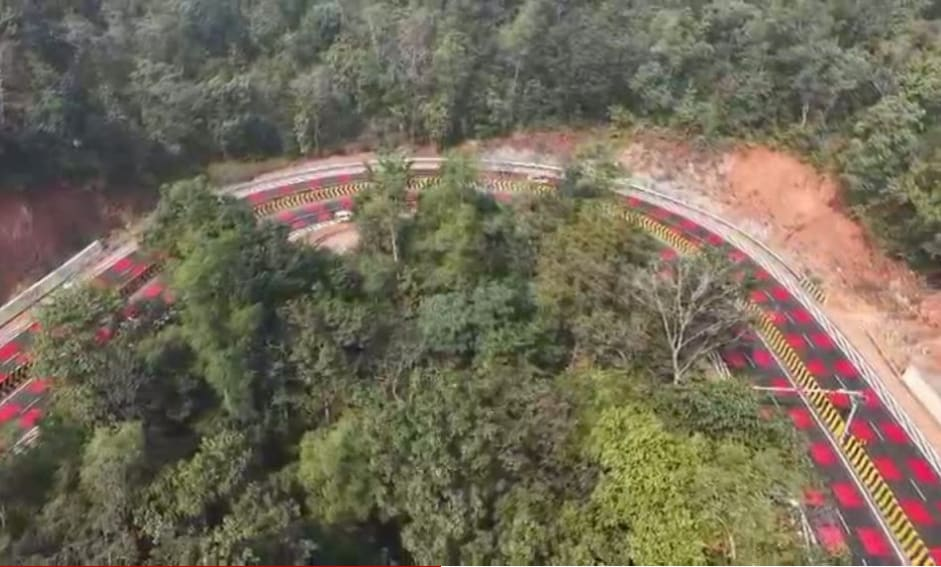
Still, the underpasses alone weren’t enough, and the red tabletop markings were added to boost driver awareness at the exact points where animal movement is most frequent. “These markings will ensure motorists slow down, keeping both themselves and the wildlife safe,” Sahu explained.