UPI, PAN, Tax and Credit Card Rules Changing From June 1; Here’s What It Means for You
UPI, PAN, Tax and Credit Card Rules Changing From June 1; Here's What It Means for You
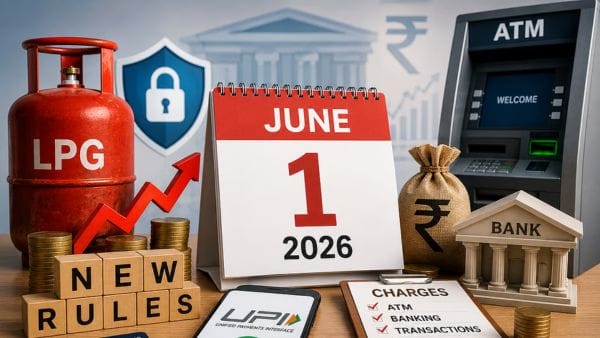
Several important financial and regulatory changes will come into effect from June 1, 2026, impacting taxpayers, bank customers, investors and digital payment users across the country.
As June begins, individuals and businesses will need to adapt to a series of new financial rules covering taxation, banking, digital payments, investments and renewable energy. The changes are aimed at improving transparency, strengthening compliance and enhancing consumer protection.

One of the most important dates for taxpayers is June 15, 2026, which marks the deadline for paying the first advance tax instalment for the financial year 2026-27. Individuals whose estimated tax liability exceeds ₹10,000 must pay 15% of their advance tax by this date. This will also be the first advance tax cycle operating fully under the Income Tax Act 2025 and Income Tax Rules 2026. Delayed payment could attract an interest penalty of 1% per month.
Salaried employees will also see relief under the old tax regime. The Children Education Allowance exemption has increased from ₹100 to ₹3,000 per month per child, while the hostel allowance exemption has been raised to ₹9,000 per month. In addition, cities including Pune, Bengaluru, Hyderabad and Ahmedabad have been added to the 50% House Rent Allowance (HRA) exemption category, offering higher tax benefits to eligible employees.

Digital payments are set to become safer with a major update from the National Payments Corporation of India (NPCI). Going forward, UPI users will see the recipient’s verified bank-registered name while scanning QR codes or entering mobile numbers. The move is expected to reduce fraud by eliminating misleading nicknames and unverified payment identities.
Another significant development is that the Employees’ Provident Fund Organisation (EPFO) is testing a system that could allow provident fund withdrawals through UPI, making the process quicker and more convenient for subscribers.
Bank customers should also prepare for higher service costs. Several banks are revising charges related to ATM services, including cash withdrawals, balance enquiries and mini statements. Customers are advised to check their respective bank notifications for updated fee structures.
Credit card users will face a number of changes as well. Some banks are revising reward programmes, redemption values and transaction charges. Certain categories such as rent payments, utility bills, education payments and fuel transactions may attract additional charges once specified spending limits are crossed.
For investors, SEBI’s fully implemented 50:50 margin rule will now require Futures and Options traders to maintain at least 50% of their margin requirement in cash or cash-equivalent instruments. Reliance solely on pledged shares for margin requirements will no longer be permitted.
The government has also revised several PAN-related rules. The threshold for mandatory PAN submission in property transactions has increased from ₹10 lakh to ₹20 lakh. However, PAN will remain compulsory for higher-value property transactions exceeding ₹45 lakh, gift deeds and joint development agreements. Annual cash withdrawals above ₹10 lakh will continue to attract PAN reporting requirements.
Meanwhile, those planning to install solar systems should note that from June 1, 2026, all government-supported, subsidised and net-metered solar projects must use modules listed under the Approved List of Models and Manufacturers (ALMM). The move is intended to support domestic manufacturing standards, though it could temporarily increase installation costs.
As is customary at the start of every month, prices of LPG, CNG and PNG may also be revised. At the same time, the government has kept interest rates unchanged for major small savings schemes, including Public Provident Fund (PPF) at 7.1% and Sukanya Samriddhi Yojana at 8.2%.
These changes collectively affect a wide range of financial activities, making it important for taxpayers, investors and consumers to stay informed and plan accordingly.
Disclaimer: Financial and tax rules may vary based on individual circumstances. Readers should consult qualified financial or tax professionals before making investment or compliance-related decisions.