What Does The ‘C’ In USB Type-C Mean? The Truth Behind Your Everyday Charger
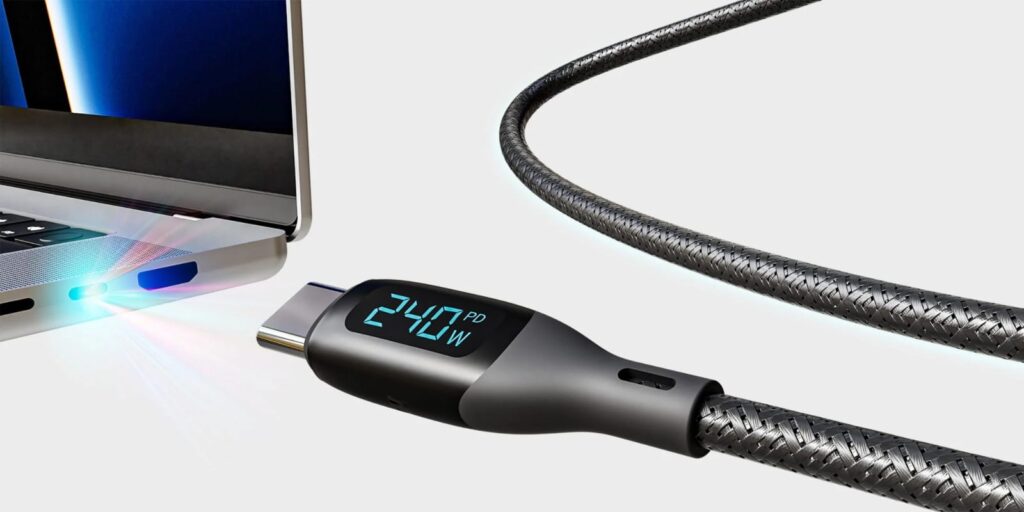
What Does The ‘C’ In USB Type-C Mean? The Truth Behind Your Everyday Charger
From reversible design to fast charging, here’s why USB Type-C became the universal standard
Every day, millions of people plug in a USB Type-C charger to power their phones, laptops, and other devices. Yet, very few actually know what the “C” in Type-C stands for — or why this technology has become the global charging standard.
Interestingly, the “C” in USB Type-C does not have a full form. It simply represents the third major design iteration in USB connector types, following Type-A and Type-B. The naming is based on its generation and design evolution rather than an abbreviation.
Why Type-C Was Introduced
Earlier USB connectors like Type-A and Type-B had a common frustration — they could only be inserted in one direction. Users often struggled to plug them in correctly, sometimes even damaging ports or cables.

Type-C solved this problem with a reversible design, allowing users to plug it in either way without worrying about orientation. This small change significantly improved everyday usability and reduced wear and tear.
More Than Just Convenience
USB Type-C is not just about ease of use. It brings major technological improvements over previous versions. It supports significantly higher power delivery, enabling faster charging — even for laptops and high-performance devices.
In addition, Type-C allows high-speed data transfer, often reaching speeds of 10Gbps or more, depending on the version. It can also transmit video and audio signals, making it possible to connect monitors, TVs, and other display devices using a single cable.
Another key advantage is its versatility. A single Type-C port can handle charging, data transfer, and display output simultaneously, reducing the need for multiple ports and cables.
Why It Became The Standard
The rise of USB Type-C is not accidental. Its compact design, universal compatibility, and ability to support multiple functions made it ideal for modern devices. Today, smartphones, tablets, laptops, and even accessories widely use Type-C ports.
Regulatory decisions have also played a role. Regions like the European Union have pushed for a common charging standard, further accelerating Type-C adoption across manufacturers.
Will Type-C Be Replaced?
For now, Type-C appears future-proof. While its physical design is likely to remain the same, its capabilities continue to improve with newer standards offering faster speeds and higher power output.
However, the future may gradually shift toward port-less devices, with wireless charging or magnetic connectors becoming more common. Until then, USB Type-C remains the most efficient and widely accepted charging solution.