Which Country’s Citizenship Does a Baby Born on a Flight Get? The Real Rules Explained
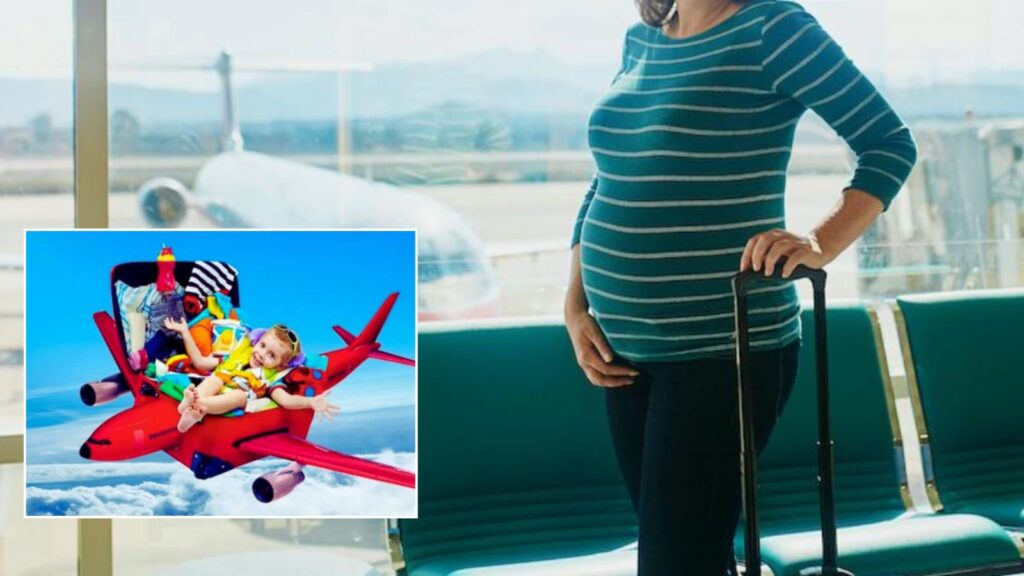
Which Country’s Citizenship Does a Baby Born on a Flight Get? The Real Rules Explained
There is no single global law; citizenship depends on airspace, aircraft registration, and parents’ nationality
When a baby is born on an airplane, the question of citizenship becomes legally complex. There is no universal rule followed by all countries. Instead, different nations apply different principles, which means the baby’s nationality depends on multiple factors such as the airspace where the birth took place, the country in which the aircraft is registered, and the citizenship of the parents.
Many people believe that a child automatically gets the citizenship of the country over which the plane is flying. This is not always true. In most cases, citizenship is decided by national laws rather than by aviation rules. Countries mainly follow two legal principles.
One is jus soli, which means “right of the land”. Under this rule, citizenship is granted based on the place of birth. Countries like the United States follow this principle. If a baby is born in US airspace, they can automatically become an American citizen, even if the parents are not US citizens.

The second principle is jus sanguinis, which means “right of blood”. In this system, a child’s citizenship is decided by the nationality of the parents, not by the place of birth. The United Kingdom and many European and Asian countries follow this rule. So even if a baby is born in UK airspace, the child does not automatically get British citizenship unless one of the parents is a UK citizen.
International aviation law also plays a role. A 1961 international agreement suggests that if a baby is born mid-air and no country claims jurisdiction through airspace, the nationality of the aircraft’s country of registration may be considered. In simple terms, the plane is treated like a floating extension of the country where it is registered.
For example:
- If a baby is born on an aircraft registered in France, some legal systems may consider France as the place of birth.
- However, most countries still prefer deciding citizenship through the parents’ nationality.
The United States has a unique classification for babies born in international airspace. Such children are sometimes referred to as “air babies”. Their legal status is examined carefully by the State Department based on airspace location and international law.
If the birth happens over international waters or areas not claimed by any country, the place of birth is often recorded as “international” or “at sea” on official documents. In such cases, parental citizenship usually becomes the deciding factor.
This is why babies born mid-flight do not automatically get “multiple citizenships” or special global status. Their nationality is determined after legal verification, documentation, and coordination between aviation authorities and national governments.
Another common myth is that babies born on flights get free air travel for life. This is mostly untrue. Only a few airlines have ever offered promotional benefits in rare cases. Some airlines have given lifetime tickets or long-term travel privileges, while others have offered symbolic gifts. These are marketing gestures, not legal rights. Airlines such as Thai Airways, AirAsia, Polar Airlines, and EgyptAir have reportedly done this in exceptional cases. Virgin Atlantic has offered free flights only up to a certain age in some situations.
Such births are extremely rare, and when they happen, airlines often assist families with documentation and coordination with immigration authorities.
In reality, a baby born on a plane does not get “automatic citizenship” of any country by default. The final decision depends on:
- The country whose airspace the plane was flying in
- The nationality laws of that country
- The country of aircraft registration
- The citizenship of both parents
- International conventions and bilateral agreements
Because of this complexity, legal procedures may take time, and families are usually advised to consult immigration authorities immediately after such a birth.
A birth in the sky may sound fascinating, but legally, it creates one of the most complicated citizenship situations in the world.
Disclaimer: Citizenship laws vary by country and are subject to legal interpretation and change. This article is for general information only. Parents should consult official immigration authorities or legal experts for accurate guidance in specific cases.