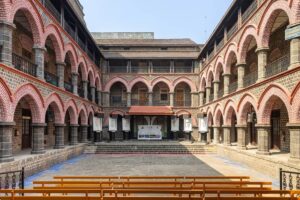
Why Pune’s Historic Wadas Were Built Around Courtyards And Why Modern Homes Are Rediscovering The Idea
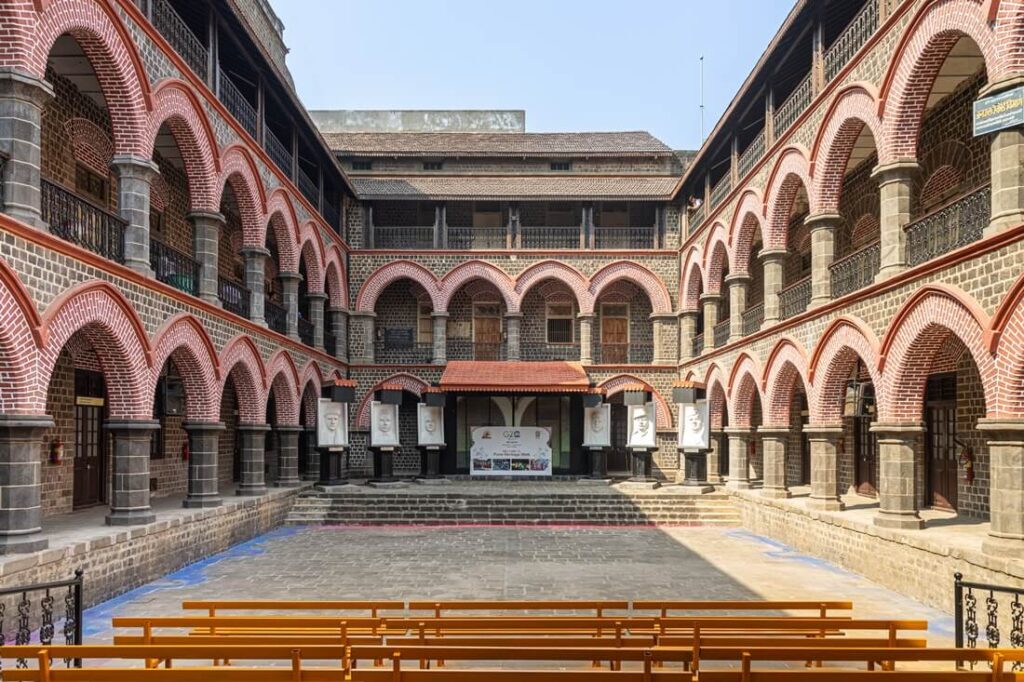
Why Pune’s Historic Wadas Were Built Around Courtyards And Why Modern Homes Are Rediscovering The Idea
Long before air conditioners, artificial lighting and modern ventilation systems, Pune’s iconic wadas used courtyard-based architecture to keep homes cool, bright and socially connected. Experts say the centuries-old design still offers lessons for modern urban living.
By Vidhi Lalla
Walk through the narrow lanes of Sadashiv Peth, Narayan Peth or Kasba Peth, and the remnants of Pune’s historic wadas still tell stories of a different era. Hidden behind wooden gateways and carved balconies, these traditional homes were carefully designed around a central open courtyard, a feature that was far more than an architectural choice.

Built largely during the Maratha and Peshwa periods, wadas became the defining residential style of Pune. While they reflected status and craftsmanship, their design was also rooted in practicality, climate responsiveness and community living.

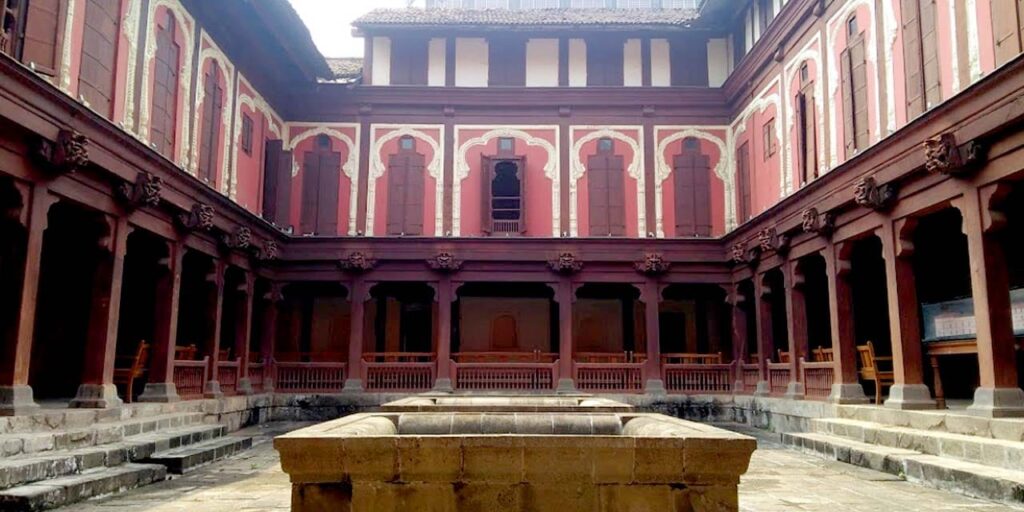
At the heart of every wada was the ‘chowk’ or courtyard, which functioned as the home’s natural source of light, ventilation and social interaction. Long before electricity became common, the open-to-sky space allowed sunlight to reach the interiors while ensuring a constant flow of fresh air.
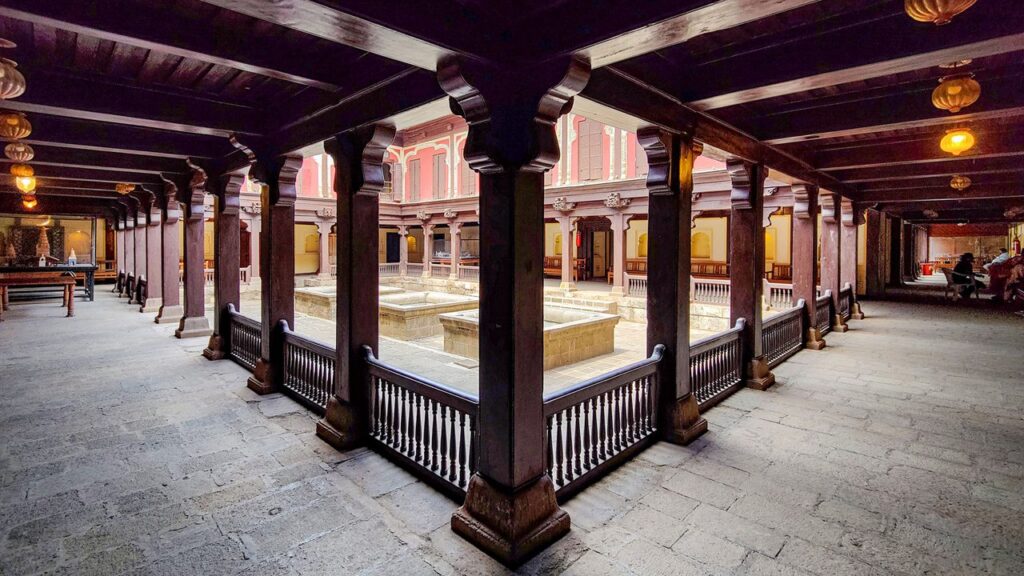
Architectural historians note that the courtyard acted as a natural thermal regulator. Thick stone walls, lime plaster and strategically placed openings helped keep interiors cool during summer and comfortable during the monsoon. The design reduced dependence on artificial cooling, making it remarkably sustainable even by modern standards.
The courtyard also played an important social role. Most families lived in large joint households, and the open central space became the hub of daily life. Women prepared food, dried papads and pickles, children played, elders gathered for conversations, and family ceremonies were often held within the same space.
From weddings and religious rituals to everyday storytelling sessions under the stars, the courtyard served as the emotional centre of the household.
Religious traditions further strengthened its significance. Many homes featured a Tulsi plant in the centre of the courtyard, where daily prayers and rituals were performed. The open design also allowed residents to remain connected with nature, offering views of the sky, rain, birds and seasonal changes without stepping outside the home.
In an era when privacy for women was highly valued, courtyards provided a secure internal space where household activities could be carried out away from public view.
Pune’s wadas combined these practical and cultural elements with sophisticated architectural planning. Following principles of Vastushastra, rooms were arranged around the courtyard in layers, with public areas near the entrance and more private family spaces deeper inside. Ornate teak pillars, carved brackets, wooden balconies and hidden staircases added both functionality and elegance.
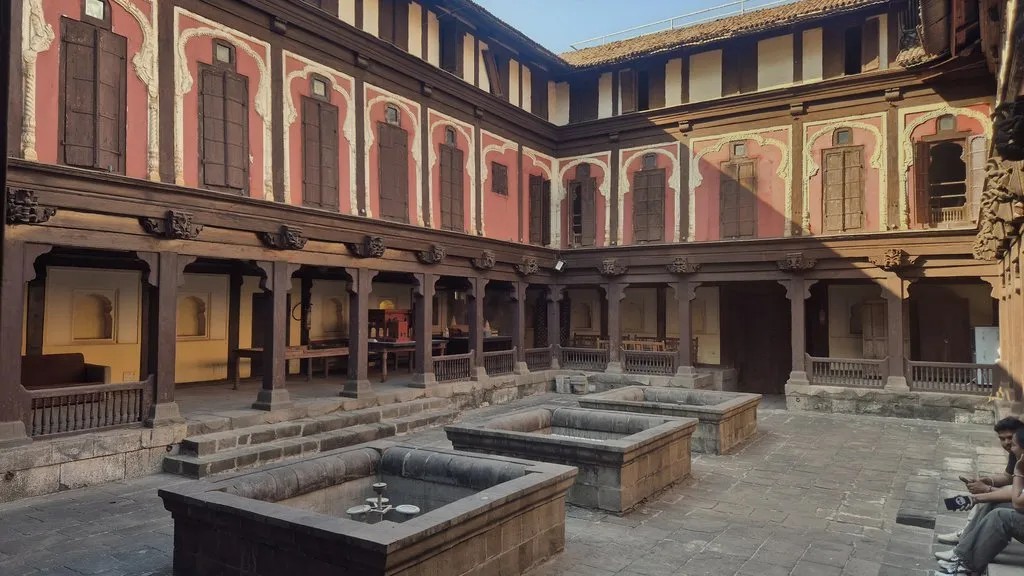
Unlike the highly decorative havelis of Rajasthan, Pune’s wadas were generally more restrained in appearance, focusing on proportion, ventilation and efficient use of space. Their architecture reflected the city’s cultural identity and the practical needs of life in the Deccan region.
Some of Pune’s best-known examples continue to attract visitors today. Shaniwar Wada, built by Peshwa Bajirao I, remains one of Maharashtra’s most recognised historical landmarks. Vishrambaug Wada, once the residence of Bajirao II, showcases the elegance of Peshwa-era architecture. Nana Wada and Kesari Wada, associated with statesman Nana Phadnavis and freedom fighter Lokmanya Tilak respectively, offer further glimpses into the city’s rich heritage.
As modern cities grapple with rising temperatures, sustainability concerns and shrinking community spaces, architects increasingly point to traditional courtyard designs as examples of climate-smart construction. What once appeared to be a simple architectural feature was, in reality, a carefully engineered solution that balanced comfort, culture, privacy and environmental efficiency.
Today, while many urban homes no longer have courtyards, the principles behind Pune’s historic wadas continue to inspire contemporary architecture, proving that some of the best design ideas were discovered centuries ago.
FAQs
What is a wada?
A wada is a traditional Maharashtrian mansion or residential complex, typically built around a central courtyard and commonly found in old Pune.
Why were courtyards built in old houses?
Courtyards provided natural light, ventilation, cooling, privacy and a common gathering space for family activities.
How did courtyards help keep homes cool?
The open central space improved airflow and reduced indoor temperatures, while thick walls and lime-plastered surfaces helped regulate heat.
Why were courtyards important for joint families?
They acted as shared spaces where family members could gather, celebrate festivals, perform household work and socialise.
What role did courtyards play in religious practices?
Many households placed a Tulsi plant in the courtyard and used the space for daily prayers and traditional rituals.
Which are the most famous wadas in Pune?
Shaniwar Wada, Vishrambaug Wada, Nana Wada and Kesari Wada are among Pune’s most prominent historic wadas.
Are courtyards making a comeback in modern architecture?
Yes. Many architects are revisiting courtyard-based designs because of their natural cooling, energy efficiency and sustainability benefits.
How are Pune’s wadas different from Rajasthan’s havelis?
While havelis are often highly ornate and decorative, Pune’s wadas generally emphasise functionality, climate-responsive design and efficient use of space.