11-Year-Old Girl Stuns Doctors With 81 Teeth — A Rare Condition Seen in Only 3% of People

11-Year-Old Girl Stuns Doctors With 81 Teeth — A Rare Condition Seen in Only 3% of People
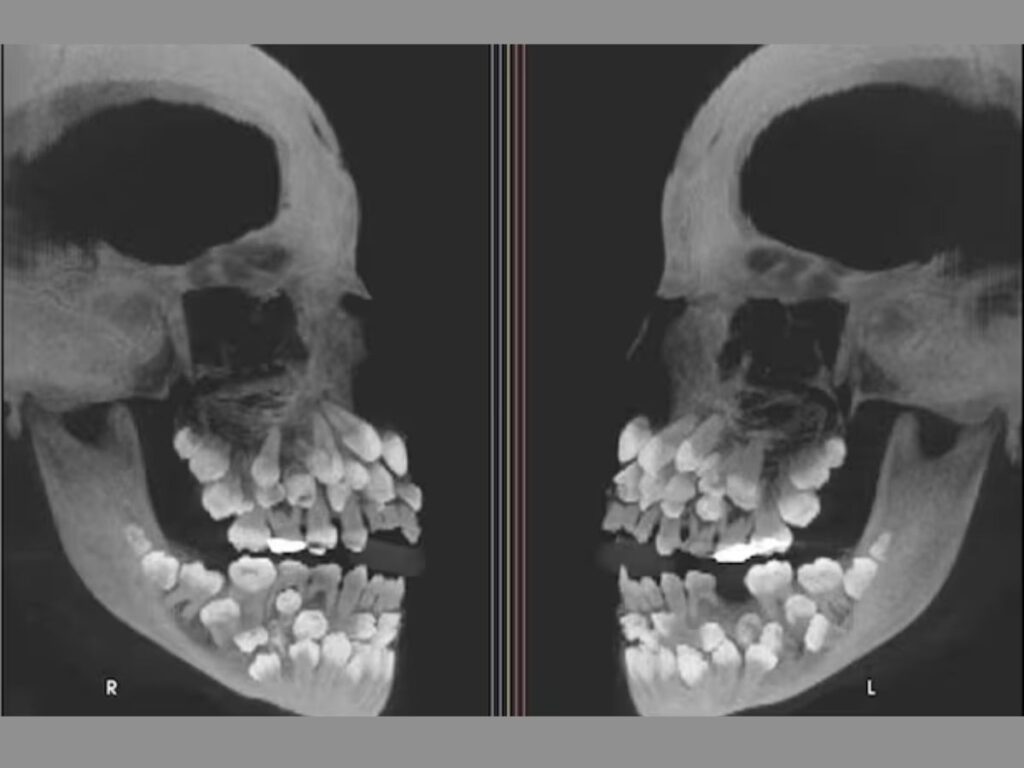
In a rare and surprising case, an 11-year-old girl from Brazil was found to have 81 teeth inside her mouth. The discovery happened when she went to the dentist to remove a single upper tooth. What seemed like a normal visit turned into a medical mystery after an X-ray revealed that her mouth had far more teeth than usual, a total of 18 baby teeth and 63 permanent and extra teeth combined.
What are supernumerary teeth?
Normally, children have 20 baby teeth, and adults have 32 permanent teeth. But in this girl’s case, she had more than double that number. These extra teeth are called supernumerary teeth, and the condition is known as hyperdontia. Most people with hyperdontia might have just one or two extra teeth, but having dozens of them, like in this case, is extremely rare.

Supernumerary teeth can look like regular ones or be oddly shaped. Some stay buried in the gums, while others grow out of place. These extra teeth can make it difficult to chew, cause pain, or cause overcrowding or make other teeth crooked if left untreated.
How the condition was discovered
When the girl’s dentist took an X-ray before removing her tooth, they noticed several small tooth-like structures forming inside her gums. At first, it seemed unbelievable because there were no visible signs, she didn’t appear to have too many teeth on the surface. But the imaging showed layers of hidden teeth waiting to emerge.
Doctors later confirmed that the girl did not have any other health conditions that are usually linked to hyperdontia, such as cleft palate or certain bone disorders. This made the case even more unique because she appeared otherwise healthy.
Possible reasons behind having extra teeth
The exact reason why someone develops hyperdontia is still not clear. However, researchers believe it can happen due to a mix of genetics and how the teeth form during childhood. Sometimes, the dental tissue that creates teeth, called the dental lamina, becomes overactive and forms too many tooth buds.
In rare cases, it can also happen because of small changes in chromosomes or inherited traits from ancestors. Long ago, humans may have had more teeth to help grind tough food, and experts believe some of these traits might reappear in modern times in rare situations.
What happens next?
Removing extra teeth is not as simple as it sounds. If done carelessly, it can damage the jawbone or surrounding teeth. Because of this, doctors often make a long-term treatment plan that involves specialists in orthodontics and oral surgery. The goal is to slowly manage the extra teeth without harming the jaw or causing pain.
For now, the girl’s case is being studied to understand more about how hyperdontia develops and how it can be safely treated in young children.
What to know about hyperdontia
Hyperdontia affects about 1% to 3% of people worldwide. It is more common in men than women and usually appears in the upper jaw. Most people who have it don’t even know unless they get an X-ray or notice a tooth growing in an odd spot.
Signs of hyperdontia
The main sign of hyperdontia is having extra teeth in the mouth, either in the front or back. Most of the time, it doesn’t cause any pain or major discomfort. However, if these extra teeth press against the gums or jaw, it can lead to problems such as pain, swelling, tenderness, overcrowding of teeth, or even infections.
Regular dental checkups are important because extra teeth can cause crowding, gum infections, and sometimes jaw discomfort. If detected early, they can be monitored or removed before causing problems.
Disclaimer: This article is for general information only and not a substitute for medical advice. Anyone noticing unusual tooth growth should visit a licensed dentist for a proper diagnosis and treatment.