Will OBAs help students build stronger skills? CBSE to Roll Out Open-Book Assessments for Class 9 from 2026-27
Will OBAs help students build stronger skills? CBSE to Roll Out Open-Book Assessments for Class 9 from 2026-27
Plan aims to reduce rote learning and exam stress, but concerns about weaker foundations remain
The Central Board of Secondary Education (CBSE) has approved the introduction of Open-Book Assessments (OBAs) for Class 9 students starting from the 2026-27 academic session. The decision, cleared by the Board’s Governing Body in June, comes after a pilot study conducted in late 2023 across select schools showed mixed academic performance but positive feedback on skill development.
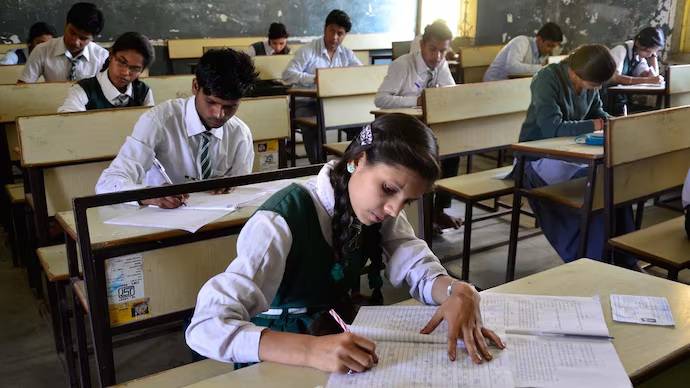
Under the scheme, OBAs will be integrated into the three pen-paper tests held each year for core subjects including Mathematics, Science, Social Science, and Languages. Students will be allowed to consult textbooks, class notes, and other approved reference materials during the exams.

A Shift in Exam Culture
CBSE has framed the initiative as part of the National Education Policy (NEP) 2020 and the National Curriculum Framework for School Education (NCFSE), both of which emphasize competency-based learning. Unlike conventional exams that rely heavily on memorisation, OBAs are designed to test application, interpretation, and problem-solving skills.
“Having material in front of you doesn’t make the exam easier. The challenge lies in knowing what to look for and how to apply it,” a senior CBSE official said, explaining that questions will focus on higher-order thinking rather than direct recall.
This is not the first time CBSE has experimented with reform. In 2014, it introduced the Open Text-Based Assessment (OTBA) for Classes 9 and 11. However, the initiative was scrapped in 2017 after feedback suggested it failed to significantly improve critical or analytical skills.
Teachers and Students Respond
The new OBA model, however, differs in structure and intent. CBSE has promised to release detailed frameworks, sample papers, and teacher-training modules to ensure smoother implementation. Several school principals have welcomed the move but advised a phased rollout.
“OBAs can reshape exam culture by reducing stress and promoting self-learning. But unless teachers are trained and sample papers standardised, the objectives won’t be met,” said the principal of a Delhi-based CBSE school.
Students, meanwhile, see the shift as a relief from rote-heavy exams. “At least now we’ll be tested on how we understand concepts, not just how much we can cram,” said a Class 9 student from Bengaluru. Parents, however, remain divided. While some view the reform as progressive, others worry it could weaken children’s foundational learning.
Concerns and Challenges
Educators caution that misconceptions about open-book exams could create hurdles. Many students assume that access to textbooks guarantees higher scores, but success in OBAs depends on comprehension and analytical thinking.
CBSE’s pilot study also noted performance challenges, though the board believes these can be addressed through structured support, high-quality questions, and teacher guidance. Importantly, the rollout will not be mandatory; schools may choose whether to adopt OBAs in line with their academic planning.
Looking Ahead
Though NEP 2020 does not specifically mandate open-book exams, it strongly advocates competency-based education. With OBAs, CBSE hopes to foster independent learning, reduce exam stress, and align assessments with real-world problem-solving.
Still, the question remains: Will OBAs help students build stronger skills, or will they dilute core knowledge? The coming years will reveal whether this reform strikes the right balance between less stress and strong foundations.