Pune’s Air Quality ‘Moderate’ on Diwali Day, Improves from Last Year but Experts Warn of Decline Ahead
Pune’s Air Quality ‘Moderate’ on Diwali Day, Improves from Last Year but Experts Warn of Decline Ahead
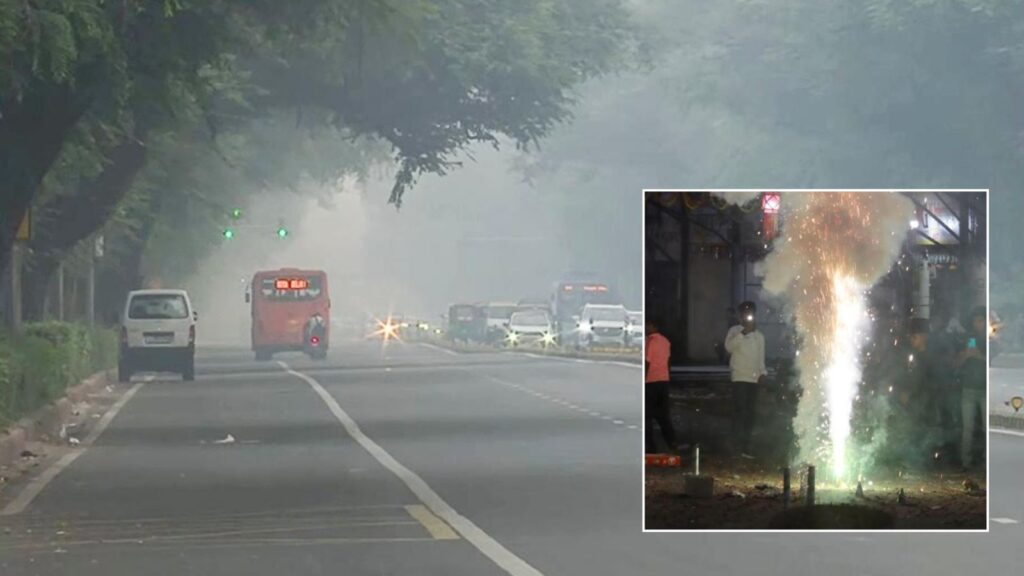
AQI at 132 by 7 pm on Lakshmi Puja day; scientists expect pollution to worsen by Wednesday morning as firecracker residue settles.
Pune recorded a comparatively better air quality level this Diwali. On the main festival day (October 21), the city’s Air Quality Index (AQI) stood at 132 at 7 pm, placing it in the ‘moderate’ category. This marks a notable improvement from last year, when Pune recorded an AQI of 201 — categorised as ‘poor’.
However, air quality varied across the city. Stations at Bhumkar Chowk (AQI 222) and Mhada Colony, Lohegaon (AQI 227) reported ‘poor’ air quality. In contrast, Pashan (AQI 108) and Nigdi (AQI 110) remained in the ‘moderate’ range, reflecting uneven pollutant distribution between Pune and Pimpri-Chinchwad.
Why the Improvement This Year?
- Data from the Air Quality Early Warning and Decision Support System (AEQMS) showed a gradual drop in pollution levels in the days leading up to Diwali — AQI 151 on October 19, 135 on October 20, and 132 on October 21.
- Clear skies, active winds and the absence of major weather disturbances helped disperse pollutants.
- Reduced vehicular movement due to festive holidays, stricter firecracker regulations and growing public awareness contributed to lower emissions.
But Pollution May Rise Soon
Atmospheric scientists caution that the improvement may be short-lived. Cooler temperatures, calm winds and lingering smoke from firecrackers are expected to push AQI levels into the ‘poor’ category by Wednesday morning.

Light drizzle in some parts of Pune on Diwali evening did little to reduce pollution. Meteorologists said the rain was too weak to wash out fine particles. Instead, rising humidity caused pollutants to stick together and remain suspended near ground level.
Health Impact: Rise in Hearing-Related Complaints
Doctors in the city have reported an increase in cases of tinnitus and temporary hearing loss, particularly among teenagers exposed to loud firecrackers such as ‘sutli bombs’.
Experts explained that sudden high-intensity sounds can cause acoustic trauma, damaging the delicate hair cells in the inner ear. These cells cannot regenerate, which may lead to permanent hearing loss in severe cases.