Mumbai To Pune In Just 48 Minutes? Proposed Bullet Train Corridor Could Transform Travel
Mumbai To Pune In Just 48 Minutes? Proposed Bullet Train Corridor Could Transform Travel
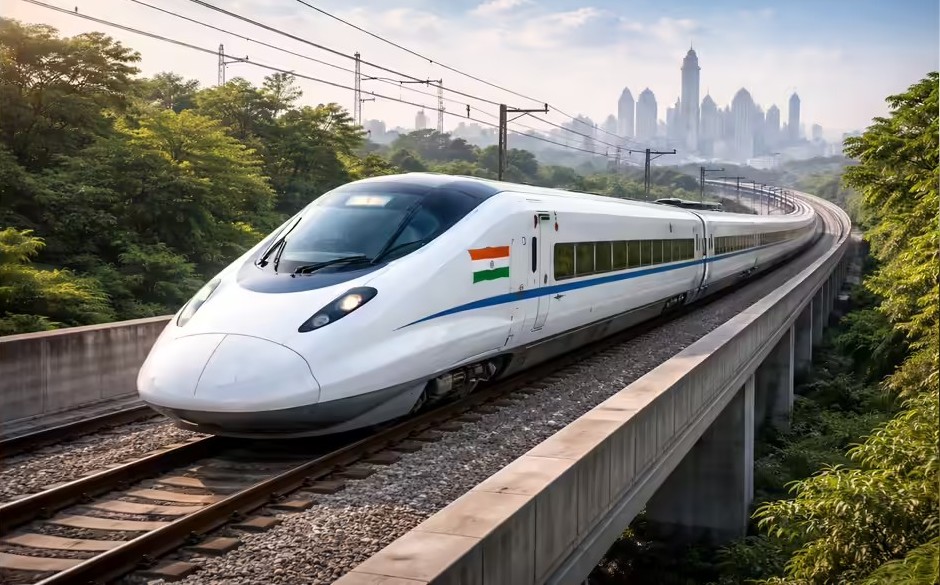
The proposed Mumbai-Pune high-speed rail corridor could cut travel time to less than an hour, potentially changing the way millions of commuters, students, tourists and business travellers move between the two cities.
By Vidhi Lalla
PUNE: A journey between Pune and Mumbai that currently takes three to four hours by road or conventional rail could one day be completed in just 48 minutes if the proposed high-speed rail corridor becomes a reality.

The ambitious project has emerged as one of the most talked-about transport proposals announced as part of India’s long-term railway expansion plans. The proposed corridor is expected to allow trains to operate at speeds of up to 350 kmph, dramatically reducing travel time between Maharashtra’s two most important urban centres.

The Mumbai-Pune route is among the busiest travel corridors in the country. Every day, thousands of office-goers, IT professionals, business executives, students, tourists and airport passengers travel between the two cities. The route also serves as a gateway to popular destinations across the Western Ghats.
The high-speed rail corridor could fundamentally change travel patterns in Maharashtra.
#WATCH | Pune, Maharashtra: Union Minister Ashwini Vaishnaw says, "Our bullet train project is progressing rapidly. The first section of the Mumbai-Ahmedabad bullet train will begin operation next year, and its inauguration will take place. Work is progressing rapidly. Now the… https://t.co/q5182km4CU pic.twitter.com/oTXkp94DhZ
— ANI (@ANI) June 17, 2026
A same-day return trip between Pune and Mumbai could become routine rather than exhausting. Business meetings, educational activities, medical appointments and leisure travel may become significantly more convenient.
The proposed project is part of a larger high-speed rail vision that includes seven bullet train corridors connecting major economic and population centres across India. Besides Mumbai-Pune, proposed routes include Pune-Hyderabad, Hyderabad-Bengaluru, Delhi-Varanasi and Varanasi-Siliguri.
For Pune, the project could strengthen its position as a major economic hub. Faster connectivity would improve access to Mumbai’s financial ecosystem while making Pune more attractive for investments, business expansion and tourism.
The corridor may also benefit travellers using Mumbai’s international airport. Currently, many Pune residents travel several hours to catch international flights. A travel time of under an hour could make airport access much easier and more predictable.
“I travel to Mumbai at least twice every month for work. If the journey can really be completed in 48 minutes, it would completely change the way professionals plan their schedules,” said Rohit Kulkarni, a frequent business traveller from Baner.
Tourism stakeholders are equally optimistic. The Mumbai-Pune corridor passes through one of India’s most scenic regions, connecting visitors to destinations such as Lonavala, Khandala and other Western Ghats attractions.
“Many tourists skip short trips because of travel time. A bullet train could make weekend travel between Mumbai and Pune much more attractive,” said Sneha Deshpande, a travel enthusiast from Kothrud.
The government’s broader railway modernisation programme also includes station redevelopment projects, dedicated freight corridors and the introduction of new-generation train services aimed at improving passenger experience and network efficiency.
Meanwhile, India’s first bullet train project between Mumbai and Ahmedabad continues to progress. The project has introduced several advanced technologies, including tunnel hood systems designed to manage air pressure changes when trains travel through tunnels at very high speeds. Such infrastructure is expected to play a key role in future high-speed rail corridors as well.
Experts point out that while the proposal has generated excitement, the project still faces several stages before construction can begin.
“For students, working professionals and families with relatives in both cities, a 48-minute journey sounds almost unbelievable. It would bring Mumbai and Pune much closer than ever before,” said Aditi Joshi, a regular Mumbai-Pune traveller from Viman Nagar.
Although construction timelines have not yet been announced, the proposal reflects the growing focus on high-speed transportation in India. If realised, the Mumbai-Pune bullet train corridor could become one of the country’s most transformative infrastructure projects, reshaping mobility, business and tourism across Maharashtra.
FAQs
How much time could the Mumbai-Pune bullet train take?
The proposed high-speed rail corridor is expected to reduce travel time between Mumbai and Pune to approximately 48 minutes.
What speed will the bullet train operate at?
The proposed corridor is being planned for train speeds of up to 350 kmph.
Why is the Mumbai-Pune corridor important?
It is one of India’s busiest intercity travel routes, serving commuters, students, business travellers, tourists and airport passengers.
Will Pune benefit economically from the project?
Experts believe faster connectivity could strengthen business activity, tourism, investments and employment opportunities between Mumbai and Pune.
Are there other proposed bullet train corridors in India?
Yes. Proposed routes include Pune-Hyderabad, Hyderabad-Bengaluru, Delhi-Varanasi, Varanasi-Siliguri and several other major city connections.
When will construction begin?
No official construction timeline has been announced yet.