This Is the Only River That Flows From East to West in India

This Is the Only River That Flows From East to West in India
While most Indian rivers rush toward the Bay of Bengal, one river takes a different path, the Narmada River. Flowing westward across central India, the Narmada is known as the only major river in India that drains into the Arabian Sea. This unique direction makes it one of the most special and sacred rivers in the country.
A River With a Story and a Soul
The name “Narmada” comes from Sanskrit and means “the giver of pleasure” or “one who arouses tender feelings in others.” The river’s name beautifully reflects its calm and nurturing nature. Throughout history, it has been mentioned by different names; the Greeks called it Namadus or Namades, and Persian literature also refers to it as Narmada. These ancient names show how deeply connected people have been to this river for centuries.

But beyond its geography, the Narmada carries a story that makes it more than just a river; it’s a symbol of love, heartbreak, and independence.
The River That Never Got Married
According to a popular legend, Narmada was once in love with Shonbhadra, a river personified as a handsome prince. Their union was eagerly awaited, but fate had a different plan. Shonbhadra fell in love with his servant, Juahila, breaking Narmada’s heart. Feeling betrayed, Narmada chose to go her own way, flowing westward, opposite to her lover’s path.
Because of this story, she is often called the “river that never got married”, a powerful symbol of strength, purity, and independence. People believe this is why Narmada took a path that no other river in India does, toward the Arabian Sea.
The Sacred Daughter of Lord Shiva
The Narmada River is not just a geographical wonder but also a deeply spiritual one. In Hindu mythology, it is said that the river was born from the sweat of Lord Shiva while he was meditating. The intense heat of his penance created a stream that became the Narmada. Because of this divine story, the river is worshipped as Goddess Narmada, also known as Reva, the daughter of Lord Shiva.
Another tale says that two teardrops from Lord Brahma fell to the earth, forming the Narmada and the Sone rivers. These legends make the Narmada one of the seven most sacred rivers in India, with thousands of devotees performing the Narmada Parikrama, a holy journey walking along its entire length.
The Journey of the Narmada
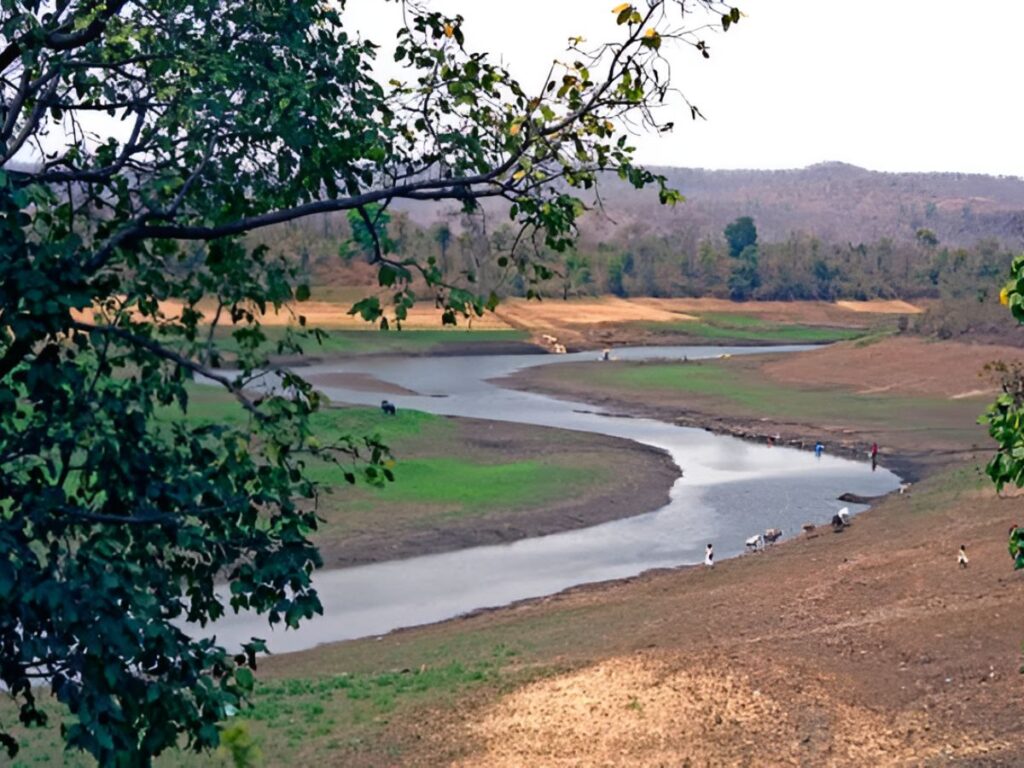
The Narmada River begins in the Amarkantak Hills in the Anuppur district of Madhya Pradesh, at about 1,080 meters above sea level. From there, it flows for around 1,312 kilometres, cutting through deep valleys, rocky hills, and lush forests. It moves west between the Vindhya and Satpura mountain ranges, forming a natural rift valley, another feature that makes it unique.
The river passes through Madhya Pradesh, Maharashtra, and Gujarat, nourishing countless villages and farmlands along its way. It finally meets the Arabian Sea near Bharuch, through the Gulf of Khambhat.
Power and Life Along the Narmada
The Narmada is also an important source of energy and irrigation. Some of the major hydroelectric projects built on it include the Sardar Sarovar Dam, the Indira Gandhi Sagar Dam, and the Maheshwar Dam. Its tributaries, like the Kolar, Tawa, Dudhi, Shakkar, and Hiran rivers, add to its might and importance.
For millions, the Narmada is more than a river; it’s a lifeline, a goddess, and a symbol of resilience. Flowing against the tide, quite literally, she continues to inspire stories, prayers, and generations who live by her banks.