PM Narendra Modi Mourns Ajit Pawar’s Demise, Recalls His Deep Connect With Grassroots and Public Service
PM Narendra Modi Mourns Ajit Pawar’s Demise, Recalls His Deep Connect With Grassroots and Public Service
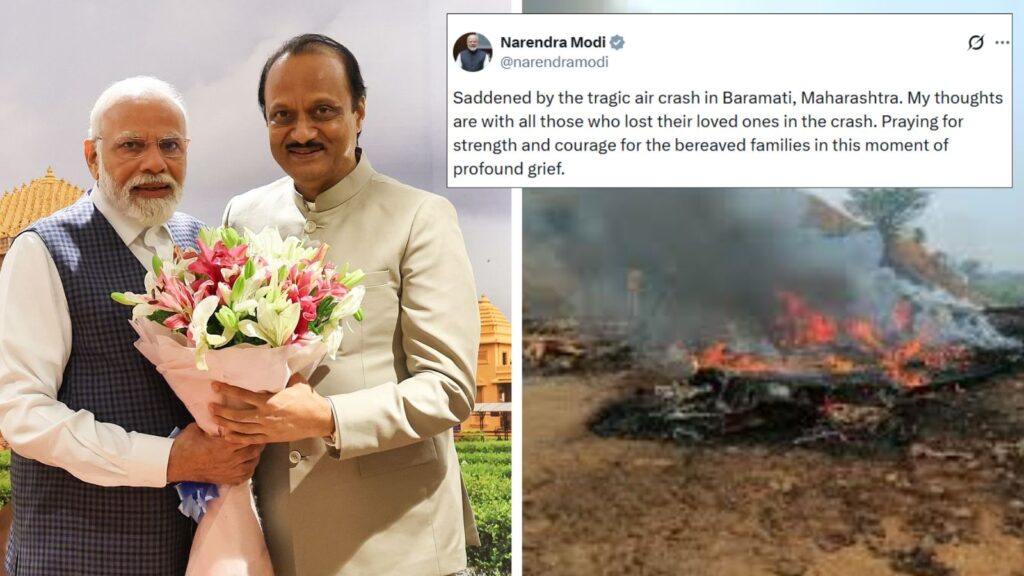
New Delhi | Baramati: Prime Minister Narendra Modi on Wednesday expressed profound sorrow over the death of Maharashtra Deputy Chief Minister Ajit Pawar, who was killed in a tragic aircraft crash while landing at Baramati airport. Remembering Pawar as a leader rooted in the masses, the Prime Minister said his passing was a major loss to public life in Maharashtra.
In a message shared on X, PM Modi highlighted Ajit Pawar’s long political journey and administrative experience, noting that he was widely regarded as a people-centric leader with a strong grassroots presence. The Prime Minister said Pawar was known for his tireless work ethic and commitment to serving citizens across the state.
PM Modi also underlined Pawar’s grasp of governance and his focus on inclusive development, especially efforts aimed at uplifting the poor and marginalised sections of society. Calling the loss sudden and deeply distressing, the Prime Minister extended his condolences to Pawar’s family, colleagues and supporters.

The Prime Minister’s tribute came soon after authorities confirmed that a Learjet 45 aircraft carrying Ajit Pawar and four others crashed during landing at Baramati, leaving no survivors. According to officials from the Directorate General of Civil Aviation (DGCA), the aircraft was carrying five people, including two crew members and two staff members accompanying Pawar.
DGCA officials said preliminary information suggested that all passengers on board lost their lives in the accident. A team from the aviation regulator has been dispatched to the crash site to examine the wreckage and conduct a detailed investigation into the cause of the incident.
Ajit Pawar, who was serving as Deputy Chief Minister at the time of his death, was one of the most influential figures in Maharashtra politics, known for his administrative roles, electoral strength and decades-long involvement in state governance.
Further updates are awaited as the investigation progresses.