Pune: Bhandarkar Oriental Research Institute Exhibition Draws Thousands, Showcases India’s Manuscript Legacy
Pune: Bhandarkar Oriental Research Institute Exhibition Draws Thousands, Showcases India’s Manuscript Legacy
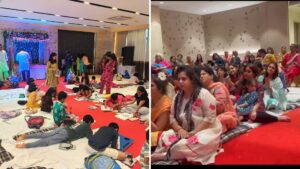
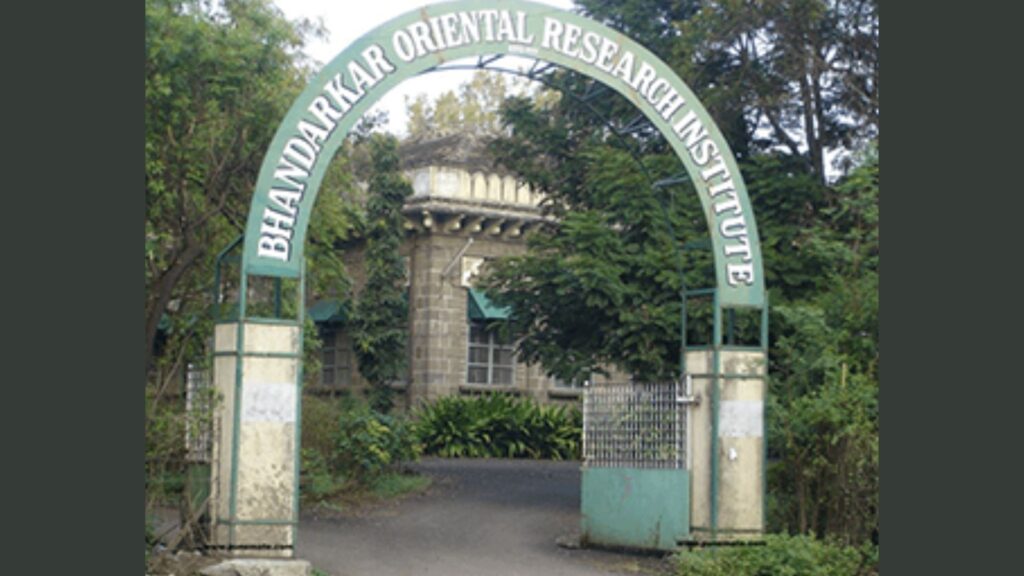
Pune, February 24, 2026: A three-day exhibition hosted by the Bhandarkar Oriental Research Institute (BORI) concluded on February 23 with a strong public response, attracting students, researchers, families and history enthusiasts eager to explore rare manuscripts and archival collections preserved by the century-old institution.
Visitors described the exhibition as an eye-opening experience that highlighted the depth of India’s intellectual and cultural traditions. Over the course of the event, more than 20,000 people visited the campus, reflecting growing public interest in classical scholarship and heritage studies.
Rare Texts and Manuscripts on Display
Among the key exhibits were a Sharada script copy of the Rigveda, critical editions of the Mahabharata, manuscripts of the Atharvaveda and Bhagavata Purana, along with early printed works and palm-leaf manuscripts.

Notable items included a preserved section of Vāstuvidyā-Tīkā from the Bṛhatsaṃhitā in Devanagari script; Vīrabāhura Vadha written in Bengali script with visible traces of traditional mineral-based preservation; Chikitsā Saṅgraha, considered the oldest surviving paper manuscript in Maharashtra within BORI’s collection; and Citrakāvyabandhodaya, inscribed on palm leaves in the Odiya language.
The exhibition also featured Līlāvatī, Viṭṭhala Sahasranāma Stotra, a 15th-century Prakrit manuscript of the Paryuṣaṇa Kalpasūtra, and a manuscript of Bhagavadgītā Pancharatna. A Persian translation of the Bhāgavata Purāṇa illustrated the historical exchange of ideas between Sanskrit and Persian scholarly traditions. The Ayodhya Mahatmya, cited in proceedings before the Supreme Court of India, was another significant attraction.
Research, Conservation and Public Engagement
Fourteen thematic stalls outlined BORI’s major academic initiatives, including its internationally recognised critical edition of the Mahabharata, long-term lexicographical projects, digital archiving efforts and online academic programmes.
Curator and Registrar Shreenand Bapat said the first gallery focused on India’s manuscript tradition, displaying texts such as the Rigveda, Panchatantra, Bhagavad Gita, and Dhvanyāloka, some of which are listed in UNESCO’s Memory of the World register. Visitors also viewed illustrated folios, a manuscript of the Nāṭyaśāstra, historical maps and scholarly charts.
A live demonstration zone allowed attendees to observe traditional manuscript handling techniques, while a conservation section explained preservation methods. Among the crowd-pullers was a 1955 typewriter used by scholar Vishnu Mahadev Atre. A traditional Goan dice-based board game, Tabulphala, dating to the 19th–20th century, offered insight into recreation in earlier times.
Expanding Academic Footprint
Dedicated displays highlighted research in ancient Indian mathematics, projects supported by the Infosys Foundation, and ongoing studies on the Bhagavata Purana, Atharvaveda, and inscriptions of the Kadamba dynasty. An exhibit on the digital restoration of Ellora sculptures also drew attention.
BORI officials noted that the institute, established in 1917, now houses around 28,000 manuscripts and nearly 160,000 books. In recent years, it has undertaken several large-scale research initiatives and published dozens of scholarly works.
The primary aim of the exhibition was to familiarise the public with BORI’s work. The enthusiastic participation of young visitors, many of whom engaged scholars with detailed questions, was particularly encouraging.
As the event concluded, organisers said the exhibition succeeded in bringing academic research closer to the wider community, reinforcing Pune’s long-standing association with classical studies and manuscript preservation.