Big Shift In Schools: CBSE Introduces AI Learning From Class 3 — What It Means For Students
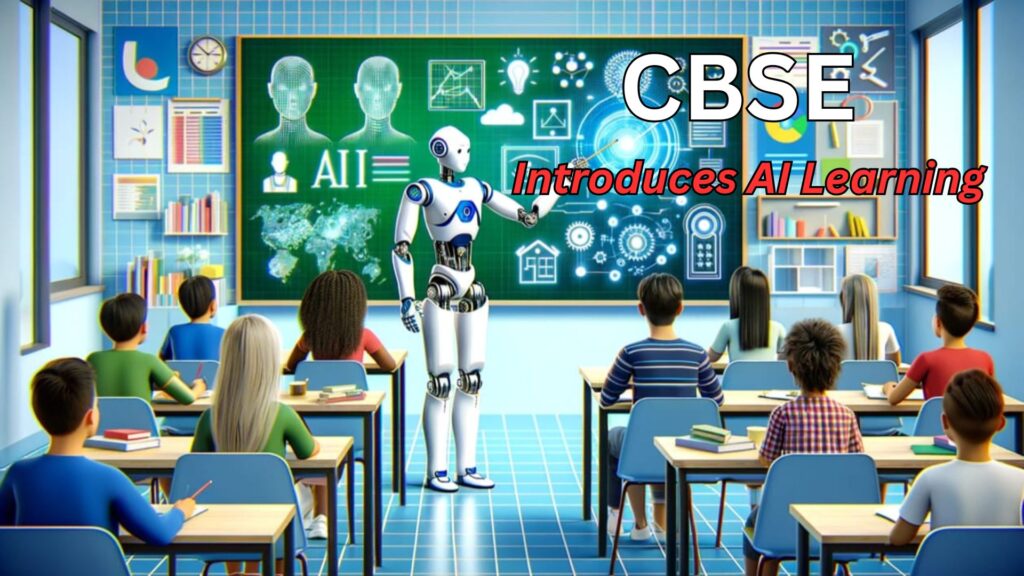
Big Shift In Schools: CBSE Introduces AI Learning From Class 3 — What It Means For Students
New curriculum for 2026–27 focuses on computational thinking, real-world problem solving, and ethical use of AI
In a major step towards modernising school education, the Central Board of Secondary Education (CBSE) has introduced a new curriculum focused on Artificial Intelligence (AI) and Computational Thinking (CT) for students from Classes 3 to 8, starting the 2026–27 academic session.
The move aligns with the National Education Policy (NEP) 2020 and aims to build “AI-ready learners” from an early age.
What The New Curriculum Focuses On

The framework is designed to develop core thinking skills before introducing advanced technology concepts. Instead of just teaching students how to use digital tools, the focus is on understanding how technology works.
Students will learn:
- Logical reasoning and problem-solving
- Pattern recognition and data understanding
- Step-by-step thinking (algorithmic approach)
- Basics of how AI impacts everyday life
The curriculum also promotes creativity, innovation, and critical thinking.
How It Will Be Taught In Schools
CBSE has planned a phased approach based on age and learning level.
Classes 3 to 5: Foundation Stage
Students will be introduced to basic computational thinking through subjects like Mathematics and environmental studies. Learning will be activity-based, using puzzles, exercises, and simple tasks.
Around 50 hours of learning time has been recommended at this stage.
Classes 6 to 8: Expansion Stage
At this level, students will move towards project-based learning and begin understanding basic AI concepts. They will work on real-life problems and explore how technology can offer solutions.
The suggested learning time is around 100 hours.
Shift In Teaching And Evaluation
The approach moves away from rote learning to practical understanding.
Teaching methods will include group projects, discussions, and real-world problem-solving exercises. Instead of traditional exams, students will be assessed through assignments, presentations, and application-based tasks.
Focus On Ethical Use Of AI
A key highlight of the curriculum is teaching responsible use of technology.
Students will learn to identify bias in AI systems, verify digital information, and understand the ethical implications of using technology. This aims to ensure they become informed and responsible digital users.
Support For Schools And Teachers
CBSE will provide resource materials and training support for teachers. Schools will also have flexibility in choosing tools and platforms, with an emphasis on accessible and open-source options.
Why This Change Matters
This initiative reflects a larger shift in India’s education system — from memorisation-based learning to skill-based education.
By introducing AI concepts early, the curriculum aims to prepare students for future careers, encourage innovation, and build a generation that can understand and shape technology, not just use it.
Disclaimer: This article is for informational purposes only. Implementation may vary across schools based on infrastructure and guidelines.