Weather-Based Speed Limits Introduced on National Highways, Automatic E-Challans for Violators
Weather-Based Speed Limits Introduced on National Highways, Automatic E-Challans for Violators
India is set to introduce dynamic speed limits on select national highways and expressways, with vehicle speeds changing according to weather conditions. The new system aims to reduce accidents by using real-time monitoring and automatic enforcement.
In a major step towards improving road safety, the Central Government has decided to introduce weather-based dynamic speed limits on selected national highways and expressways across the country. The initiative will allow speed limits to change in real time depending on weather conditions such as heavy rain, dense fog, dust storms and poor visibility, while violations will trigger automatic e-challans.
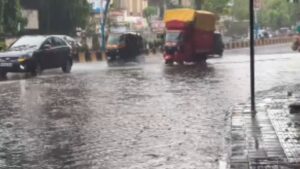
The move comes amid growing concerns over highway accidents caused by adverse weather conditions, especially during the monsoon and winter seasons. Officials believe that regulating vehicle speeds according to visibility and road conditions can significantly reduce the risk of collisions.


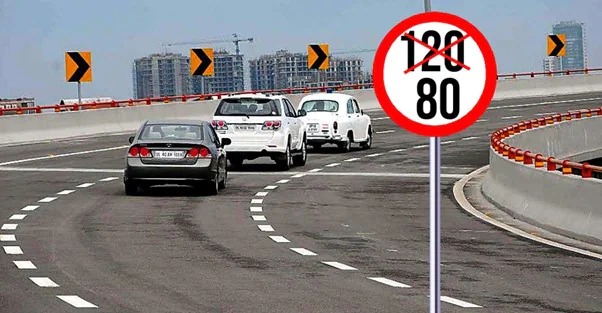
Under the new system, vehicles will be required to maintain speeds between 60 kmph and 80 kmph during rain, fog, dust storms or other conditions that reduce visibility. When weather conditions are normal and roads are clear, the maximum permissible speed will remain 100 kmph on national highways and 120 kmph on expressways, subject to local regulations.
The dynamic speed limit system will rely on a network of visibility sensors, weather stations and real-time traffic management centres installed along highways. These systems will continuously analyse weather conditions and automatically determine the appropriate speed limit for a particular stretch.
Digital variable message boards placed along highways will display the revised speed limits instantly, while drivers will also receive alerts on their mobile phones whenever required. Authorities plan to use Cell Broadcast technology so that safety messages can reach motorists even when internet connectivity is unavailable.
Enforcement will be fully automated through Automated Number Plate Recognition (ANPR) and Speed Violation Detection (SVD) cameras. If a vehicle exceeds the weather-specific speed limit, the system will automatically capture the violation and generate an e-challan, which will be sent directly to the registered mobile number of the vehicle owner.
According to information shared by the Ministry, AI-based predictive models suggest that implementing dynamic speed limits along with real-time warning systems could reduce highway accidents by 70 to 80 per cent, particularly during periods of poor visibility.
The project will initially be introduced on selected corridors, including the Delhi-Mumbai Expressway and parts of the Ganga Expressway in Uttar Pradesh, where pilot testing has already begun. Based on the results and after completing technical evaluations, the system is expected to be expanded to other major greenfield expressways and accident-prone national highways across the country.
Road safety experts have welcomed the initiative, noting that static speed limits often fail to account for rapidly changing weather conditions. By adapting permissible speeds to real-time situations, authorities hope to encourage safer driving behaviour while reducing fatalities and serious injuries.
Motorists have been advised to pay close attention to digital highway signage and weather alerts while travelling and strictly follow the displayed speed limits, as violations will now be detected automatically without manual intervention.
FAQs
1. What is a weather-based dynamic speed limit?
It is a system where speed limits change automatically depending on real-time weather conditions such as rain, fog, dust storms and reduced visibility.
2. What will be the speed limit during bad weather?
During adverse weather conditions, vehicles will generally be required to maintain speeds between 60 kmph and 80 kmph, depending on the severity of conditions.
3. What will be the speed limit in normal weather?
When weather conditions are clear, the maximum permissible speed will remain 100 kmph on national highways and 120 kmph on expressways, subject to applicable road rules.
4. How will violations be detected?
The system will use Automated Number Plate Recognition (ANPR) and Speed Violation Detection (SVD) cameras to identify vehicles exceeding the prescribed speed limit.
5. Will drivers receive an automatic e-challan?
Yes. If a driver exceeds the weather-specific speed limit, an e-challan will be generated automatically and sent to the registered mobile number linked to the vehicle.
6. How will drivers know the revised speed limit?
Updated limits will be displayed on digital variable message boards along highways and communicated through real-time mobile alerts.
7. Where will the system be implemented first?
The pilot phase is expected to cover stretches of the Delhi-Mumbai Expressway and the Ganga Expressway, before being expanded to other national highways and expressways.